
Eighty-five percent of organizations use HR technology to manage their people operations. The strongest platforms now do more than store team records. They help teams automate daily work, understand workforce trends, and make faster decisions.
Optimizing your HR tech stack—especially your human resource management system (HRMS)—is essential. A strong HRMS streamlines workflows, automates repetitive tasks, and frees up time to focus on people strategy. As Jeanne Meister, co-founder of Future Workplace, puts it, “HR tech gives us the tools to lead with data, not drift with intuition.” The right HRMS doesn’t just save time. It builds trust, boosts engagement, and drives business growth.
Key insights:
- HRMS software connects core HR, payroll, time, performance, and reporting in one system
- The right choice depends on company size, geography, integrations, implementation needs, and the HR processes your team wants to improve
- Small teams often need simple payroll and HR tools, while growing companies need stronger analytics, automation, and workforce planning
- HiBob offers the best end-to-end fit for growing organizations that want HR, Payroll, Finance, and AI working from shared data
- Global hiring, advanced payroll, device management, and PEO support may require specialized platforms
Best human resource management systems: Quick review
With so many HR platforms available, we focused on tools that simplify daily HR work and give leaders a clearer view of their people and operations. We reviewed dozens of HRMS systems through details from each provider’s official site, trusted research platforms like G2 and Gartner, and user feedback.
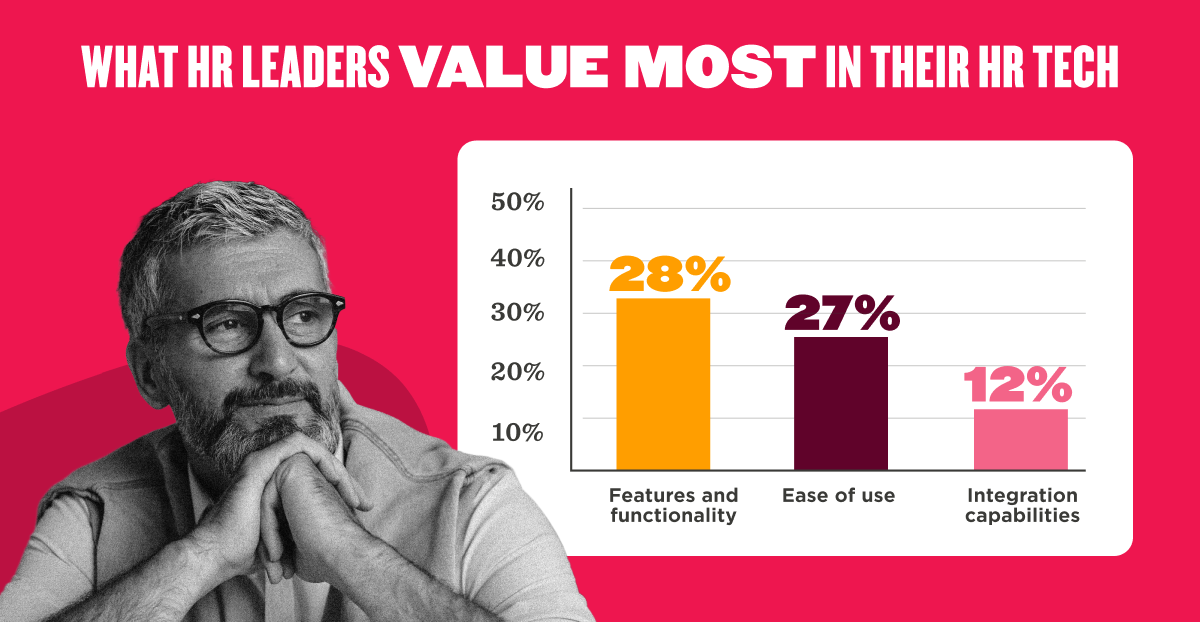
We selected the top picks based on what HR leaders value most in their HR tech, based on HiBob’s recent study: breadth of features and functionality (28 percent), ease of use (27 percent), and integration capabilities (12 percent). Each platform in this list met or exceeded these standards for different company sizes, structures, and HR needs.
Here’s a quick look at the top HRMS platforms and which organizations they’re best suited for:
| HR software | Best for | Customer size | Key industries | Pricing style |
| HiBob | End-to-end HR and Finance workflows and strengthening culture through connected HRMS | Mid-size to large (50-5,000+) | Tech, services, creative sectors | Custom pricing |
| ADP Workforce Now | Managing payroll, HR, and compliance | Mid-size to enterprise (50-1,000+) | Finance, healthcare, manufacturing | Custom pricing |
| BambooHR | Managing core HR, payroll, and people processes | Small to mid-size (1-1,000+) | Retail, hospitality, healthcare | Subscription (per user per month) |
| Deel | Handling global payroll, compliance, and international hiring | Small to enterprise (1-1,000+) | Technology, ecommerce, financial services, media, and manufacturing | Tiered by service |
| Factorial | Streamlining HR and finance processes with automation | Small to mid-size (1-500) | Construction, hospitality, and professional services | Tiered pricing |
| Gusto | Running payroll, benefits, and HR for U.S. businesses | Small businesses (1-200) | Retail, professional services, and ecommerce | Tiered plans |
| Namely | Consolidating HR, payroll, and benefits | Small to mid-size (up to 1,000) | Healthcare, consulting, retail | Custom pricing |
| Paycor | Managing payroll, labor costs, and workforce scheduling | Small to enterprise (1–1,000+) | Healthcare, manufacturing, restaurants | Bundled plans with custom quotes |
| Personio | Managing HR and payroll | Small to mid-size (10-5,000) | Manufacturing, professional services, and technology | Custom pricing |
| Rippling | Unifying HR, payroll, and IT operations globally | Small to enterprise (1-1000+) | Tech, SaaS, professional services | Modular custom pricing |
| Sage HR | Managing time off, performance, and scheduling | Small businesses with up to 250 employees | Retail, hospitality, services | Modular pricing based on employee count and selected features |
| TriNet | Combining HR tech with expert HR guidance | Small to mid-size (1-500) | Healthcare, consulting, legal | Custom per-user-per-month pricing |
| Workday | Managing HR, Finance, payroll, and workforce planning | Large enterprises (1,000+) | Finance, healthcare, retail | Custom pricing |
Explore how HiBob connects HR, Payroll, Finance, and AI in one platform built for growing global teams.
What does HRMS software do?
HRMS software helps HR teams manage people and business processes in one place. It builds on the recordkeeping functions of an HRIS by adding tools for payroll, time and attendance, onboarding workflows, performance reviews, reporting, and more.
However, as Brian Testa, HR Pro at Spinnaker Human Capital, notes, “HR technology should be evaluated not just within HR, but by how it impacts stakeholders across the organization.” Look for an HRMS platform that helps businesses:
- Stay ahead of compliance and audits: HRMS tools can track required training completions and store important documentation. When an audit or compliance check happens, HR can generate up-to-date reports in minutes instead of piecing together paper trails or old emails.
- Scale with growth and organizational change: HiBob research found that headcount changes (75 percent), turnover or retention (74 percent), and absenteeism (73 percent) rank as the three metrics HR reports most often to management. As teams expand, HRMS systems can automatically sync these updates across payroll, benefits, and directories, so HR doesn’t have to re-enter information multiple times. Leaders also gain a clearer view of the workforce measures they use to plan growth.
- Spot and address workforce trends: HRMS analytics can reveal changes in absenteeism, turnover, engagement, and workload before they develop into larger problems. Almost 50 percent of HR leaders identify burnout and poor wellbeing as the biggest business risk for 2026. HR teams can use these early workforce signals to review workloads, check in with managers, and respond before people disengage or leave.
- Give managers better context: Managers often need people data before they can approve raises, adjust workloads, or plan hiring. HiBob research found that 66 percent of managers spend three or more hours assembling data across systems before making a single people decision. An HRMS brings that information together so managers can act faster and make decisions with more confidence.
Key features of HRMS software
Every HRMS platform covers the basics of people management, but the best ones go further by helping you make a long-term impact. Let’s look at the key features that matter most and how they can make a real difference in your daily life.
- Employee management: This helps keep important information like job details, paid time off, and documentation accurate and easy to find
- Payroll and compliance: Integrated payroll and compliance ensure pay, benefits packages, and taxes process without errors to protect the company from legal risks
- Recruitment and onboarding: Automated hiring and onboarding tools make it easy to bring in and train new team members and set them up for success
- Performance management: Performance tools track goals, feedback, and reviews in one place and help HR identify opportunities for growth
- Analytics and reporting: Reporting dashboards help turn all your people data into actionable insights to guide better decisions across the organization
What’s the difference between HRIS, HCM, and HRMS?
While people often use these HR software acronyms interchangeably, they serve different purposes and offer varying levels of functionality:
HRIS (human resource information system)
An HRIS is a foundational layer that primarily stores and manages team member information like personal records, job titles, salaries, and benefits enrollment. It’s focused on recordkeeping and ensuring the basics run smoothly—such as payroll integration or self-service. HRIS systems are ideal for smaller teams that need to store information securely, track changes, and stay compliant without relying on spreadsheets.
HRMS
These systems build on HRIS functionality by adding tools that streamline everyday HR work—like time and attendance tracking, performance management, onboarding workflows, and reporting. An HRMS is both operational and relational.
HCM (human capital management)
HCM systems cover everything in an HRMS and add advanced features for workforce planning, talent management, and deeper analytics that connect HR data to business outcomes. It connects data from across the business so leaders can see where skills are growing, which teams need support, and how hiring or promotions affect budgets. These systems are often used by larger organizations that want a big-picture view of their workforce.
Best HRMS software to support your team
Over 50 percent of HR professionals say HR tech has significantly impacted company culture. The right platform can make that impact even stronger. Let’s look at the HRMS systems leading the way for different team sizes, industries, and HR priorities.
HiBob

G2 rating: 4.5/5 from over 2,500 user reviews
HR leaders from all over the world use HiBob’s all-in-one HR platform to manage team member data, performance, time off, and engagement in one user-friendly, connected system. Teams can automate repetitive work such as approvals and updates, connect data to payroll, and keep hiring aligned with onboarding through built-in applicant tracking.
With shared, real-time people data, HR and Finance can stay aligned on headcount changes and workforce costs without relying on spreadsheets. AI-powered tools help reduce manual effort and surface clearer insights, so leaders can spot trends sooner and act with confidence.
HiBob’s custom dashboards give leaders visibility into turnover, growth, and engagement signals, while integrations with tools like Slack, bswift, and payroll providers keep information flowing across systems.

Features:
- Core HR: Automate approval chains, maintain org charts, and track HR metrics such as headcount, absenteeism, and turnover
- Payroll Hub: Sync payroll data across systems in real time for accurate reporting and fewer manual updates
- Finance: Connect people plans to budgets by modeling headcount and workforce costs and keeping HR and Finance working from the real-time data
- Compensation and benefits: Manage salary reviews, bonuses, and equity cycles with transparency and control
- Hiring and onboarding: Streamline recruiting, collect new-hire documentation, and track onboarding milestones
- Time and attendance: Record working hours, paid time off (PTO), and schedules directly within the platform
Best for: Mid-size and global companies that want to automate workflows, strengthen culture, and provide real-time people insights
Not the right fit for: Companies primarily looking for Employer of Record services to hire people without opening local entities
What customers are saying about HiBob:
“We used Bob not only for core HR processes like learning and talent management, but also to create a sense of connection across teams. The interface feels modern and intuitive, which makes adoption easy, and I especially value the people-centric features” – user review
“As a talent acquisition professional I’ve worked with many HRIS systems in the past and I can honestly say HiBob makes my job so much easier. I love that it integrates with my ATS system and it’s so easy to pass candidates from offer into HiBob.” – user review
Learn what HiBob can do for your organization
Feature descriptions, pricing references, and availability for third-party platforms are based on publicly available information on the HiBob website at the time of publication and may change.
ADP Workforce Now

G2 rating: 4.2/5 from over 4,200 user reviews
ADP Workforce Now is an all-in-one HR and payroll platform that offers HR, benefits, time, and talent management in a single system. HR leaders use it to automate payroll runs, manage benefits, track time, and unify talent and performance workflows across their organization. ADP also offers compliance tooling, AI-powered anomaly detection, and benchmarking using a database of over 42 million team members.

Features:
- Payroll automation: Run payroll continuously with built-in tax calculations and AI error detection
- Core HR management: Maintain accurate records across job changes, promotions, and exits
- Benefits administration: Manage enrollment and carrier connections directly within the system
- Analytics and benchmarking: Compare workforce metrics against aggregated market data
Best for: Mid-size organizations that want to combine payroll, benefits, and talent management
Not the right fit for: Teams that want a lightweight HR system with minimal configuration and a short implementation
What customers are saying about ADP Workforce Now:
“I like that I can have the various aspects of our HR program hosted through ADP Workforce Now.” – user review
“The user interface on the user end was also sometimes outdated and difficult to manage.” – user review
Feature descriptions, pricing references, and availability for third-party platforms are based on publicly available information on the ADP Workforce Now website at the time of publication and may change.
BambooHR

G2 rating: 4.4/5 from over 5,600 user reviews
BambooHR is an HR software platform with features for core HR, payroll, time, benefits, and performance. HR leaders can use it to centralize team data, automate onboarding, run payroll, track time off, and generate reports. BambooHR also includes an AI-powered HR assistant and benchmarked analytics to help guide decisions.

Features:
- Team database: Keep job, salary, and performance records in one location
- Payroll management: Run payroll, manage benefits, and calculate taxes
- Time tracking: Record hours, manage time-off requests, and approve schedules
- Performance tools: Set goals, gather feedback, and organize review cycles year-round
Best for: Small to mid-size businesses seeking an all-in-one HR system.
Not the right fit for: Multinational companies that need native payroll across several countries
What customers are saying about BambooHR:
“The app is very easy to use and upload your documents to.” – user review
“Org chart feature is basic.” – user review
<<Compare Bob vs. BambooHR – See which fits your business best>>
Feature descriptions, pricing references, and availability for third-party platforms are based on publicly available information on the BambooHR website at the time of publication and may change.
Deel

G2 rating: 4.7/5 from over 6,800 user reviews
Deel is a global HR platform that provides payroll, performance, and HR operations for distributed workforces across over 150 countries. Organizations can use it to handle contractor and team member pay, connect performance data to compensation, and access continuous compliance insights. It also features a Compliance Hub with alerts and legal updates.

Features:
- Global payroll: Pay team members and contractors in multiple currencies with built-in tax and compliance support
- Compliance hub: Stay ahead of legal changes with real-time regulatory alerts and local guidance
- People management: Manage contracts, team data, and performance reviews from one place
- Benefits administration: Offer localized benefits packages that meet regional requirements
Best for: Organizations with global or remote workforces.
Not the right fit for: Domestic-only companies that don’t need international payroll, contractor management, or Employer of Record services
What customers are saying about Deel:
“One of its biggest advantages is the flexibility it offers.” – user review
“Some features can feel limited or take time to update when new regulations or integrations are introduced.” – user review
Feature descriptions, pricing references, and availability for third-party platforms are based on publicly available information on the Deel website at the time of publication and may change.
Factorial

G2 rating: 4.4/5 from over 100 user reviews
Factorial is an all-in-one business management platform with HRMS capabilities covering time, payroll, HR operations, and analytics. HR leaders use it to automate repetitive work like payroll prep, absence tracking, document handling, and to view data across HR and finance flows. Users can also access customizable workflows for performance and onboarding.

Features:
- Time and attendance: Track hours, holidays, and schedules from one dashboard
- Payroll processing: Automate payroll runs with pre-filled data from attendance and contracts
- Document management: Store and share contracts, policies, and signed forms
- Onboarding workflows: Create templates and checklists to streamline new joiner setup
Best for: Comprehensive business management for payroll, finance, and talent
Not the right fit for: Organizations that need highly customized reports, approval structures, and enterprise-level workflows
What customers are saying about Factorial:
“In general, it works ok and does the job.” – user review
“I occasionally run into limitations with the reports and the available customization options.” – user review
Feature descriptions, pricing references, and availability for third-party platforms are based on publicly available information on the Factorial website at the time of publication and may change.
Gusto

G2 rating: 4.6/5 from over 11,600 user reviews
Gusto is a people platform that blends payroll, benefits, HR tools, and compliance features together for HR teams. Organizations use it to run payroll for regular and off-cycle runs, manage hiring and onboarding checklists, and centralize benefits enrollment. Gusto also supports global contractor payments and compliance alerts across states.

Features:
- Payroll automation: Process payroll regularly or on demand with tax calculations built in
- Hiring and onboarding: Issue offer letters, handle electronic forms, and set up tasks
- Benefits management: Enroll team members in health plans, retirement accounts, and automatically sync deductions
- Reporting: Review payroll trends, headcount movement, and compliance alerts
Best for: Companies seeking a unified platform for payroll, benefits, and core HR functions.
Not the right fit for: Large enterprises that need extensive customization across complex payroll and HR processes
What customers are saying about Gusto:
“For a small team, it strikes a good balance between functionality and ease of use.” – user review
“Some advanced reporting and customization features feel limited.” – user review
Feature descriptions, pricing references, and availability for third-party platforms are based on publicly available information on the Gusto website at the time of publication and may change.
Namely

G2 rating: 3.9/5 from over 300 user reviews
Namely is an HR platform with HR, payroll, benefits, and talent management tools in one system for mid-size companies. Users can maintain team records, run payroll, manage performance reviews, and oversee compliance. The system also includes a self-service portal for team members that integrates with third-party systems for benefits and accounting.

Features:
- Core HR: Centralize team member data, time-off tracking, and org structures
- Payroll and tax filing: Automate pay runs, deductions, and year-end reporting
- Benefits management: Enroll and manage benefits plans within the platform
- Performance reviews: Manage goal setting, feedback, and review cycles
Best for: Mid-size organizations that want an all-in-one HR platform
Not the right fit for: Global enterprises that need native payroll and workforce management across many countries
What customers are saying about Namely:
“It’s a simple HRIS, very focused on the US environments.” – user review
“Most times I have to run a report in HRIS and in Payroll to get what I want.” – user review
Feature descriptions, pricing references, and availability for third-party platforms are based on publicly available information on the Namely website at the time of publication and may change.
Paycor

G2 rating: 3.9/5 from over 1,300 user reviews
Paycor offers payroll, HR, benefits administration, recruiting, performance management, and workforce management functionalities. Their workforce management tools give managers visibility into overtime, staffing coverage, attendance, and labor spend before they publish schedules. Paycor also offers AI-powered analytics that answer workforce questions and help leaders identify trends in turnover, performance, and staffing needs.

Features:
- Payroll and HR: Process payroll, manage tax filing, maintain employee records, and support benefits administration
- Workforce management: Track time and attendance, build schedules, monitor overtime, and compare staffing needs with labor costs
- Recruiting and onboarding: Post jobs, manage candidates, create hiring workflows, and move new hires into onboarding
- Analytics and AI: Review workforce trends, build reports, and ask questions about HR and labor data using natural language
Best for: Organizations that want to track labor costs alongside payroll, scheduling, and workforce data
Not the right fit for: Multinational companies that need payroll and compliance support across several countries
What customers are saying about Paycor:
“There is flexibility in creating reports, which was helpful when looking for historical data.” – user review
“I can’t create my own report unless I start with a template in the new reporting area.” – user review
Feature descriptions, pricing references, and availability for third-party platforms are based on publicly available information on the Paycor website at the time of publication and may change.
Personio

G2 rating: 4.4/5 from over 800 user reviews
Personio is an HR and payroll software platform meant for small and mid-size companies. It brings together core HR processes like recruiting, payroll, time tracking, and performance management. HR teams use it to centralize team data, automate recurring tasks, and maintain compliance with labor laws.

Features:
- Team database: Maintain personal records, job data, and documentation
- Payroll processing: Automate payroll and sync changes from attendance and HR updates
- Recruiting and onboarding: Manage job postings, applications, and onboarding checklists
- Compliance and data protection: Access built-in GDPR compliance for secure data handling
Best for: Small and mid-size companies needing HR and payroll management
Not the right fit for: US-focused companies that need domestic payroll and compliance as their primary HR requirement
What customers are saying about Personio:
“The report functions are easy to pull basic information for reporting and that it stores all HR documentation.” – user review
“The API is not good, which makes integrations with other applications difficult.” – user review
Feature descriptions, pricing references, and availability for third-party platforms are based on publicly available information on the Personio website at the time of publication and may change.
Rippling

G2 rating: 4.8/5 from over 13,000 user reviews
Rippling is an end-to-end HR and IT operations platform with features for payroll, benefits, HR, and device management. Teams can onboard or offboard team members, automate compliance checks, administer benefits globally, and manage access to IT resources. The platform also offers cross-currency payroll and local compliance support in multiple countries.

Features:
- Global payroll and benefits: Run payroll across countries with local tax rules and benefit integrations
- Onboarding and offboarding: Automate equipment provisioning, access permissions, and HR workflows
- Org charts: Access visual hierarchies and role-based access control tied to HR data
- Reporting: Use built-in dashboards and custom reports for work, spend, and headcount
Best for: Teams that want to combine HR, IT, and operations in a unified system
Not the right fit for: Teams that want basic HR software without selecting and paying for separate IT, finance, payroll, or device-management modules
What customers are saying about Rippling:
“I think Rippling is good for small business models that don’t necessarily have a team of HR to manage the workforce.” – user review
“At times, the navigation between modules can feel slightly disjointed.” – user review
<<Compare Bob vs. Rippling – See which fits your business best>>
Feature descriptions, pricing references, and availability for third-party platforms are based on publicly available information on the Rippling website at the time of publication and may change.
Sage HR

G2 rating: 4.3/5 from over 90 user reviews
Sage offers an HR software platform that helps businesses manage people operations like leave tracking, performance, shift scheduling, and expenses. HR teams can handle day-to-day tasks such as managing absences, reviewing goals, and storing key team documents. The platform also includes a mobile app for team members and managers to approve requests or review performance updates on the go.

Features:
- Leave management: Automate vacation, sick leave, and approval workflows
- Performance tracking: Set objectives, collect feedback, and run review cycles
- Shift scheduling: Build and adjust work schedules for teams or departments
- Expense management: Submit, approve, and track reimbursement claims digitally
Best for: Companies looking for a simple system to manage everyday HR tasks
Not the right fit for: Businesses that need payroll processing built directly into the same HR platform
What customers are saying about Sage HR:
“Easy to use, and accessible and digestible help menus.” – user review
“The mobile app is somewhat limiting in terms of the experience you get compared with the web version.” – user review
Feature descriptions, pricing references, and availability for third-party platforms are based on publicly available information on the Sage HR website at the time of publication and may change.
TriNet

G2 rating: 4.2/5 from over 1,800 user reviews
TriNet is a cloud-based HR platform and professional employer organization (PEO) that combines HR technology with dedicated service for small and mid-size businesses. It gives companies access to enterprise-level payroll, benefits, risk mitigation, and compliance resources without building an internal HR department. HR leaders use TriNet to manage team data, run payroll, administer benefits, and ensure legal compliance with state and federal regulations.

Features:
- Payroll management: Automate pay runs, tax filings, and wage reporting
- Benefits administration: Offer and manage access to large-group health, retirement, and insurance plans through TriNet’s network
- Compliance support: Stay current with labor law changes and automatically update forms and policies
- Analytics dashboards: Monitor payroll expenses, benefit usage, and turnover trends with built-in reporting
Best for: Businesses that want professional HR support with their tech
Not the right fit for: Companies that want to keep payroll, benefits, compliance, and HR administration fully in-house
What customers are saying about TriNet:
“The solution worked well within our organization of under 200 employees” – user review
“The UI for the pre-payroll run is different from the detailed report after the run, which makes it difficult to track changes.” – user review
Feature descriptions, pricing references, and availability for third-party platforms are based on publicly available information on the TriNet website at the time of publication and may change.
Workday

G2 rating: 4.1/5 from over 1,600 user reviews
Workday offers core HR, payroll, talent management, workforce planning, and Finance in one cloud platform. Organizations can manage job changes, benefits, time, recruiting, learning, and performance while using shared data to model headcount and workforce costs. The platform also uses AI across recruiting, skills management, scheduling, payroll, and workforce analytics. Workday primarily serves larger organizations with complex structures, although Workday GO now extends some capabilities to smaller and mid-size companies.

Features:
- Core HR: Manage team records, organizational structures, benefits, absence, job changes, and employee self-service
- Workforce planning: Model headcount, forecast labor needs, and connect workforce plans with Finance and operating budgets
- Talent management: Support recruiting, onboarding, learning, performance reviews, skills development, and succession planning
- Payroll and workforce management: Process payroll, track time and attendance, build schedules, and manage workforce rules across locations
Best for: Large organizations that need HR, Finance, payroll, and workforce planning in one system
Not the right fit for: Small businesses that need lightweight HR software with minimal configuration and implementation work
What customers are saying about Workday:
“It centralizes all my essential work tools into one intuitive platform.” – user review
“Reporting customization is a bit complex and some workflows are a bit rigid, needing more flexibility.” – user review
Feature descriptions, pricing references, and availability for third-party platforms are based on publicly available information on the Workday website at the time of publication and may change.
What HRMS users say on Reddit
We reviewed multiple Reddit threads focused specifically on HRMS and workforce management recommendations, covering 150+ comments from HR practitioners, operators, founders, and small business owners, with most discussions taking place in the past 6-12 months. Unlike broader HRIS conversations, Redditors evaluating HRMS platforms focused less on analytics or organizational planning and more on automation, payroll integration, onboarding, attendance tracking, and reducing administrative work for lean HR teams.
Across discussions, there was no single HRMS platform that emerged as the universal winner. Instead, Redditors repeatedly argued that the best HRMS depends heavily on company size, workforce complexity, and whether organizations want an all-in-one platform or a lighter system focused on core HR operations.
Top HRMS platforms highlighted by Redditors
The strongest positive sentiment generally went to systems that reduced manual work without creating additional implementation or administrative burden.
- HiBob: HiBob generates consistently positive sentiment (roughly 65-70 percent positive) among organizations looking for a modern HRMS without the complexity of traditional enterprise software. Redditors regularly highlight the intuitive interface, clean employee experience, onboarding workflows, payroll integrations, and ability to scale as organizations grow. Unlike Rippling, discussions around HiBob more frequently emphasize simplicity and usability over breadth of functionality.
- BambooHR: BambooHR trends moderately positive (around 55-65 percent positive) and is frequently recommended for smaller organizations or first-time HR system buyers. Redditors regularly cite its ease of use, quick implementation, and employee-friendly design. Many practitioners position BambooHR as the safest option for organizations prioritizing usability over advanced automation or workforce management capabilities.
HRMS platforms with more mixed sentiment
- Rippling: While Reddit discussions around Rippling skew positive overall (roughly 65-75 percent positive), it generated more caveats than any other highly rated HRMS. HR professionals praised the breadth of functionality, automation, payroll integration, onboarding workflows, and ability to consolidate multiple systems. However, some users felt the platform could become overwhelming for smaller organizations, noted that implementation complexity increases as modules are added, and warned that pricing can rise quickly through add-ons and upsells.
- Gusto: Gusto receives generally favorable commentary from small businesses (roughly 50-60 percent positive) due to its payroll capabilities and ease of setup. However, many Redditors describe it as a payroll-first platform rather than a complete HRMS solution. As organizations grow, discussions increasingly mention outgrowing Gusto’s HR functionality and needing additional systems for performance management, workforce planning, or more advanced HR workflows.
Within the Reddit threads we analyzed, Redditors mentioned additional vendors only once or twice, often by employees, consultants, or vendors themselves, without enough independent practitioner discussion to support a meaningful sentiment classification.
Best HRMS according to G2
G2’s Core HR rankings place HiBob, Rippling, and BambooHR among the category’s leading platforms. HiBob offers the strongest end-to-end fit for growing organizations that want core HR, performance management, compensation, workforce planning, and people analytics in one connected system. G2 reviewers frequently highlight its user-friendly interface, configurable workflows, and people-focused features.
G2 ranks Rippling highly for teams that want to manage HR and IT through the same platform. Reviewers often value its payroll, app access, device management, and workflow automation, although its modular setup may introduce more complexity than teams need for HR alone.
BambooHR remains a strong option for smaller organizations that want straightforward employee records, onboarding, time off, and reporting. G2 reviewers regularly praise its ease of use, while some note that its reporting and workflow customization may not support more complex HR operations.
Recommended For Further Reading
Make the right choice for your HRMS needs
When you streamline your HR functions, you can shift focus from managing tasks to supporting people. A strong HRMS helps you stay organized, simplify workflows, and give every leader the visibility they need to make confident decisions.
If you want a connected platform that supports the full people lifecycle, consider HiBob. HiBob brings key HR workflows such as performance, time off, and reporting into one intuitive system, with built-in applicant tracking that connects hiring to onboarding. Real-time people data keeps HR and Finance aligned on headcount changes and workforce costs, while AI-powered tools help reduce manual work and surface clearer insights.
The result is fewer handoffs, faster execution, and a more consistent experience for leaders and team members.
Learn what HiBob can do for your organization.
HRMS FAQs
What is the best HRMS for small businesses?
The best HRMS for small businesses depends on what your team needs. Gusto can work for small teams that mainly need payroll, benefits, and basic HR tools, while BambooHR can fit teams that want recordkeeping, onboarding, time off, payroll, and reporting in one system.
HiBob is the best HRMS for small businesses that plan to scale. It brings onboarding, performance, time off, payroll connections, analytics, and workforce planning into one platform, so teams can add structure without replacing their HR system as headcount grows.
How much does HRMS software cost?
HRMS pricing can start around $8 per user per month for entry-level platforms, while payroll-focused plans may begin near $55 per month before per-person fees. Mid-size and enterprise vendors usually provide custom quotes based on headcount, selected modules, locations, and support needs. Your final cost may also include implementation, data migration, integrations, training, and additional payroll or talent-management modules.
What’s the difference between HRMS and HCM?
An HRMS manages everyday HR processes such as payroll, time tracking, onboarding, performance reviews, and employee records. HCM covers those functions but adds more strategic tools for workforce planning, succession management, compensation, skills development, and advanced analytics. Companies often choose HCM when leaders need workforce data to guide long-term hiring, development, and budget decisions.
How long does HRMS implementation take?
HRMS implementation can take anywhere from a few weeks to several months, depending on company size, data quality, integrations, and required customization. For example, HiBob typically takes six to eight weeks, while larger enterprise platforms such as Workday may require four to six months for broader deployments. Teams can keep implementation on track by cleaning team data early, assigning internal owners, and allowing time for testing and training.
What is the best HRMS for startups?
HiBob is the best HRMS for startups because it prepares them to scale their teams, formalize HR processes, or expand into new locations. Teams can start with core HR and onboarding, then add performance management, compensation, payroll, and workforce planning as hiring accelerates. Its shared people data also gives founders, HR, and Finance a consistent view of headcount and workforce costs instead of separate spreadsheets.
Disclaimer:
This content reflects HiBob’s perspective, informed by our experience supporting HR teams as they evaluate and implement HR software. It is provided for informational purposes only and is not intended as independent research or professional advice. Prospective users should conduct their own evaluation before making a decision.
Feature descriptions, pricing references, and availability for third-party platforms are based on publicly available information at the time of publication and may change. HiBob does not guarantee the accuracy or completeness of information related to third-party products. Prospective users should verify details directly with each provider.