
When good data creates uncomfortable moments
Many HR professionals have found themselves in the following situation. They provide carefully collected, well-analyzed data, and the insights revealed are sound and significant. But instead of immediate alignment or enthusiasm, questions start to surface about the data or the proposed plan of action.
While this can feel deflating, the HR team isn’t doing anything wrong. Sometimes the data simply doesn’t give leaders the answers they’d hoped for. Hesitation doesn’t mean your people data insights aren’t valuable. Instead, it means the insights you’re presenting challenge existing assumptions, narratives, or priorities. And that can be uncomfortable for the people you’re talking to.
This is where a strong data-first culture becomes essential, as explained in the fifth webinar of our data bootcamp series.
A data-first culture isn’t defined by dashboards or advanced analytics. It’s defined by how an organization responds when the data says something unexpected. It’s a shared commitment to evidence as a common reference point—so insights are examined, discussed, and acted on through shared understanding rather than persuasion.
When that foundation is in place, uncomfortable moments don’t stall progress. They move it forward.
Handling these moments well is what separates organizations that use data occasionally from those that truly rely on it.
Why a data-first culture depends on people, not just analytics
In a data-first culture, there’s shared agreement that data is part of how decisions are made—even when insights are unexpected or uncomfortable. And while tools and dashboards give you access to that data, they can’t create this culture on their own. Instead, that comes from repeated human interactions over time.
We can see this reflected in the numbers. Research shows that 70 percent of analytics projects fail due to people and process issues, not because the software falls short.
Ultimately, uncertainty in the face of new data is normal. Insights can prompt concern about changing the status quo, letting go of old processes, and learning new ways of working—especially when people feel personally invested in how things have been done up to this point.
As an organization, moving beyond this initial point of hesitation requires shared confidence in how decisions are made and ongoing trust in data as a shared decision-making language. Making real, beneficial changes based on your HR data requires adopting company culture, not just technical data-gathering capability.
That’s why understanding who you’re delivering insights to matters as much as what the data says.
Mapping influence before important data conversations
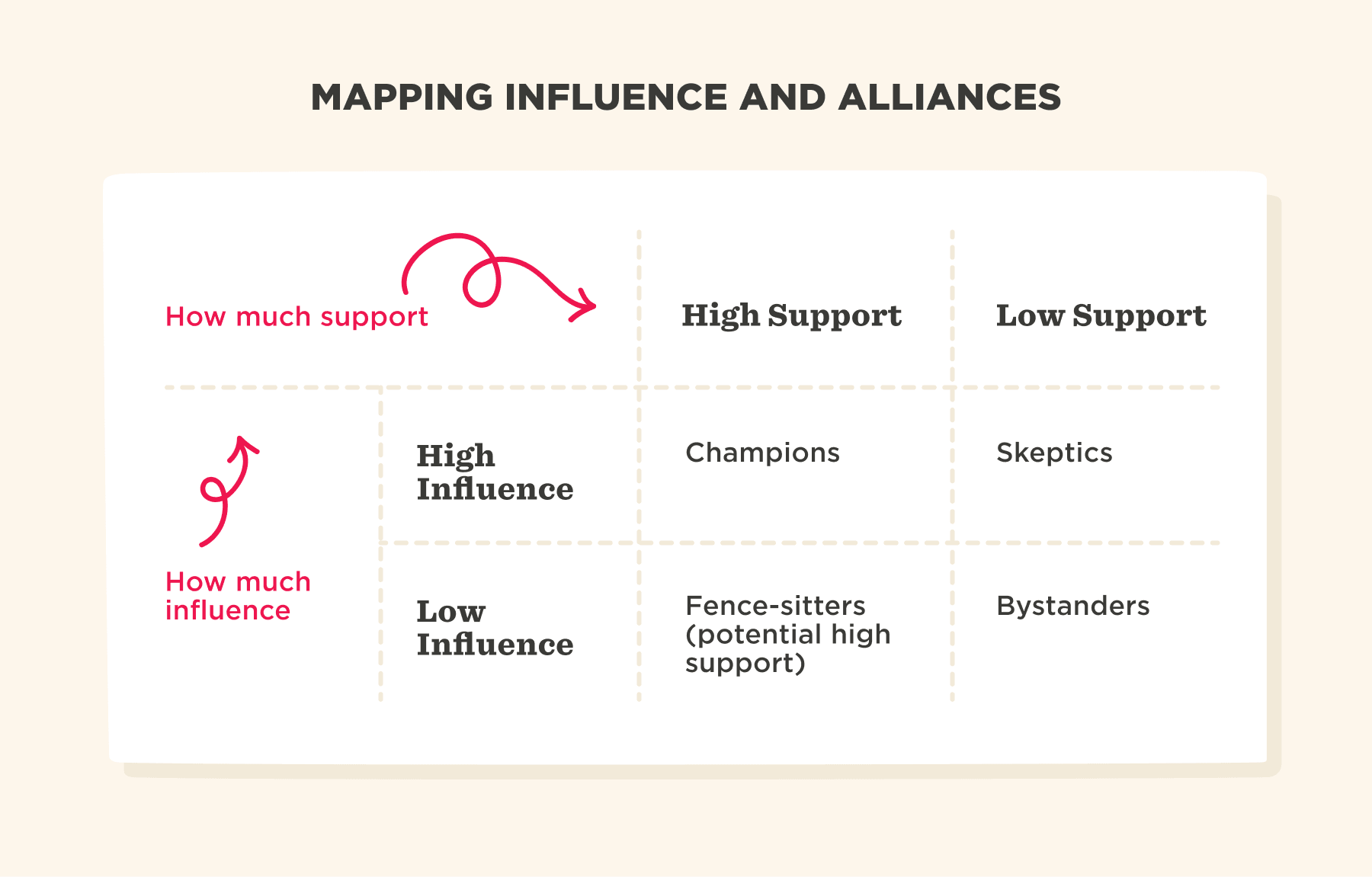
Data conversations don’t happen in a vacuum. The outcomes of these conversations vary depending on your company culture and the outlook of the stakeholders you’re talking to. Influence and openness inevitably differ from one person to another.
In our experience, decision-makers tend to fall into a few broad groups:
- Champions, who are supportive and will sing your praises.
- Skeptics, who prefer evidence and reassurance before change.
- Fence-sitters, who are curious but undecided.
- Bystanders, who stay on the periphery and don’t tend to voice an opinion.
Understanding these perspectives and mapping influence before you embark on data conversations isn’t about manipulating stakeholder reactions. Instead, it’s about anticipating perspectives and questions—and building momentum thoughtfully.
Our stakeholder influence map worksheet helps you think through where different stakeholders sit so that you can approach conversations with greater clarity.
How a data-first culture works
Let’s look at an example of the importance of a data-first culture in action.
Meet Alex, an HR analyst at a mid-sized tech firm.
Alex had built a strong attrition model and uncovered something concerning: top performers were leaving at a higher rate than anyone realized. The financial impact was significant. The data was clear.
She walked into her leadership meeting ready to deliver a compelling people data insights presentation.
The reactions told a different story.
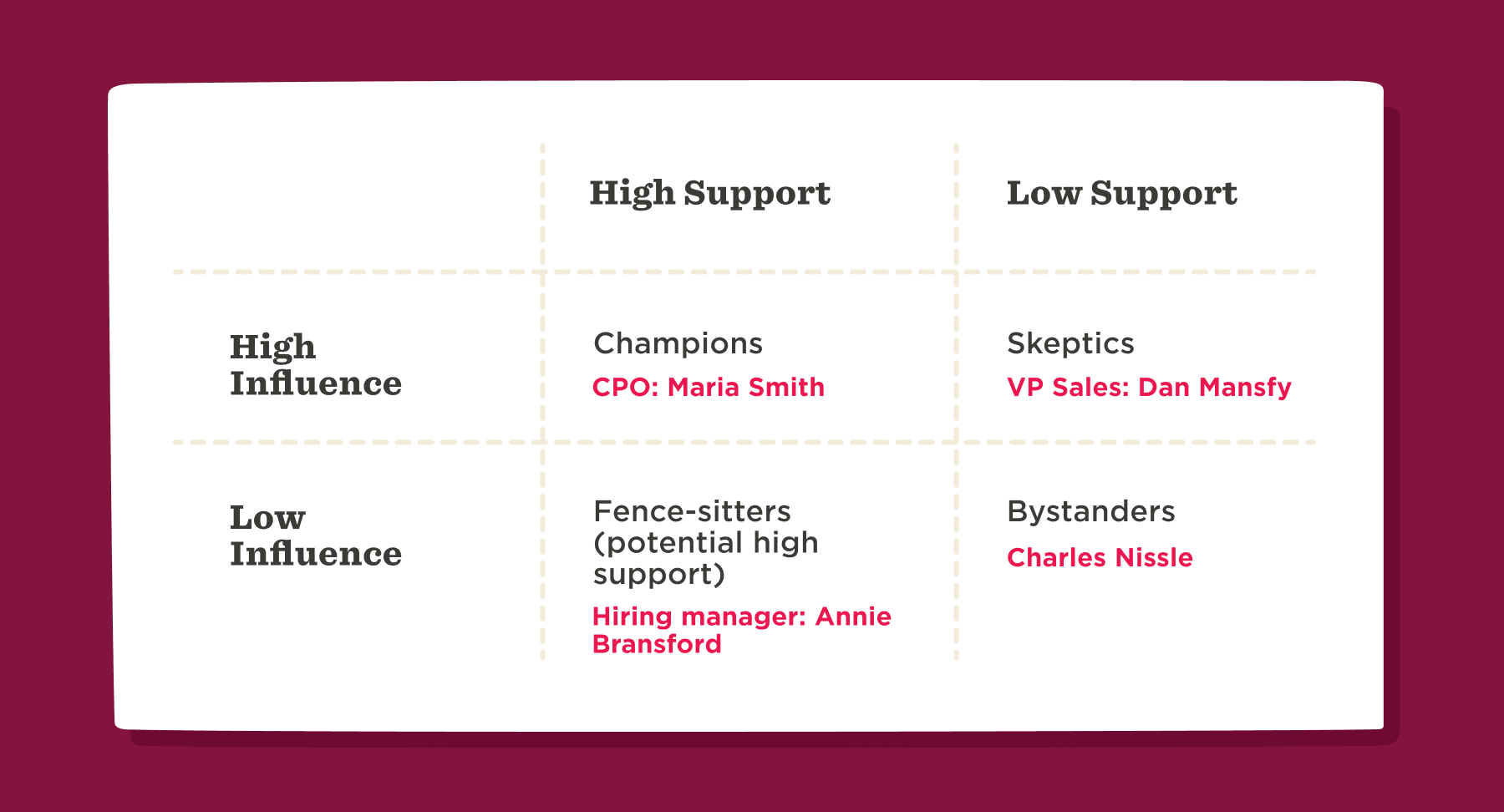
Dan, the VP of Sales, focused on overall headcount. “We’re still growing,” he pointed out.
Maria, the CPO, immediately saw the retention risk.
Annie, a hiring manager, said it matched what she was seeing on her team.
Charles, a team lead, admitted he’d noticed turnover too, though only within his own group.
Same people data insights. Four different interpretations.
That’s when Alex realized something important: insights don’t drive action on their own. Alignment does.
So she paused and mapped her stakeholders using the stakeholder influence map worksheet. Who had high influence? Who was already supportive? Who needed more context?
Maria became her champion with high influence, high support. Together, they reframed the analysis around business outcomes: succession risk, revenue continuity, and hiring costs. What started as a standalone analysis evolved into a cross-functional conversation about retention strategy.
The difference wasn’t better charts. It was a smarter approach to influence.
Once you discover where influence and readiness vary, the challenge turns to delivering unexpected insights.
Handling pivotal moments while strengthening trust in data
When stakeholders push back and question your data, it may feel difficult to manage in the moment. But it can help to view them as stepping stones to a data-first culture. These are the learning moments that strengthen your culture over time.
When navigating these pivotal moments, it can help to:
- Anchor back to shared goals, so your people data insights feel relevant to the bigger company picture and what the organization is trying to achieve.
- Present the insight clearly and calmly by positioning leaders as the heroes of the story and HR as the guide.
- Acknowledge emotional reactions without retreating by giving stakeholders space to respond and by demonstrating that you hear their concerns.
- Offer options instead of ultimatums by presenting various courses of action (potentially including low-risk pilots).
- Invite collaboration by treating the meeting as a cooperative conversation and being open to ideas.
Immediate agreement isn’t always necessary. Even without it, you can move forward with credibility. Trust is built through consistency over time, not just comfort. The same insight thoughtfully reframed, based on stakeholder influence and perspective, can land very differently with your audience.
Handling one tough conversation is an important skill. But making that approach repeatable is what allows insights to scale—and helps you, as an organization, move toward a dynamic data-first culture.
Recommended For Further Reading
A culture that grows through honest insights
The key benefits of integrating people insights data include shared understanding and alignment with the C-suite. Moving from individual moments to sustained data-first systems requires a commitment to building data trust over time. Rituals, repetition, and follow-ups help you embed data-first principles.
That might mean holding regular forums to share and debate insights, creating rewards that celebrate data champions (including those who raise difficult yet important insights), and reinforcing the value of data with ongoing audits and retrospectives.
It might mean recognizing leaders who engage with data openly and constructively, and finding ways to embed insights into existing workflows.
Throughout all this, HR acts as a guide, not an enforcer. They’re a partner and collaborator—a team that brings data insights to help the organization make better decisions and develop a truly data-first culture.
Creating the conditions for confident decisions
As people data insights scale, the real opportunity isn’t just better data, it’s better conversations.
A data-first culture grows stronger when data is allowed to challenge assumptions. When questions or hesitation surface, they signal engagement and curiosity rather than resistance. When handled well, they create space for shared understanding, strengthen trust, and (over time) support more thoughtful, people-first decisions.
Use the stakeholder influence map worksheet to support this work. It offers a practical way to think through different perspectives, prepare for more complex conversations, and keep your people insights moving toward action rather than stalling in discussion.
Key takeaways
- Scaling people insights is as much about culture as it is about data. As insights grow in reach and complexity, shared understanding and trust matter as much as analytics capability.
- Questions and hesitation are part of progress. When new insights prompt discussion or uncertainty, it often signals engagement rather than resistance.
- Strong data-first cultures make space for sense-making. Organizations build confidence in people data insights by allowing time for interpretation, dialogue, and alignment.
- HR creates impact by guiding conversations rather than forcing conclusions. The role of HR is to provide clarity, context, and perspective that help leaders make thoughtful decisions.
- Preparation helps insights move forward. Thinking through stakeholder perspectives in advance supports more productive conversations and reduces friction.
- Tools work best when they support reflection and action. Practical frameworks like the Stakeholder Influence Map help keep people insights driving decisions rather than stalling in discussion.