New team members arrive excited to grow, connect, and contribute. A thoughtful onboarding experience can turn that excitement into lasting engagement—setting the stage for strong relationships, clear expectations, and early wins.
As Amy Hirsh Robinson, an HR strategist and former chief people officer, points out, “If you’re going to spend all this time and money acquiring employees and paying them to work, why not prepare them to succeed and convince them to stay?” Research proves that a strong onboarding process sees productivity increase by more than 70 percent.
When HR teams combine structured support with genuine human connection, those early days become a launchpad for long-term success. This guide walks through practical onboarding activities you can use to help every new joiner feel confident, included, and ready to thrive.
<<Engage your new joiners with a free onboarding activities list.>>
Key insights
- Organized onboarding activities reduce time-to-productivity for both new joiners and their managers in on-site, remote, and hybrid settings
- Companies with structured onboarding see higher retention rates and better performance outcomes
- Download the free onboarding activities list to build a welcoming, high-impact onboarding experience
The importance of engaging onboarding activities
Engaging onboarding activities help new joiners settle in, understand their responsibilities, and build the relationships they need to do their best work. As Ellyn Shook, Accenture’s Chief Leadership and Human Resources Officer, notes, “Great onboarding isn’t about day one. It’s about supporting people through the moments that matter in their first weeks and months.” These activities guide people from offer acceptance to becoming confident contributors by giving them a clear view of what their first weeks will look like.
Instead of focusing only on paperwork, thoughtful activities help:
- Set clear expectations from day one: Clear expectations help new joiners understand their responsibilities, how success is measured, and who to turn to with questions. When people know what their first month should look like, they can prioritize the right tasks and avoid common early-stage confusion. Easy access to information during onboarding boosts productivity and engagement for nearly 80 percent of new joiners, reinforcing the value of clarity from the start.
- Speed up cultural integration: Activities that highlight values, norms, and team practices help new joiners understand how work gets done across the organization. This context shapes how they communicate and navigate their daily decisions.
- Increase satisfaction and retention: People start their roles with more confidence and commitment when they feel informed, supported, and included. A strong preboarding process alone can improve new-joiner retention by 82 percent. Plus, people who have a negative onboarding experience are more than 50 percent likely to look for another job. Try answering questions quickly, setting clear expectations, and supporting someone during their first few projects to help them get off to a good start.
- Raise awareness of tools, resources, and support: Onboarding helps new joiners learn where to find HR policies, IT help, development opportunities, and everyday tools they’ll depend on. Understanding these systems early reduces avoidable slowdowns, especially in the first few weeks. Nearly 80 percent of people say that having this information easily accessible improves their productivity and overall engagement.
- Strengthen relationships across the team: Activities like buddy programs, team introductions, and one-on-one conversations give new joiners early touchpoints with the people they’ll work with most. These relationships help them learn unwritten rules, understand team rhythms, and find the right person to ask when questions come up.
- Make a better first impression and reduce stress: As onboarding expert George Bradt points out, “If a company doesn’t have a formal onboarding process, it says to new employees, ‘We don’t care about you.’” A structured onboarding plan gives new joiners a clear roadmap, reducing the confusion that can occur during someone’s early days. Sharing clear expectations early helps new joiners focus on learning instead of worrying about what’s next.
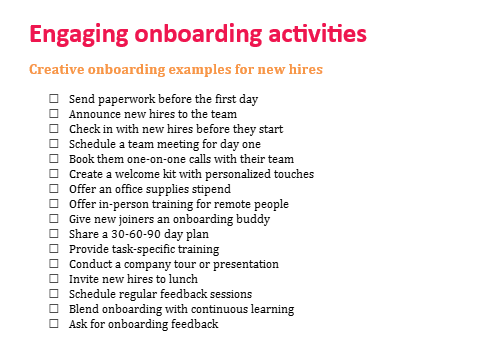
Creative onboarding examples for new hires
Effective onboarding process activities start before day one and continue through the first 90 days. Let’s look at proven activities you can adapt for both in-person and remote environments.
Recommended For Further Reading
1. Send paperwork before the first day
Preboarding activities eliminate first-day administrative stress and create excitement for the role. Send essential documents like tax forms, benefits enrollment, and the company handbook three to five days before their start date. You can also create a digital welcome packet that includes a personalized note from their manager, team photos with names and roles, and a first-week schedule. Essential preboarding documents include:
- Tax forms and payroll setup
- Benefits enrollment materials
- Company handbook and policies
- First-week schedule
- Parking and building access information if you’re in person
2. Announce new hires to the team
Team announcements build anticipation and help existing team members prepare to welcome new joiners. Send a company-wide email two days before their start date, including their background, role, and interesting personal details they’ve agreed to share. You can also post the announcement in Slack, Teams, your human resource information system (HRIS), and any other communication platform your organization uses.
For example, create a short “Meet our new team member” post with their photo, start date, and a fun intro like their favorite hobby or why they chose your company.
Encourage team members to introduce themselves and share what they’re excited to collaborate on. Use your employee directory to help new joiners learn about colleagues quickly and identify key contacts for different projects or questions.
3. Check in with new hires before they start
- Schedule two touchpoints—one week before and the day before their start date: During the first check-in, confirm logistics, schedule upcoming calls, connect them with HR, make sure they have their devices, and share what to expect during their first week
- The second check-in focuses on answering any last questions before they start and making preparations they might need
- The final check-in confirms their excitement and reinforces that their manager is available for support
4. Schedule a team meeting for day one
First-day team meetings create immediate belonging and clarify working relationships. Structure these 60-minute sessions to include introductions, explanations of team dynamics, and overarching project descriptions.
Start with icebreaker activities that work in both virtual and in-person settings, like sharing professional backgrounds and one interesting personal fact. Keep the focus on people and culture rather than processes. Deeper logistics like communication preferences, meeting cadences, and tools can be covered in separate role-specific onboarding sessions.

5. Book them one-on-one calls with their team
Individual conversations build deeper, more meaningful connections than group introductions alone. To support relationship building from day one, schedule a series of 30-minute calls with direct team members, key cross-functional partners, and leaders across the business.
Provide each person with a short conversation guide that goes beyond basic intros. Include prompts about working styles, communication preferences, and current projects to help spark relevant, engaging discussions. Encourage team members to share what they do, how they collaborate, and how they plan to support the new joiner’s success.
Spread these meetings across the new joiner’s first month to avoid overwhelm and give time for reflection. A thoughtfully paced calendar keeps the experience manageable while helping new team members build relationships that last.
6. Create a welcome kit with personalized touches
Welcome kits create tangible excitement and demonstrate a company’s investment in new team members. Include both practical items like company-branded notebooks and personal touches based on information gathered during interviews.
For remote workers, ship welcome kits to arrive around their first day, including items like company swag and handwritten notes from team members. In-person welcome kits might include desk accessories, local coffee shop gift cards, and team swag.
Use personalization to make welcome kits memorable. For example, if they mentioned loving tea during interviews, include specialty tea blends. These thoughtful touches show attention to individual preferences and create positive first impressions.
7. Offer an office supplies stipend
Home office stipends help both remote and hybrid workers create productive workspaces while demonstrating company support. Provide budget ranges for essential equipment like pens, paper, ergonomic chairs, monitors, and lighting.
Create clear guidelines about covered expenses and reimbursement processes, including receipt requirements and approval workflows. Include a checklist of recommended items like standing desks, noise-canceling headphones, and productivity tools.
8. Offer in-person training for remote people
Bringing remote workers onsite for initial training creates stronger relationships and deeper cultural understanding. Plan a three to five-day visit that combines role-specific training with team building and cultural immersion.
Structure these visits to include hands-on training sessions, informal meals with team members, and meetings with key stakeholders they’ll work with regularly. Balance scheduled activities with informal interaction time.
When travel isn’t possible, create online alternatives such as virtual office tours and online team building activities that help replicate in-person connections.
9. Give new joiners an onboarding buddy
Buddy programs provide peer support and insider knowledge that managers can’t always offer. Choose people who are strong cultural ambassadors, patient teachers, and enthusiastic about helping others succeed.
Train partners on their responsibilities, which include daily check-ins during the first week, answering questions about company culture, and helping navigate unwritten rules and processes.
Make your buddy program effective by:
- Providing conversation starters and check-in templates
- Collecting input from both the established team members and new joiners
- Acknowledging people for their mentorship contributions
Peer relationships often evolve into lasting professional connections that benefit both parties long-term.

10. Share a 30-60-90 day plan
Structured milestone plans create clear expectations and measurable progress indicators. Building and sharing a 30-60-90 day plan gives new joiners a clear view of what they’re learning, when they should apply it, and how their manager will support them at each stage.
The first 30 days focus on orientation, relationship building, and basic skill development. Days 31-60 emphasize deeper role understanding and initial project contributions. The final 30 days target independent work and expanded responsibilities.
Include performance check-ins at each 30-day mark so managers and new joiners can review progress, adjust goals, and surface any support they need. Schedule regular touchpoints throughout the plan to celebrate wins, clarify expectations, and keep momentum strong. These plans provide roadmaps for success while still allowing flexibility for different learning styles and role requirements.
11. Provide task-specific training
Role-specific training matters more than ever, given that 49 percent of executives worry their workforce lacks the skills needed to deliver organizational strategy. You can build competence and confidence in core responsibilities by creating focused modules for each major job function, combining theoretical knowledge with hands-on practice opportunities.
Design training sessions that accommodate different learning preferences as well. For example, visual learners may benefit from diagrams and walkthrough videos, while kinesthetic learners gain more from demos and hands-on practice. Include simple competency checks to confirm understanding without creating pressure or formal assessments.
Document training materials in one place so new joiners can revisit them as they grow into their roles. Clear, centralized resources also make it easier to update training as workflows evolve so everyone becomes confident in the work they’re responsible for.
12. Conduct a company tour or presentation
Company tours help new joiners understand organizational structure and identify key resources. For physical offices, include introductions to different departments, explanations of shared spaces, and locations of important facilities.
Create virtual tours for remote workers using video walkthroughs, interactive maps, and department introduction videos. Include company history, milestone achievements, and cultural traditions that shape daily operations.
These tours provide context for decision-making processes and help new joiners understand how their role fits within the broader organizational structure.
13. Invite new hires to lunch
Social bonding over meals creates informal opportunities for connection that build trust and rapport. Organize lunches within their first month with different groups like their immediate team, partners from adjacent departments, and company leaders.
For remote teams, arrange virtual lunch sessions with meal delivery services or coordinate local meetups when possible. These informal interactions reveal personality and build relationships beyond work tasks.
Remember to consider dietary restrictions and preferences when planning meals to accommodate everyone’s needs and comfort levels.
14. Schedule regular feedback sessions
Structured feedback sessions provide support and course correction opportunities throughout onboarding. Schedule weekly check-ins during the first month, then transition to bi-weekly sessions through day 90.
Use onboarding survey questions to gather structured feedback about their experience, challenges, and suggestions for improvement. Create psychological safety by framing these conversations as learning opportunities rather than evaluations.
Document feedback themes to continuously improve your onboarding process, ensuring future new joiners benefit from lessons learned from previous experiences.

15. Blend onboarding with continuous learning
Studies show that companies investing in growth and development increase job confidence by 83 percent. You can increase confidence by connecting initial onboarding to ongoing development opportunities to create seamless transitions from orientation to career growth. Identify skill gaps and learning interests during onboarding conversations.
Create continuous learning paths that extend beyond initial training, including mentorship opportunities, projects, and external development resources. Use HR software to track progress and adjust development plans as new joiners grow into their roles.
16. Ask for onboarding feedback
Comprehensive feedback collection on the onboarding process improves future onboarding experiences while demonstrating commitment to continuous improvement. Conduct feedback sessions at 30, 60, and 90 days to capture different perspectives.
Ask specific questions about activity effectiveness, timing, and teaching quality. Include both structured survey questions and open-ended discussion opportunities for deeper insights. For example,
- Which onboarding activities helped you feel most prepared for your role?
- Were there any parts of the process that felt unclear, rushed, or mistimed?
- Did you have access to the information and tools you needed in your first week?
- Which meetings or training sessions were the most helpful, and why?
- Is there anything you wish you had learned earlier in your onboarding journey?
Implement improvements based on feedback patterns, showing new joiners that their input creates positive changes for future team members.
Drive success with a supportive onboarding process
From faster ramp-up times to stronger engagement and long-term retention, a consistent, people-first onboarding experience creates real impact across the business.
All of these activities contribute to that smooth start every new joiner wants. Your people will integrate with your team faster and contribute sooner when they know what to expect and feel connected from the beginning. The more consistently you invest in these early experiences, the easier it becomes for new joiners to find their footing and stay engaged well beyond their first week.
If you want a clear, ready-to-use starting point, this onboarding activities list gives you practical ideas you can plug directly into your process. Use it to map out the moments that matter most across preboarding, day one, and the first 90 days—so every new joiner receives the same thoughtful, well-structured welcome to your team.
<<Download this free onboarding activities checklist.>>
FAQs about onboarding activities
What are the 4 Cs of onboarding activities?
The 4 Cs framework includes compliance (legal requirements and policies), clarification (role expectations and responsibilities), culture (organizational norms and values), and connection (interpersonal relationships and networks).
How long do effective onboarding activities typically last?
Effective onboarding activities typically extend 90 days beyond the start date, with intensive activities during the first month and continued support through the first quarter.
What’s the difference between orientation activities and onboarding activities?
Orientation activities are one-time administrative events focused on paperwork and basic information sharing. Onboarding activities are comprehensive, multi-week experiences that integrate new joiners into their roles, teams, and company culture.
How can HR teams measure onboarding activity effectiveness?
Track metrics like time-to-productivity, retention rates at 90 days and one year, engagement scores from new joiner surveys, and feedback quality from structured check-ins.
What onboarding activities work best for remote team members?
Virtual welcome kits, video team introductions, digital scavenger hunts, online social events, structured virtual check-ins, and home office stipends help remote team members feel connected despite physical distance.