Work ethic and workplace success go together like morning coffee and productivity—one naturally fuels the other. Research shows that people who value hard work, responsibility, and steady effort tend to feel more motivated in their roles, which strengthens the behaviors that define a good work ethic, like follow-through and focus.
Personal work ethic is just the starting point. The real momentum comes when companies add clarity, autonomy, and encouragement to the mix. With the right support, clear expectations, and a company culture that celebrates progress, the motivation-ethic loop becomes even stronger.
Let’s explore specific work ethic examples and practical ways to infuse these qualities across your organization.
What is work ethic?
Work ethic is the mindset people bring to their job—the standards they set for themselves and how they handle their responsibilities as a result. You can see it in how someone manages their time, follows through on tasks, and communicates with their team. It can be as noticeable as taking charge of a slipping deadline or as subtle as updating a project file so nothing gets held up.
A strong work ethic improves productivity and promotes a culture of support, paving the way for long-term success. When teams stay organized and follow through on tasks, projects move forward without constant check-ins or last-minute scrambles. That reliability boosts team morale by building trust and shared momentum. Over time, these habits help create a work environment where people feel engaged and able to grow—qualities that make companies more adaptable and resilient as they evolve.
Examples of good work ethic
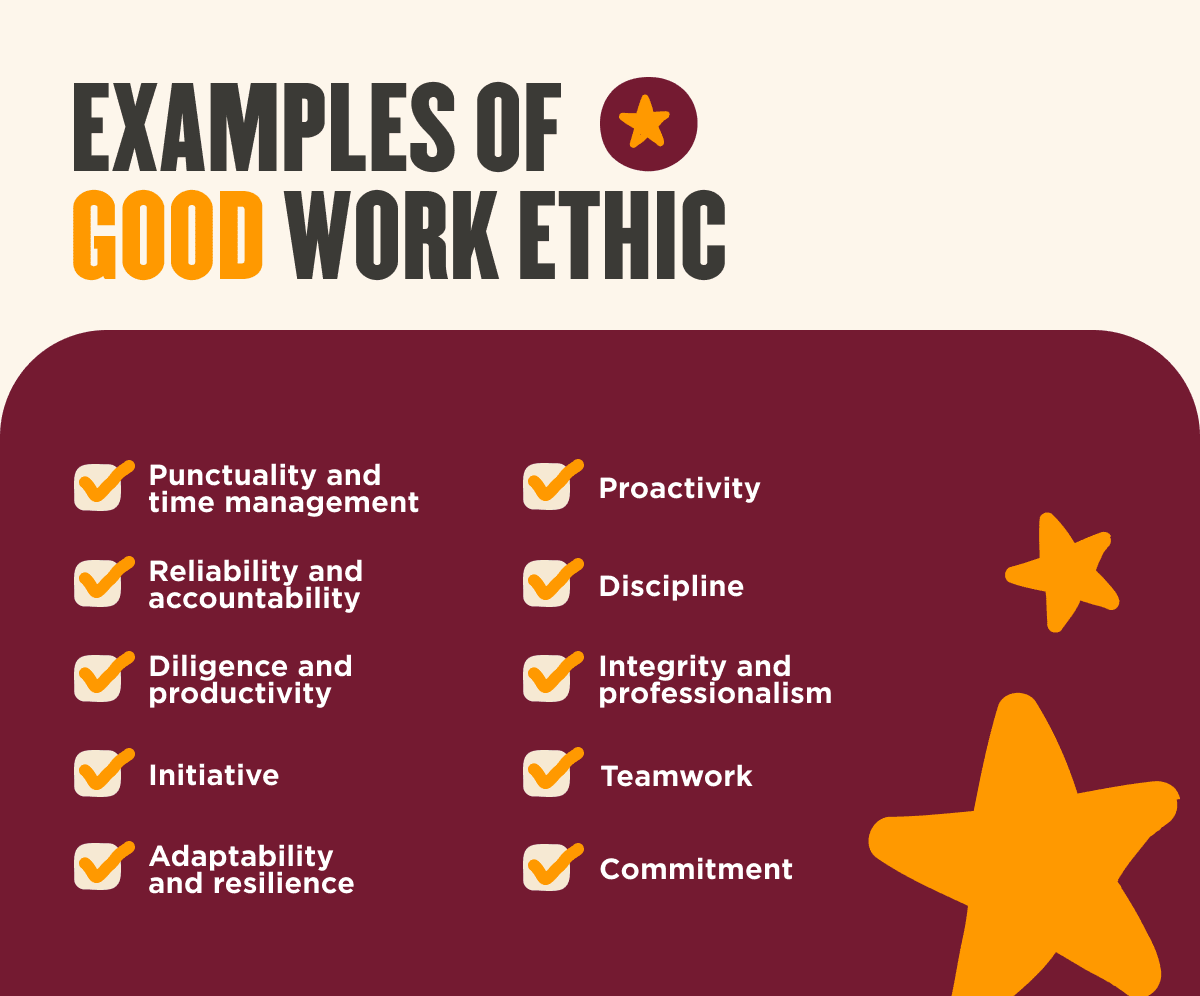
Good work ethic shows up in the everyday actions that keep projects moving and teams connected. These work ethic examples show how it strengthens collaboration and improves results:
- Punctuality and time management: Starting meetings on time and managing schedules well keeps projects on track and avoids decision delays. A teammate who shows up prepared helps the team align faster, saving time and driving momentum from the start.
- Reliability and accountability: Reliable team members deliver what they promise, which reduces uncertainty for everyone else. Accountable teammates share updates as they go, which keeps work transparent and easy to follow.
- Diligence and productivity: Diligence means approaching work with care, consistency, and follow-through. Diligent team members raise the quality of the group’s output—spotting outdated metrics, polishing drafts, and catching small issues before they become big ones. Their attention to detail helps others move forward faster and with confidence.
- Initiative: Taking initiative means stepping in where help is needed without waiting for direction. For instance, someone might draft the first version of a project plan after a kickoff meeting, giving the team a concrete starting point to expand on.
- Proactivity: Proactive people help projects move forward without friction—say, by asking clarifying questions early or checking in with a collaborator to make sure everyone’s aligned.
- Discipline: Discipline is reflected in consistent, everyday actions—keeping documentation accurate, maintaining an organized workflow, and following up without delay. These habits build a steady rhythm the team can rely on to stay aligned and move work forward.
- Integrity and professionalism: Integrity builds trust, and professionalism sets the tone for how people work together. This shows up in being honest about capacity, communicating with respect, and offering constructive feedback that helps the whole team grow and deliver high-quality work.
- Teamwork: Strong teamwork reflects a solid work ethic—showing commitment not just to your own tasks, but to shared goals. It means staying connected, making room for others’ strengths, and stepping in when support is needed. Whether it’s sharing context, collaborating on a challenge, or offering a quick assist, these small actions keep the team aligned and moving forward together.
- Adaptability and resilience: A strong work ethic includes staying steady when things change. Team members who adjust quickly to shifting priorities—whether by reworking a plan or pivoting with minimal friction—help the group stay flexible, focused, and on pace.
- Commitment: Committed team members stay engaged from start to finish. They show enthusiasm during planning, stay focused through execution, and bring care to final touches, all of which helps the team deliver strong results.
Examples of poor work ethic
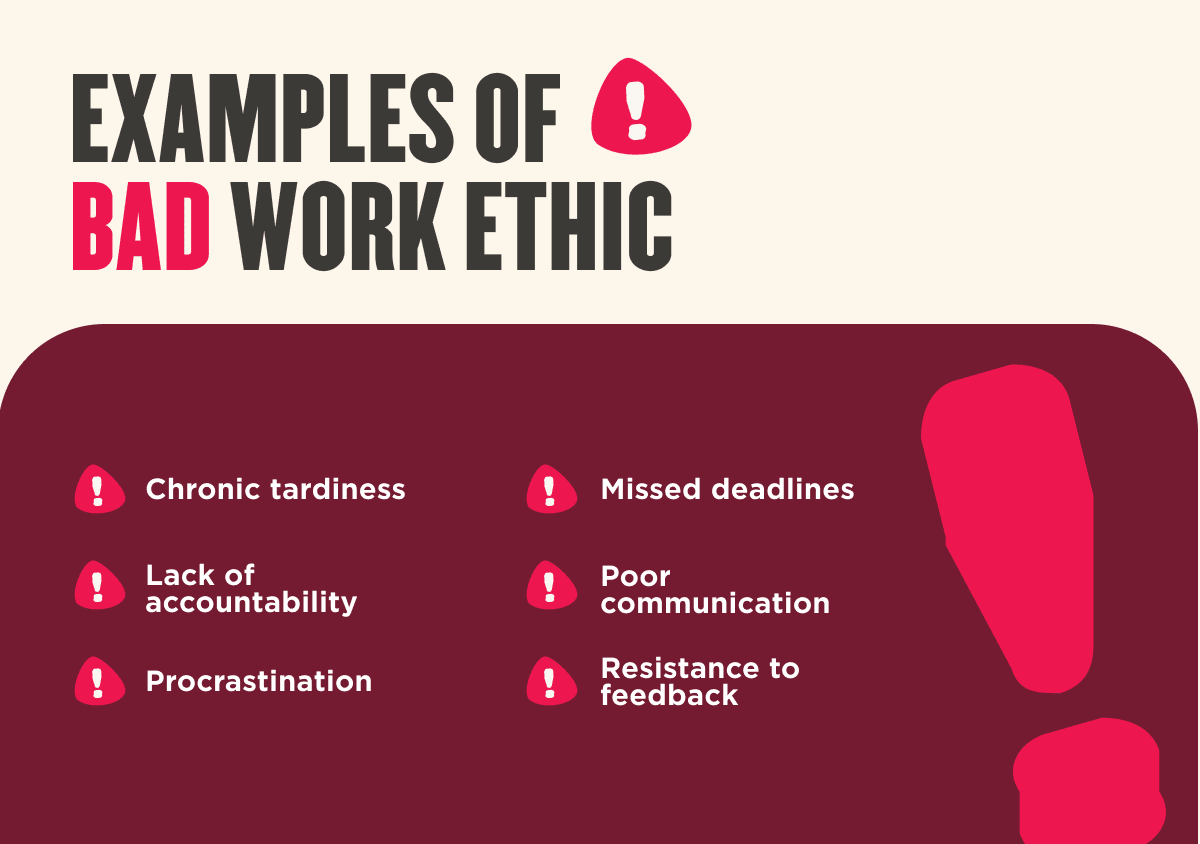
Certain behaviors can slow projects down or make coordination more difficult. Here are poor work ethic examples and the impact they can have on team performance and outcomes:
- Chronic tardiness: A pattern of late starts can make coordination harder. Even small delays can affect other people’s timelines, especially when tasks are connected or people need information from their team members.
- Missed deadlines: Consistently missing deadlines signals a breakdown in planning or follow-through. It can shift priorities unexpectedly, increase stress, or require others to take on extra work to keep the project on track.
- Lack of accountability: When team members don’t follow through or own their contributions, it creates uncertainty about progress and priorities. This can lead to missed expectations, last-minute scrambles, or uneven workloads, all of which disrupt trust and consistency.
- Poor communication: Gaps in communication—like unclear updates or radio silence—make it hard for teams to stay aligned. Without a clear understanding of who’s doing what and when, it’s easy to duplicate work, miss key handoffs, or drift off track.
- Procrastination: Delaying tasks until the last minute compresses timelines for others. Even if teams complete their work on time, the rush can reduce quality, limit opportunities for feedback, and increase workplace stress across the team.
- Resistance to feedback: When someone is hesitant to consider input or adjust their approach, it can prevent the team from refining their work or improving processes. This makes collaboration less fluid and can slow the team’s ability to iterate and deliver at a high standard.
Strategies to create a good work ethic
Work ethic develops fastest in environments designed to support it. HR can make that possible by cultivating exceptional company culture and giving people what they need to do their best work. Here are a few ways to make that happen:
Recommended For Further Reading
Continuous feedback loops
Continuous feedback loops help people stay aligned with what matters, including the goals they’re driving toward, the expectations they’re accountable for, and the habits that will set them up for growth. Gallup data shows that people who receive frequent feedback (rather than just annual reviews) from their manager are 3.6 times more likely to do outstanding work.
These feedback loops can take many forms, including:
- Weekly priority check-ins: Giving quick, targeted feedback on what’s working well and where focus needs to shift for the week ahead
- Midweek “pulse” messages: Sending a short check-in to offer timely feedback and give people space to surface questions before they become roadblocks
- Real-time coaching: Sharing feedback while work is still in progress—highlighting strengths, suggesting one or two adjustments, and keeping momentum going
- After-meeting summaries: Sending a brief recap that confirms decisions and next steps, reinforcing expectations while everything is still fresh
- Project retrospectives: Wrapping up projects with a short review focused on specific feedback and choosing one or two takeaways to carry into the next cycle
How managers deliver feedback matters just as much as when they deliver it. Feedback isn’t one-size-fits-all—and delivering it effectively means knowing your audience.
Some people prefer direct, bullet-point clarity; others respond better to context, stories, or examples. When managers tailor their message to how each person processes information, the feedback is more likely to land—and drive real impact.
Recognition programs
Acknowledging people’s achievements—both big wins and everyday contributions—goes a long way in encouraging a high work ethic. Over 90 percent of people say that receiving recognition for their work drives them to put in more effort and makes them more likely to repeat a behavior they were recognized for.
Effective recognition doesn’t need to be complicated. Here are just a few examples:
- Public shout-outs: Calling out great work in meetings or shared channels, and being clear about what the person did and why it mattered
- Peer-nominated wins: Giving teammates a simple way to recognize each other and surfacing everyday contributions managers might miss
- Spot bonuses or small rewards: Using small rewards—like a bonus, gift card, or flex time—to acknowledge extra effort in the moment
- Manager-to-person notes: Sending a short, specific note that highlights an action and its impact to reinforce positive habits
- Milestone celebrations: Marking major moments, such as project completions, goal achievements, or new skills, to encourage team members and drive continued excellence
Prioritizing employee recognition changes how people show up and apply their work ethic.
Structured performance management
A structured performance management process supports more than just reviews—it reinforces a strong work ethic by making expectations clear, progress visible, and accountability part of the day-to-day. When people know what’s expected and have regular touchpoints to reflect and adjust, it’s easier to stay focused and grow over time.
Here are some performance management best practices to support accountability and development effectively:
- Start with clear goal-setting: Kick off each quarter by helping each team member set 3–5 measurable goals tied to the team’s priorities. Capture them in a shared document so expectations stay visible and don’t get lost in inboxes.
- Break goals into monthly checkpoints: Schedule monthly one-on-one meetings to review progress, talk through challenges, and adjust goals if priorities shift. This helps your people stay on track and gives managers regular chances to offer support.
- Use performance management software for consistency: A performance management system centralizes goals, notes, feedback, and progress updates in one place. That way, you’re not chasing down documents or relying on memory when review time comes.
- Close the loop with documentation: After each check-in, jot down a quick summary of what’s going well, what’s shifting, and what’s next. Having a written record keeps the process transparent and gives your people actionable steps forward.
<< Support team motivation with free employee goal setting templates >>
Strengthen your company culture with a positive work ethic
Work ethic doesn’t live in a vacuum—it grows in environments where expectations are clear, support is consistent, and people feel recognized for the effort they put in. When companies actively nurture that foundation—with thoughtful feedback, meaningful recognition, and clear goals—they don’t just fuel productivity. They strengthen team resilience, deepen engagement, and set the stage for long-term success.
Work ethic examples FAQs
What is an example of a good work ethic?
A team member with a strong work ethic might start the week by reviewing team goals, flagging potential blockers early, and proactively updating co-workers as things progress. When a project hits a snag, they take ownership—communicating openly, proposing solutions, and staying focused on next steps rather than placing blame. They may also demonstrate consistency under pressure, willingness to pitch in without being asked, and ability to shift gears when priorities change.
What are the 7 work ethics?
The seven core work ethics represent the attitudes and behaviors that drive consistent, high-quality performance:
- Reliability: Following through on commitments and staying dependable day to day
- Professionalism: Communicating with respect and maintaining a positive, solutions-focused attitude
- Discipline: Staying organized, meeting deadlines, and keeping momentum—even without external pressure
- Accountability: Taking ownership of both outcomes and actions, including mistakes
- Integrity: Choosing to do what’s right, even when it’s inconvenient or goes unnoticed
- Teamwork: Contributing to shared goals, supporting others, and helping the group succeed
- Adaptability: Adjusting to change, learning quickly, and staying effective as priorities shift
How does work ethic contribute to company culture?
When a strong work ethic becomes the norm, teams don’t just perform better—they operate with more trust, clarity, and shared purpose. It turns daily habits into cultural signals: that people care about their work, that quality and accountability matter, and that everyone plays a role in shared success. Over time, this consistency builds a culture of integrity, where people take pride in what they do and support one another in doing their best.