Every HR leader in Australia knows how quickly the to-do list grows. From staying compliant with the Fair Work Act to welcoming new joiners and supporting managers, the demands add up—fast. All the while, you’re expected to nurture a culture that keeps people engaged as the business scales.
However, without the right human resource information system (HRIS), strategic work often takes a back seat. Instead of coaching managers or offering 1:1 support to your team members, you’re stuck putting out daily fires. For midsize Australian companies, the right HRIS can be the difference between staying reactive and building a workplace where people truly thrive.
This urgency is reflected in recent Mercer research. David Guazzarotto, Principal and Leader of HR Digital Transformation at Mercer Workforce Solutions (Pacific), shares how 97 percent of the Australian companies they polled have implemented or upgraded their HR technology recently, with an additional 51 percent planning on future upgrades. However, when implementing this technology, he encourages HR leaders to determine how they can “help our people better understand what the technology can provide, help them to adapt to their ways of work, [and] to reskill and upskill.”
In this guide, we’ll help you identify the HRIS platforms that not only streamline admin but also support this deeper work ahead: reskilling and upskilling your people, enabling smarter ways of working, and giving HR the capacity to lead with strategy, culture, and human impact.
Discover the power of a modern HRIS and learn firsthand how Bob can optimize your HR processes
Popular HRIS for Australian midsize businesses
To create this list, we reviewed the best HRIS platforms for medium businesses available to Australian companies. We started with each provider’s product information to understand their features, then cross-checked with customer reviews on authoritative third-party review sites like G2 and Capterra to capture real-world sentiment. Then, we narrowed down the list to the systems that deliver the most value for midsize HR teams operating in Australia.
Here’s a quick look at the top platforms and which businesses they’re best suited for:
| Software | Best for | Pricing | G2 rating |
|---|---|---|---|
| HiBob | Teams that want engagement and culture tools inside the HRIS | Custom pricing | 4.5/5 |
| BambooHR | Straightforward HR management for smaller teams | Per-employee, monthly | 4.4/5 |
| ADP Workforce Now | Payroll-led HR across a range of company sizes | Quote-based | 4.2/5 |
| ELMO Software | Australian compliance training and learning in one system | Tiered by modules | 4.4/5 |
| Employment Hero | Payroll and perks for small and growing teams | Subscription tiers | 4.4/5 |
| Rippling | HR, IT and finance in one platform | Per-employee, monthly | 4.8/5 |
| Workday | HR and finance on one platform, from mid-size to enterprise | Custom pricing | 4.1/5 |
We scored all seven on the same capabilities, including how each one handles local requirements, and published the full comparison, with ratings and review counts, in this spreadsheet.
Leading HRIS solutions for Australian midsize businesses
Let’s look at the top HRIS solutions for modern Australian teams that want to stay focused on their people.
HiBob

G2 rating: 4.5/5 from over 2,600 user reviews
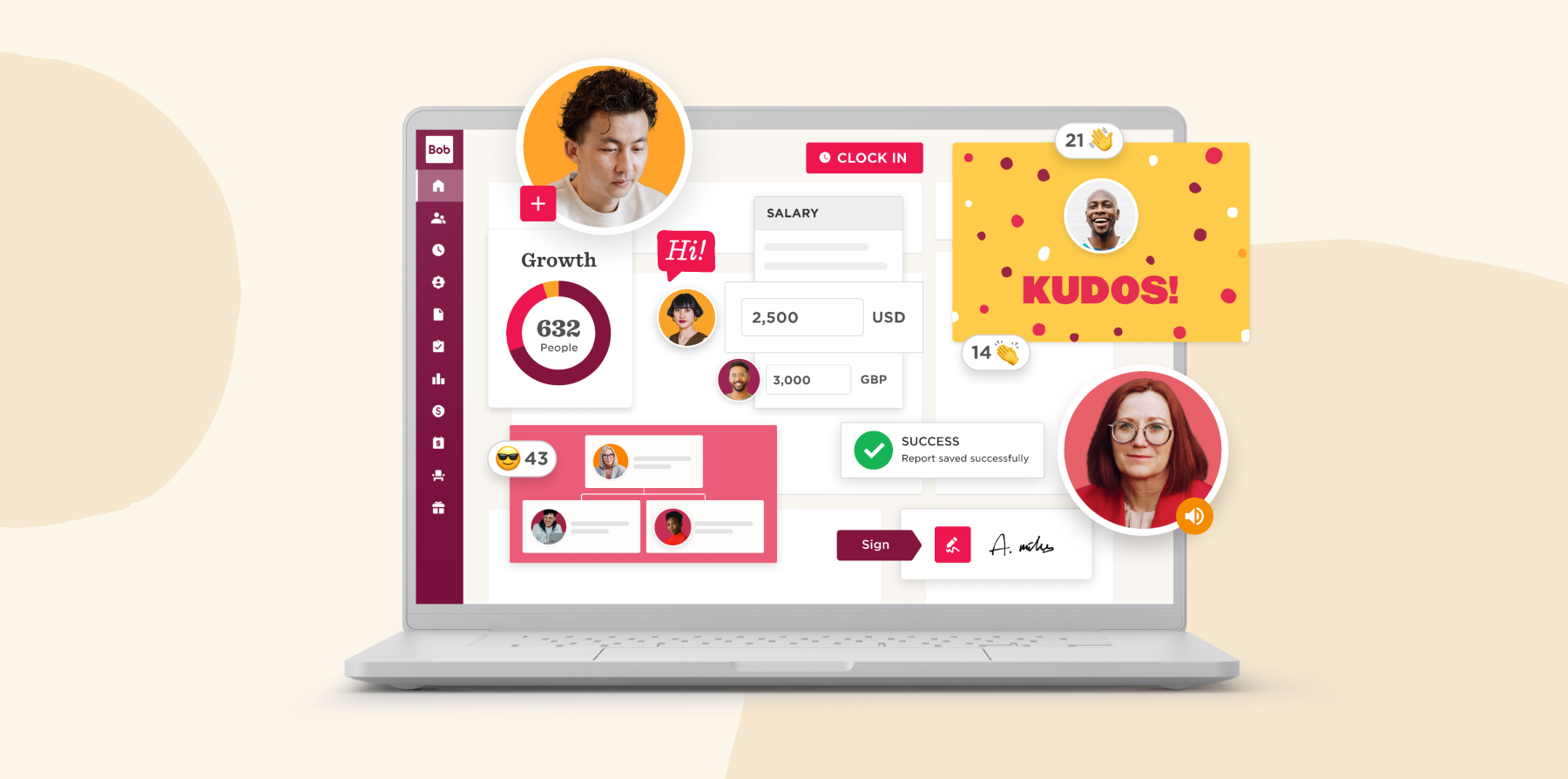
HiBob is made for midsize and multinational Australian companies that need more than just an HR database. Instead of switching between spreadsheets and siloed tools, HR teams manage people data, feed approved pay and headcount changes straight into payroll, track learning and development, and report on all of it from one system. Most teams are live in weeks rather than quarters, which matters when nobody has been hired to run an implementation.
HR leaders can also access built-in surveys, recognition tools, and feedback features to help keep people engaged, while dashboards make it easy to spot turnover risks or growth trends.
For Australian companies with people in New Zealand, Asia-Pacific or beyond, HiBob handles multi-country records, local requirements and reporting in one place rather than one system per country.
Features:
- Core HR: centralize team member data, documents, and contracts in one secure system
- Bob AI: Ask questions of your own workforce data in plain language and get answers governed by the same permissions as the rest of the system, with no report-building and no waiting on an analyst
- Finance: Connect people plans to budgets by modeling headcount and workforce costs and keeping HR and Finance working from the real-time data
- Hiring and Onboarding: Streamline the recruitment journey with applicant tracking, interview scheduling, candidate evaluations, offer letters, and guided onboarding workflows
- Payroll: Pay team members accurately and on time with automated calculations, approvals, and reporting that reduce manual work and support compliance
- Time and Attendance: Track hours, attendance, absences, and time off accurately with integrated time-tracking tools to ensure timely paychecks
- Analytics and reporting: Access dashboards with live insights into headcount, turnover, and engagement
Pros:
- “Setting up workflows and processes for our entire team has been a breeze, and the customization options are fantastic at every step.” – verified user
- “It feels like a platform that’s built with HR teams in mind, and their support is responsive and helpful.” – verified user
Cons:
- “As HiBob offers so much information and so many resources, it can be easy to go down a bit of a rabbit hole when you’re interested in a particular topic.” – verified user
- “It would be nice if some buttons were more customizable (like the text in it).” – verified user
Pricing: Custom pricing, tailored to what your team needs.
Learn how HiBob can optimize your HR.
BambooHR

G2 rating: 4.4/5 from over 6,000 user reviews
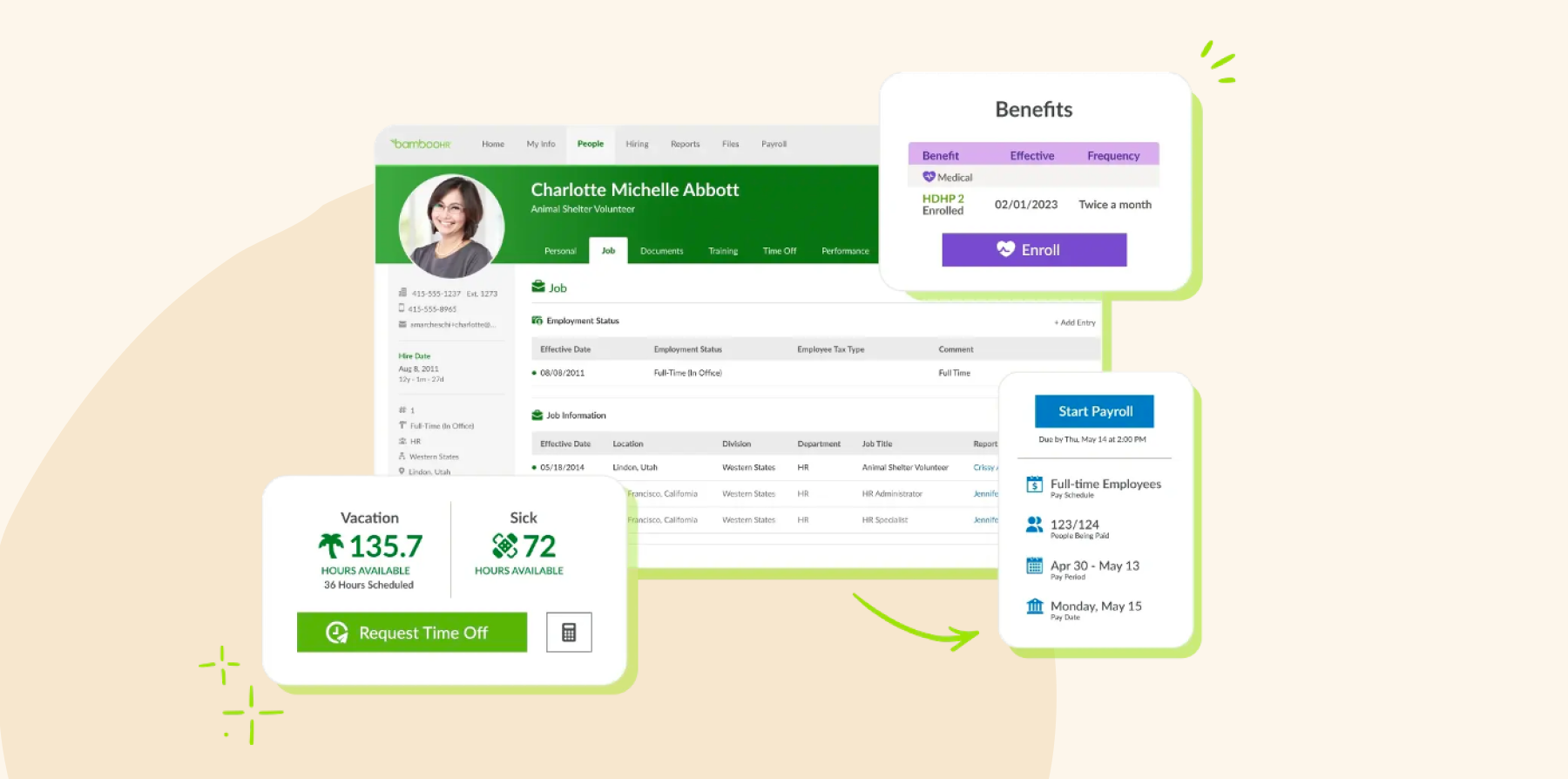
BambooHR is an HR software that functions as a complete HRIS. It centralizes team data in a single database with role-based access and replaces paper onboarding with e-signatures, new-hire packets, and task checklists. HR can also automate review schedules and collect performance feedback, then surface trends with built-in reporting.
Features:
- Employee database: Store team member details, documents, and job history
- Time-off management: Automate leave requests, balance tracking, and approvals
- Performance management: Run review cycles and set measurable goals within the platform
- Reporting: Create custom HR reports for headcount, turnover, and workforce metrics
Pros:
- “I love how BambooHR turns chaotic HR workflows into a smooth, intuitive experience.” – verified user
- “BambooHR saves me so much time in my day.” – verified user
Cons:
- “The main downside at the moment is the analytics capability is weak so you need to extract data and do a lot of the analysis yourself” – verified user
- “Customer support is not always quick to resolve issues.” – verified user
<<Compare Bob vs. BambooHR – See which fits your business best>>
ADP Workforce Now

G2 rating: 4.2/5 from over 4,200 user reviews
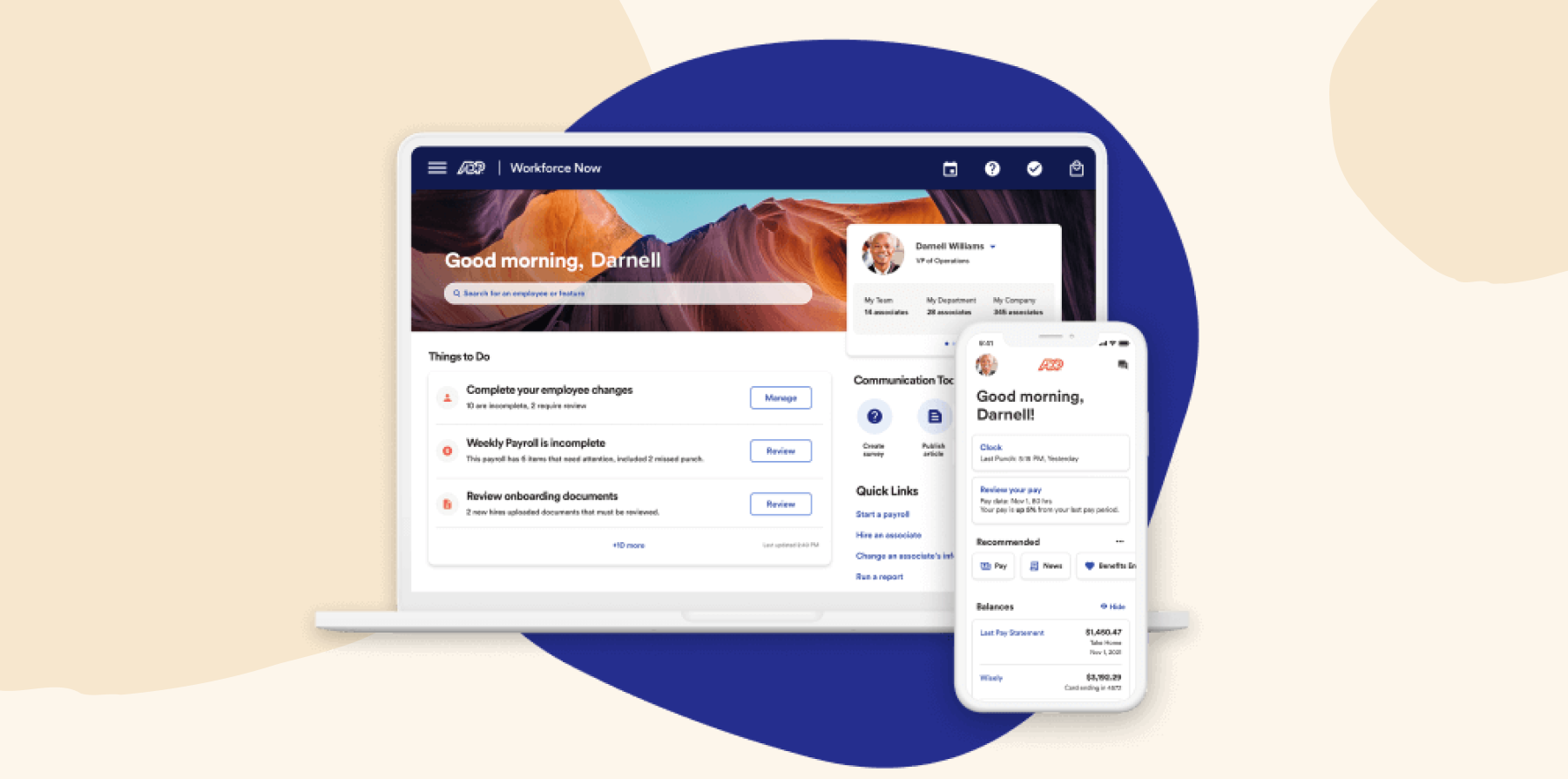
ADP Workforce Now is an HR software that can serve as a central HRIS for medium to larger organizations. It unifies HR management with payroll, time, benefits, and compliance in one system. HR teams can manage the employee lifecycle from a single dashboard and use built-in analytics to monitor trends. Australian buyers are generally sold ADP’s local products, ADP Payline or ADP Celergo, rather than Workforce Now, so confirm which one you are quoting before you compare.
Features:
- Record Keeping: Maintain digital team member files
- Onboarding: Use digitised forms, manager task tracking, and new-hire checklists
- Payroll Connection: Connect people data directly to payroll
- Reporting: Access workforce reporting and dashboards to track HR trends
Pros:
- “What I find most helpful about ADP WFN is how much it centralizes.” – verified user
- “I like that I can have the various aspects of our HR program hosted through ADP Workforce Now.” – verified user
Cons:
- “It can be time-consuming to build exactly what you need, and small errors can throw things off.” – verified user
- “The system is not intuitive and requires navigating multiple disconnected areas to complete even basic tasks. It can feel overwhelming and inefficient.” – verified user
ELMO Software

G2 rating: 4.4/5 from over 60 user reviews
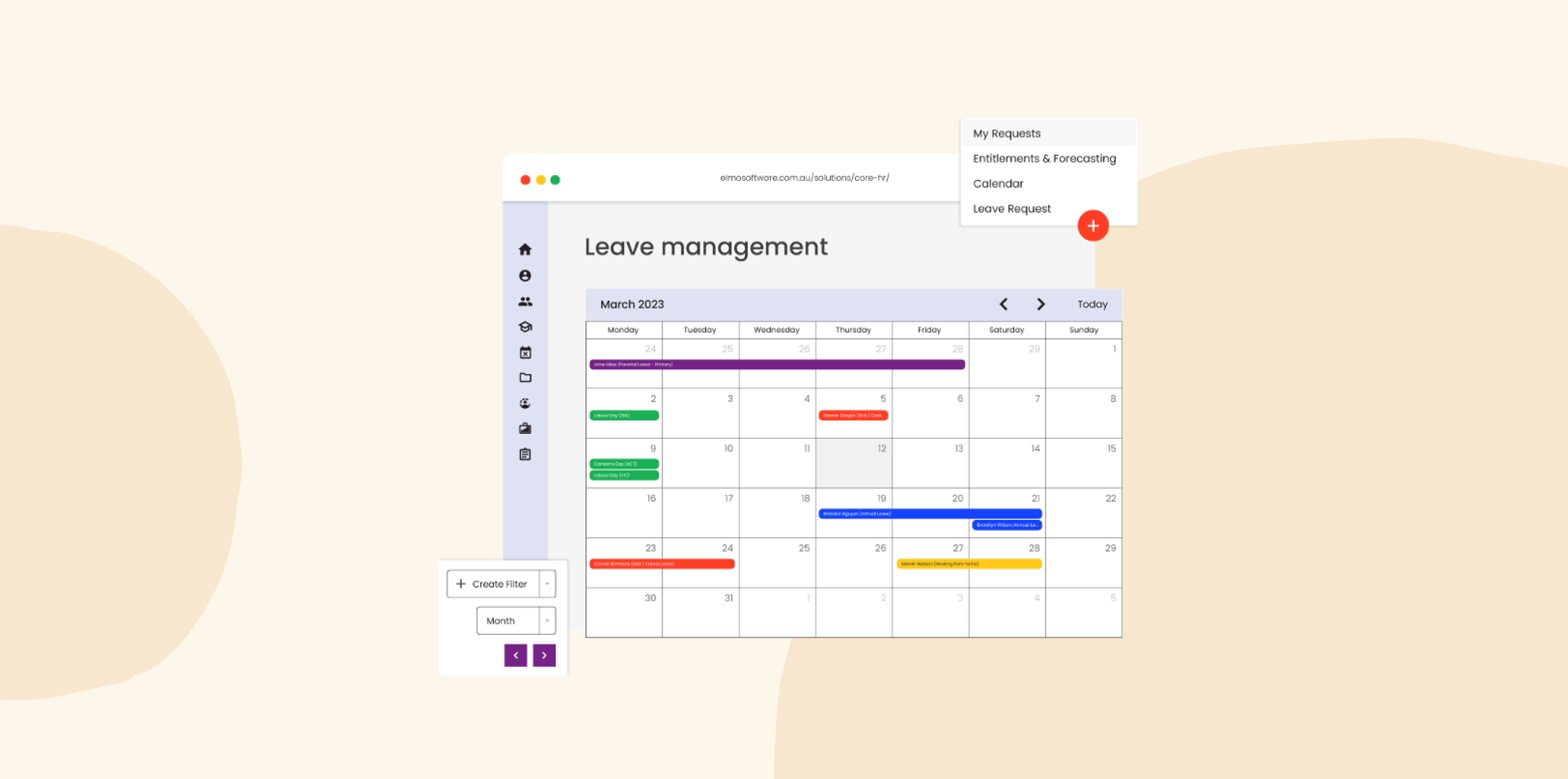
ELMO Software is an Australian HR platform that acts as a modular HRIS. Leaders can choose their own feature set, including core HR recordkeeping, recruitment, onboarding, and learning. ELMO also lets your team manage their own HR tasks like updating personal details, downloading documents, and requesting leave.
Features:
- HR: Centralize individual profiles, employment history, and document storage
- Onboarding: Automate onboarding steps with digital contracts, task checklists, and pre-start forms
- Learning management: Deliver and track mandatory training directly from the same platform
- Compliance tools: Manage policies, certifications, and reporting aligned with Fair Work requirements
Pros:
- “The software centralizes employee information securely.” – verified user
- “Elmo is highly customisable and adaptable.” – verified user
Cons:
- “Different Modules are not synchronised between common interfaces.” – verified user
- “Some employee details are not transferred to the ELMO payroll. For example: gender, employment type.” – verified user
Employment Hero
G2 rating: 4.4/5 from over 600 user reviews
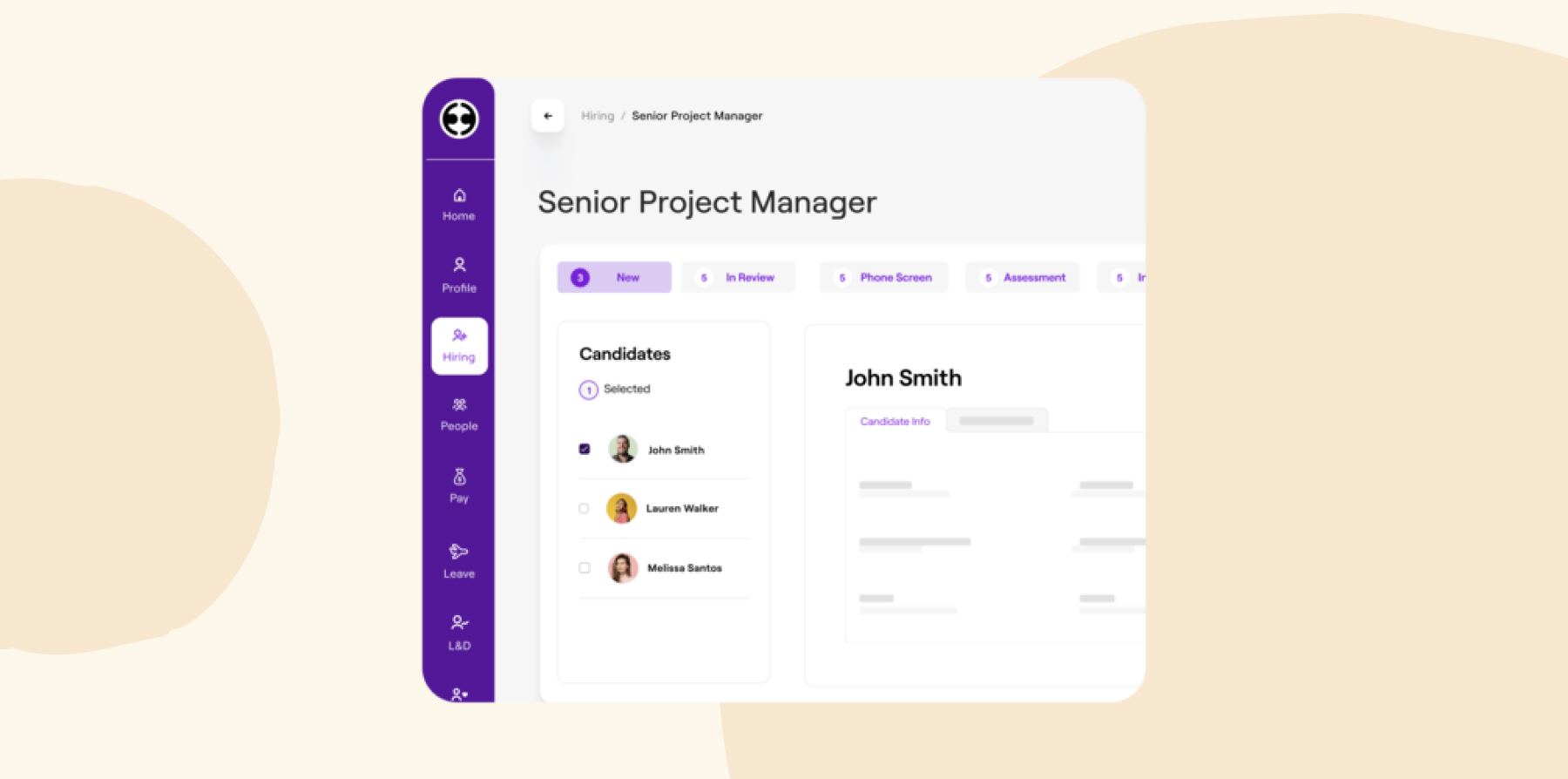
Employment Hero is an Australian HR and payroll platform for small to midsize companies. The platform helps automate admin tasks like onboarding checklists, policy distribution, and pay updates while maintaining compliance with Australian employment standards. Businesses use it to manage recruitment, offboarding, and more.
Features:
- HR: Store team member profiles, employment details, and company documents
- Onboarding: Access digital contracts, new-starter forms, and task automation
- Payroll: Handle STP reporting, superannuation, and tax calculations
- Benefits and recognition: Manage perks, employee benefits, and recognition programs
Pros:
- “Integrates both payroll and our HR processes and documentation all in one place.” – verified user
- “Overall, it’s a user-friendly platform that makes both HR and payroll easy to manage and even easier to teach others.” – verified user
Cons:
- “The only area of employment hero that could be better is management information attached to employees’ profiles.” – verified user
- “Some workflows aren’t easy to understand within the system, and my recent experience creating performance review periods was less than ideal.” – verified user
Rippling

G2 rating: 4.8/5 from over 13,400 user reviews
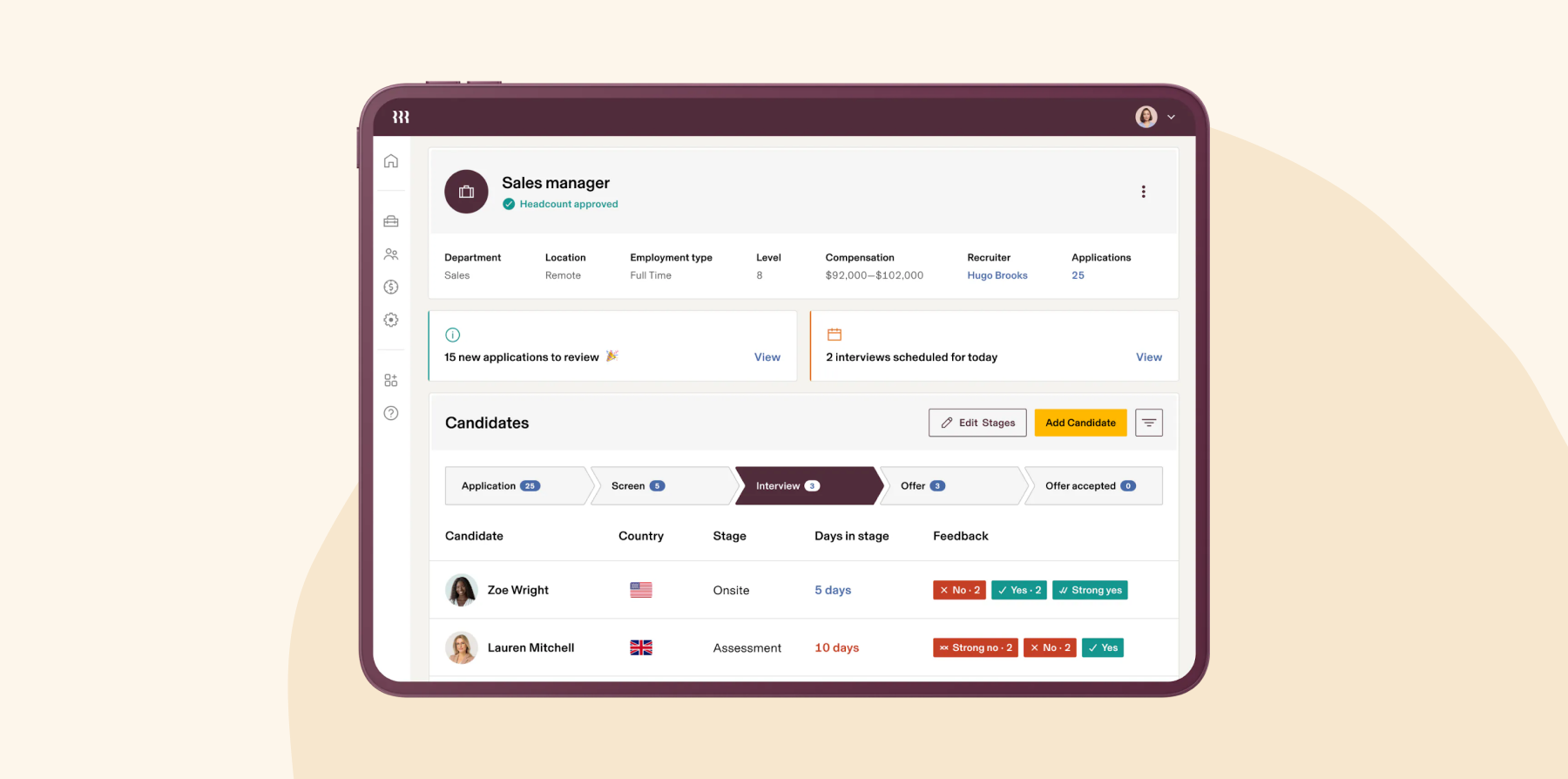
Rippling is a workforce management platform that unites HR, payroll, and IT data into one platform. HR teams can use it to automate onboarding, manage individual records, and sync changes instantly across payroll, benefits, and device access. The platform’s modular setup lets companies add or remove tools as they scale while maintaining a single source of truth.
Features:
- Record system: Sync team member profiles across HR, payroll, and IT
- Onboarding automation: Auto-assign paperwork, system permissions, and payroll setup for new joiners
- Payroll integration: Process payroll with automatic updates from HR data
- Reporting and analytics: Build custom workforce reports for headcount, costs, and compliance data
Pros:
- “It’s straightforward for both managers and team members to use” – verified user
- “Seeing where everything is stored and organized is so intuitive.” – verified user
Cons:
- “The platform is cluttered and disjointed.” – verified user
- “It’s surprisingly hard to find all my documents after I am done submitting it.” – verified user
<<Compare Bob vs. Rippling – See which fits your business best>>
Workday

G2 rating: 4.1/5 from over 1,700 user reviews
Workday is enterprise HR software that can serve as a global HRIS for large organizations. It unifies core HR, payroll, talent, and analytics in one cloud-based system. Teams can automate approvals, maintain audit trails, and give leadership visibility into people metrics worldwide. Workday also runs native payroll for Australia, so Australian teams can keep pay and people data in the same platform.
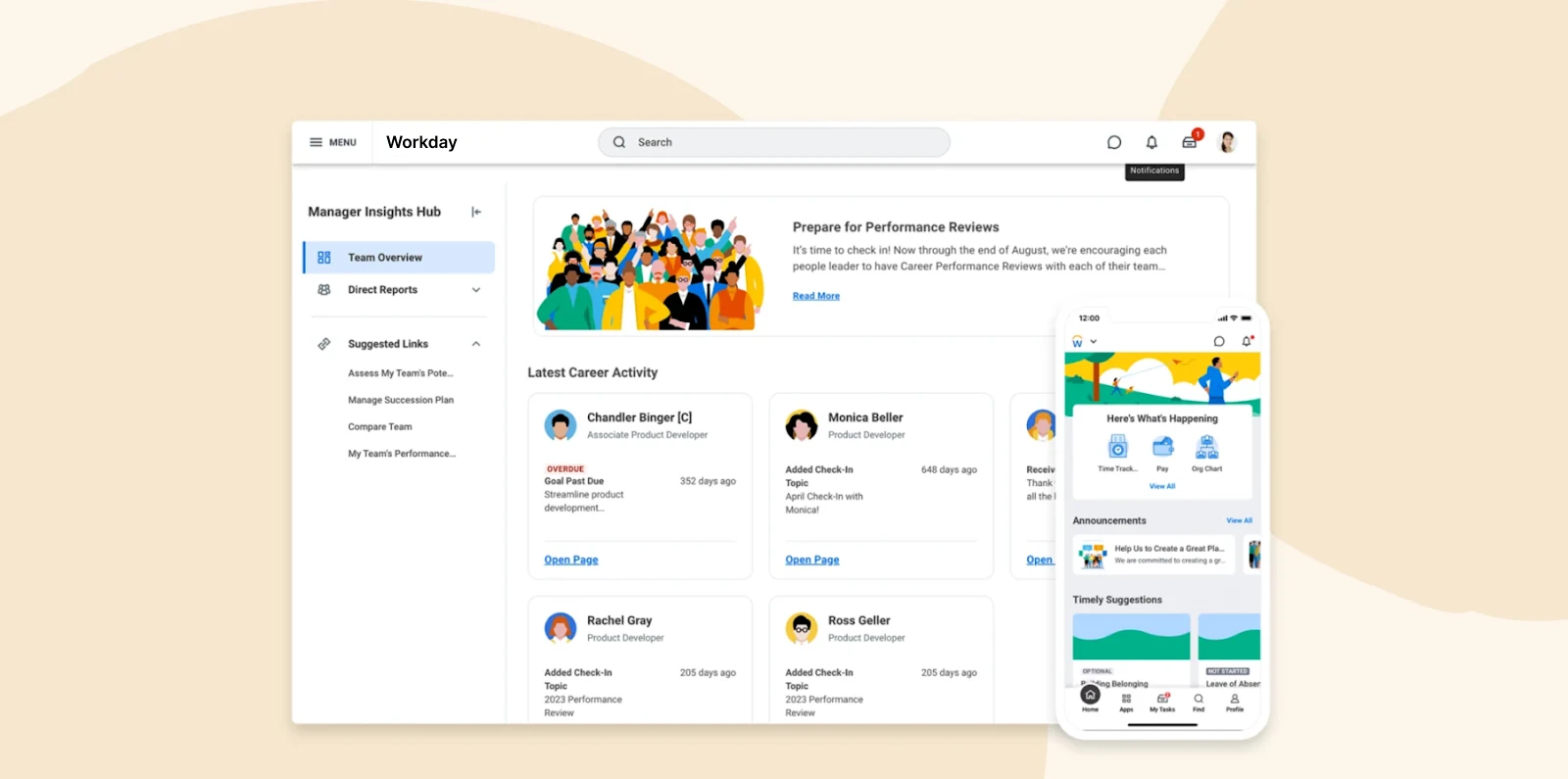
Features:
- Workday Core HCM: Centralize team member records, job hierarchies, and position management
- Payroll: Support multi-country compliance and tax rules
- Talent management: Access tools for succession planning, development tracking, and internal mobility
- Analytics: Generate real-time workforce analytics and dashboards connected to financial data
Pros:
- “It is easy to use with a simple interface to track your basic needs.” – verified user
- “I really like that I can access everything from my phone when I’m on the go.” – verified user
Cons:
- “I have to admit that at first it felt a bit overwhelming.” – verified user
- “The layout isn’t always intuitive, and you sometimes have to click through several menus just to complete a simple task.” – verified user
What to look for in an Australian HRIS
We selected these systems based on the capabilities HR leaders value most in their technology. According to our latest HR tech trends report, features and functionality are the top buying priority for 28 percent of companies—followed closely by ease of use (27 percent) and integration (12 percent).
Here is what to hold every vendor to:
- Stay compliant with Australian labor laws by automating award interpretation, leave entitlements, and STP reporting
- Boost paycheck accuracy through real-time syncing between payroll, time tracking, and benefits
- Streamline onboarding and performance management by automating new-joiner tasks, document collection, and check-in reminders
- Improve engagement using surveys, recognition tools, and real-time feedback
- Simplify daily tasks with intuitive, user-friendly interfaces and self-service tools that empower people to manage their own data
- Integrate seamlessly with existing systems like payroll, finance, and productivity tools
- Make better decisions with accurate, actionable analytics on HR KPIs like headcount, turnover, and engagement
- Strengthen HR’s strategic role by freeing up time to focus on culture, development, and long-term planning
As Josh Bersin, HR thought leader, says, “HR technology isn’t about replacing the human element. It’s about giving HR professionals more time to be human.” The right HRIS gives your team the structure and time to have real conversations, support managers, and build a culture where people can thrive.
Find the right HRIS for your Australian business
Australia’s HR tech landscape offers plenty of capable systems. The right HRIS serves as the foundation that keeps your people, processes, and data connected. The key is choosing a platform that’s easy to adopt, encourages collaboration, and takes care of the tedious admin work.
HiBob gives midsize and scaling companies that balance. With AI-powered tools that automate HR admin, streamline Finance, and help you manage compliance, it’s a powerful HRIS for HR teams ready to move from spreadsheets to a professional, people-led system.
Recommended For Further Reading
Australian HRIS FAQs
Both models are common and both work. Some platforms run payroll themselves; others hold the people data, approvals and reporting and pass it to a payroll system, which is how most global platforms deliver Australian payroll. Either way the same things get done: pay runs, superannuation each cycle, Single Touch Payroll reporting to the ATO. What matters is that the handoff is a real integration rather than a spreadsheet export, and that you know which system is doing what before you sign. Ask any vendor to walk you through a full pay cycle in their own demo environment, using your own setup, rather than taking a feature list at face value.
Award interpretation is one of the harder parts of Australian payroll, and platforms handle it differently. Locally built systems tend to maintain award rules and apply them to timesheets themselves. Global platforms more often run it through the payroll engine they connect to, which works the same way for the end user as long as the integration is real. Whichever model you choose, ask the vendor to show you your own award running against real timesheets, and check the edge cases: casual loading, annual leave loading, and hours averaged over a roster cycle.
Most vendors price per person per month and quote rather than publish. For a midsize team you’re generally looking at the low tens of dollars per person per month for the HR platform, with payroll, time and attendance, and learning often priced as modules on top. Implementation is the cost people underestimate: data migration, award configuration and training usually add a meaningful share of the first year.
It depends on where your time actually goes. If you run shift workers across multiple awards, payroll and award handling will dominate the decision, and you’ll want to know exactly which system does the interpreting. If your team is salaried and spread across more than one country, the harder problem is usually keeping one set of people data that HR, managers and Finance all work from, rather than a system per country. Most midsize companies are somewhere in between, so rank the two honestly before you start demos. Then check adoption either way: the system your managers actually open is worth more than the one with the longer feature list.
Disclaimer:
This content reflects HiBob’s perspective, informed by our experience supporting HR teams as they evaluate and implement HR software. It is provided for informational purposes only and is not intended as independent research or professional advice. Prospective users should conduct their own evaluation before making a decision.
Feature descriptions, pricing references, and availability for third-party platforms are based on publicly available information at the time of publication and may change. HiBob does not guarantee the accuracy or completeness of information related to third-party products. Prospective users should verify details directly with each provider.