Managing HR processes in a growing startup can feel both exciting and challenging. Whether you manage HR on your own or have just started building out your team, you’re probably wearing many hats at once. With the right HR software, you can offload manual tasks, optimize people management, and create an engaged, productive workforce.
In many startups, better HR decisions start with better visibility into people data. “When leaders can clearly see how people decisions connect to business outcomes, they’re able to make smarter, more strategic choices,” notes Johnny C. Taylor, Jr., President and CEO of the Society for Human Resource Management (SHRM).
However, that connection can be harder to maintain as headcount increases and processes become more complex. The right HR software gives founders and HR teams the clarity they need to support growth without slowing it down.
In this guide, we’ll review some of the best HR software available for startups today. These platforms offer features that can help you streamline your HR tasks, so you can focus on what matters most: growing your startup.
Key insights
- HR software for startups is designed to support teams as they grow by automating manual tasks, enhancing people management, and boosting engagement
- The right platform streamlines onboarding, performance management, and self-service needs, freeing HR to focus on what matters most—supporting its people
- Effective HR software supports compliance, reduces human error, and increases overall team engagement by integrating seamlessly with existing tools and offering real-time analytics for strategic decision-making
Best HR software for startups: Quick review
We built this list for growing startups and evaluated each platform for how well it scales as teams expand. We reviewed product documentation and feature releases, assessed payroll and compliance capabilities, and compared integrations that affect day-to-day operations. We also analyzed user feedback from review sites like G2 to understand real implementation experiences and ongoing support quality.
To keep the comparison practical, we focused on the workflows teams run every week: onboarding and lifecycle changes, performance and development cycles, payroll coordination, approvals and access controls, and workforce visibility through reporting and dashboards.
| HR software: | Best for: | G2 rating: |
| HiBob | Teams that need an all-around HR platform that unites HR, managers, finance, and payroll operations with the same source of people data | 4.5/5 |
| BambooHR | Startups that want a simple, people-first HR system focused on employee records, hiring, and performance tracking | 4.4/5 |
| Deel | Startups hiring internationally that need support for global payroll, contractors, and employer-of-record compliance | 4.8/5 |
| GoCo | Startups looking to digitize HR paperwork, onboarding, and benefits administration without heavy configuration | 4.6/5 |
| Gusto | Startups that want payroll, benefits, and basic HR tools combined in one straightforward platform | 4.6/5 |
| OnPay | Startups that prioritize payroll accuracy and tax compliance with light HR support built in | 4.8/5 |
| Oyster | Startups building distributed teams that need help hiring, paying, and staying compliant across multiple countries | 4.4/5 |
| Paychex | Startups that want payroll, benefits, and compliance tools backed by a long-established provider | 4.1/5 |
| Personio | European startups that need core HR, recruiting, and compliance support built for EU requirements | 4.4/5 |
| TalentHR | Very small startups that need a lightweight HR system for employee records, time off, and basic workflows | 4.7/5 |
| TriNet | Startups that want to outsource payroll, benefits, and HR compliance through a PEO model | 4/5 |
| Workable | Startups focused primarily on hiring and recruiting with a dedicated applicant tracking system | 4.5/5 |
| Zoho People | Startups already using Zoho products that want flexible HR tools integrated into their existing ecosystem | 4.4/5 |
What is HR software for startups?
HR software for startups is designed to manage and automate key HR operations like recruitment, payroll, employee engagement, and performance management. These systems centralize data, automate manual tasks, and support HR teams as they scale.
Features to look for in startup HR software
The right HR software provides a great liftoff for your startup’s growth. To maximize efficiency and scalability, look for features that can make a difference in day-to-day HR operations.
Applicant tracking system
An applicant tracking system (ATS) keeps your hiring process organized as your startup grows. It centralizes job postings, resumes, interview feedback, and offer approvals in one place. Look for features like pipeline visibility, structured interview scorecards, and automated offer letter workflows. Clear reporting on time-to-fill, time-to-hire, and candidate sources also helps founders understand where hiring bottlenecks are forming.
Time and attendance tracking
Attendance management features automate time tracking and approval requests for paid time off (PTO) and sick days. Advanced tracking systems can automatically adjust for varying time zones and work schedules.
You can often access reports that display historical data, time taken off, and current balances in current and previous cycles. This helps ensure accurate and fair timekeeping, reducing the administrative burden on HR teams.
Onboarding management system
Effective onboarding sets the foundation for long-term engagement and retention. Find a strong onboarding system with automated checklists, custom learning paths, and reporting that tracks new joiner satisfaction.
Recommended For Further Reading
- HR software explained: Unpacking the basics of human resources software
- How to choose an HR software for your small business
- Best HRIS systems for small businesses
- Best HRIS for medium businesses
- Onboarding software for small businesses
- 9 HR challenges in startups and how to solve them
- HR software pricing: How much should you expect to pay?
Performance management
Performance management features allow people and businesses to learn, grow, and develop for the better. Make sure you can set goals, schedule 360-degree reviews, personalize growth paths, and customize performance review templates.
Use your HR software to keep performance management an ongoing conversation—not a one-time chat.
Employee self-service portals
Look for an intuitive self-service portal that integrates with your payroll, benefits, and performance systems so your people have a one-stop shop for everything they need. With employee self-service, your people can update personal information, request time off, or connect with others without needing HR assistance.
This builds trust and autonomy among your startup’s people and frees up your HR team to focus on strategic initiatives like talent management or succession planning.
Payroll and benefits
The best payroll systems do more than automate accurate payments. They also support benefits administration by syncing deductions for health insurance, retirement plans, and other benefits directly into payroll. Managing payroll and benefits together helps teams handle complexities like different tax laws, multiple currencies, and varied compensation structures while reducing manual adjustments.
Analytics and reporting
Real-time analytics and reporting allow you to spot trends, predict future workforce needs, and make strategic decisions that align with your growth. Prioritize software that offers standard reports, predictive analytics, and customizable dashboards to see the numbers. This gives you the power to drill down into specific metrics, from employee turnover to engagement levels, to proactively address issues before they turn into major challenges.
Integrations
Strong HR software integrates easily with the tools your startup already uses, such as payroll, accounting, time tracking, and identity management systems. These integrations reduce manual data entry by keeping team member information in sync across systems when changes happen. This helps maintain accurate data and allows your HR stack to scale without constant system replacements.
AI and automation
AI and automation reduce repetitive HR tasks and surface insights that might otherwise go unnoticed. Automation can route approvals, flag missing documentation, and sync compensation changes directly to payroll without manual updates.
AI-powered tools can even highlight patterns in turnover, identify engagement dips across teams, or model how new joiners affect headcount costs. Instead of compiling reports manually, HR and finance teams can review real-time data and make decisions based on current information.
Leading HR software for startups
Choosing the right HR software for your startup can reduce admin workload and help you build a strong company culture while freeing up your time to focus on growth. Let’s look at the best HR software for startups.
HiBob
Best for: Teams that need an all-around HR platform that unites HR, managers, finance, and payroll operations under the same source of people data
Customer reviews: 4.5/5 on G2
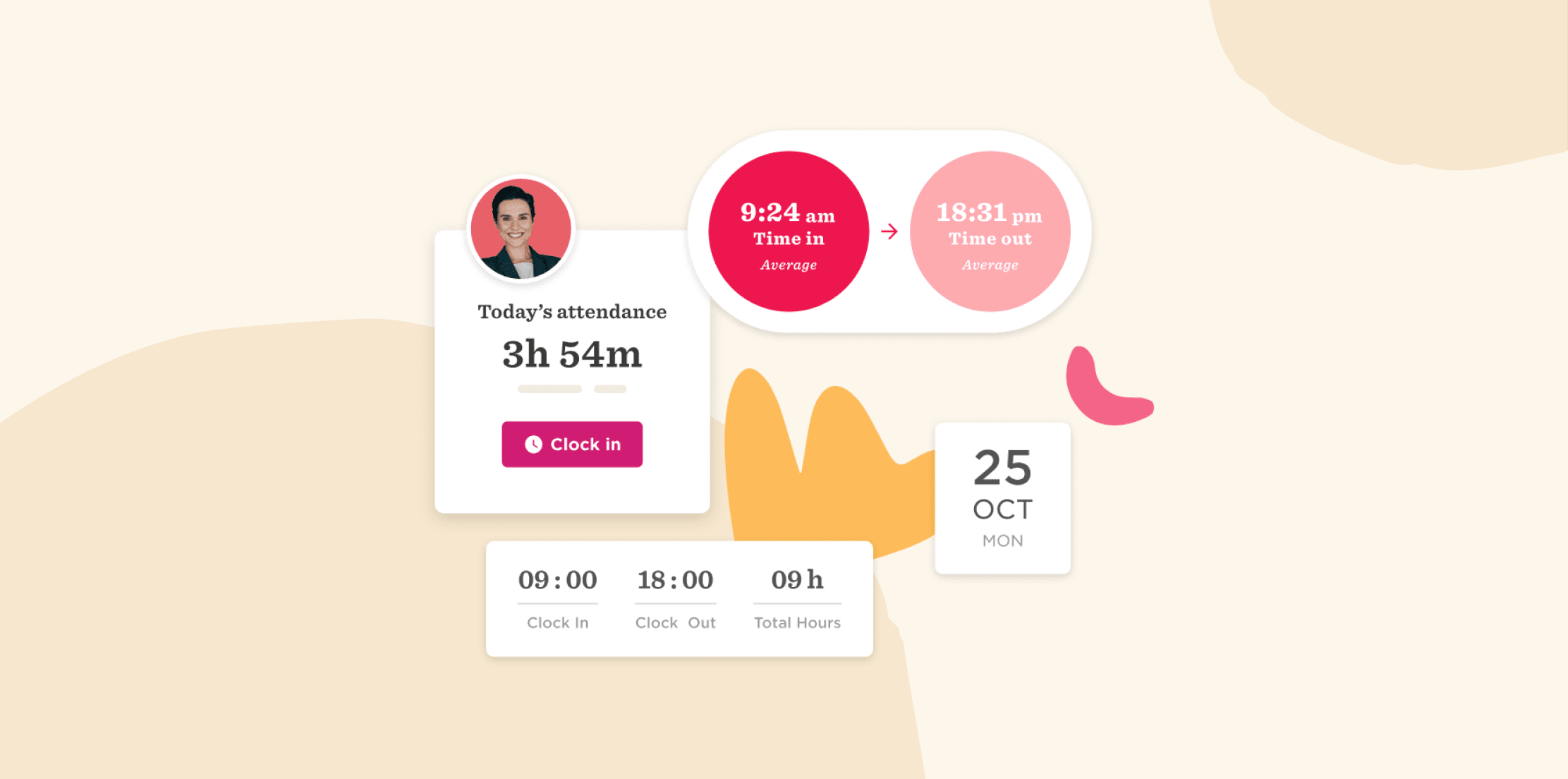
Startup leaders use HiBob’s HR software to manage people data as their businesses scale. The platform brings HR, managers, finance, and payroll teams onto one shared system, reducing manual handoffs as headcount, locations, and policies grow. Built-in automation and real-time visibility help teams spend less time on admin work and more time supporting employees.
HiBob connects core HR processes like onboarding, performance, compensation, and time off, so changes made in one place stay consistent everywhere else. Its AI is designed to empower people in the flow of work by enhancing productivity and elevating how HR and managers make decisions.
The platform also integrates with payroll systems and other workplace tools, allowing startups to extend their HR workflows without rebuilding their tech stack as they grow.
Startup leaders use HiBob’s HR software to manage their people as their business scales. The intuitive interface helps teams adopt the system quickly and reduces the time spent on manual tasks like collecting onboarding documents, managing time off requests, and tracking performance metrics.
HiBob’s breadth of core HR functionality gives your startup team everything needed to operate efficiently, from employee self-service to time and attendance management. You can automate HR processes and gain real-time insights into your people—without getting slowed down by administrative overhead.
HiBob’s flexible platform also integrates with communication tools and select payroll systems so you can connect your HR workflows to your existing tech stack.
Key features:
- Core HR: Centralize people records, job details, and organizational data in one system
- Hiring and onboarding: Streamline the recruitment journey with applicant tracking, interview scheduling, candidate evaluations, offer letters, and guided onboarding workflows
- Performance management: Support goal setting, continuous feedback, and 360 reviews tied to roles and teams
- Compensation management: Plan and manage salary reviews, bonuses, and equity with approval workflows and budget visibility
- Payroll Hub: Sync HR data with external payroll systems to reduce manual updates and errors
- Workforce planning and cost modeling: Model headcount growth, open roles, and hiring scenarios while giving finance real-time visibility into projected payroll impact
- People analytics and AI insights: Use real-time dashboards and AI-powered insights to track retention trends, headcount changes, engagement patterns, and compensation gaps
Pros:
- “I appreciate the strong reporting and people analytics, customizable workflows, and how well it centralizes employee data, time off, and performance management in one place.” – verified review
- “What stands out most to me about HiBob is how well it balances modern employee experience with practical HR operations.” – verified review
Cons:
- “We love the org chart view but wish that it was easier to export in a way that could be easily inserted into external presentations.” – verified review
- “Some employees find mobile less intuitive or feature-complete than the desktop version.” – verified review
Pricing (as of publication date): HiBob pricing plans are crafted personally for HR leaders to match their needs. The flexible options let you get precisely what your HR team requires, from implementation to integrations.
BambooHR

Best for: Startups that want a simple, people-first HR system focused on records, hiring, and performance tracking
Customer reviews: 4.4/5 on G2
BambooHR is a cloud-based HR platform that simplifies administrative HR processes. It helps manage employee databases and reporting, payroll and benefits, and hiring and onboarding. It’s available for use in over 150 countries.
Key features:
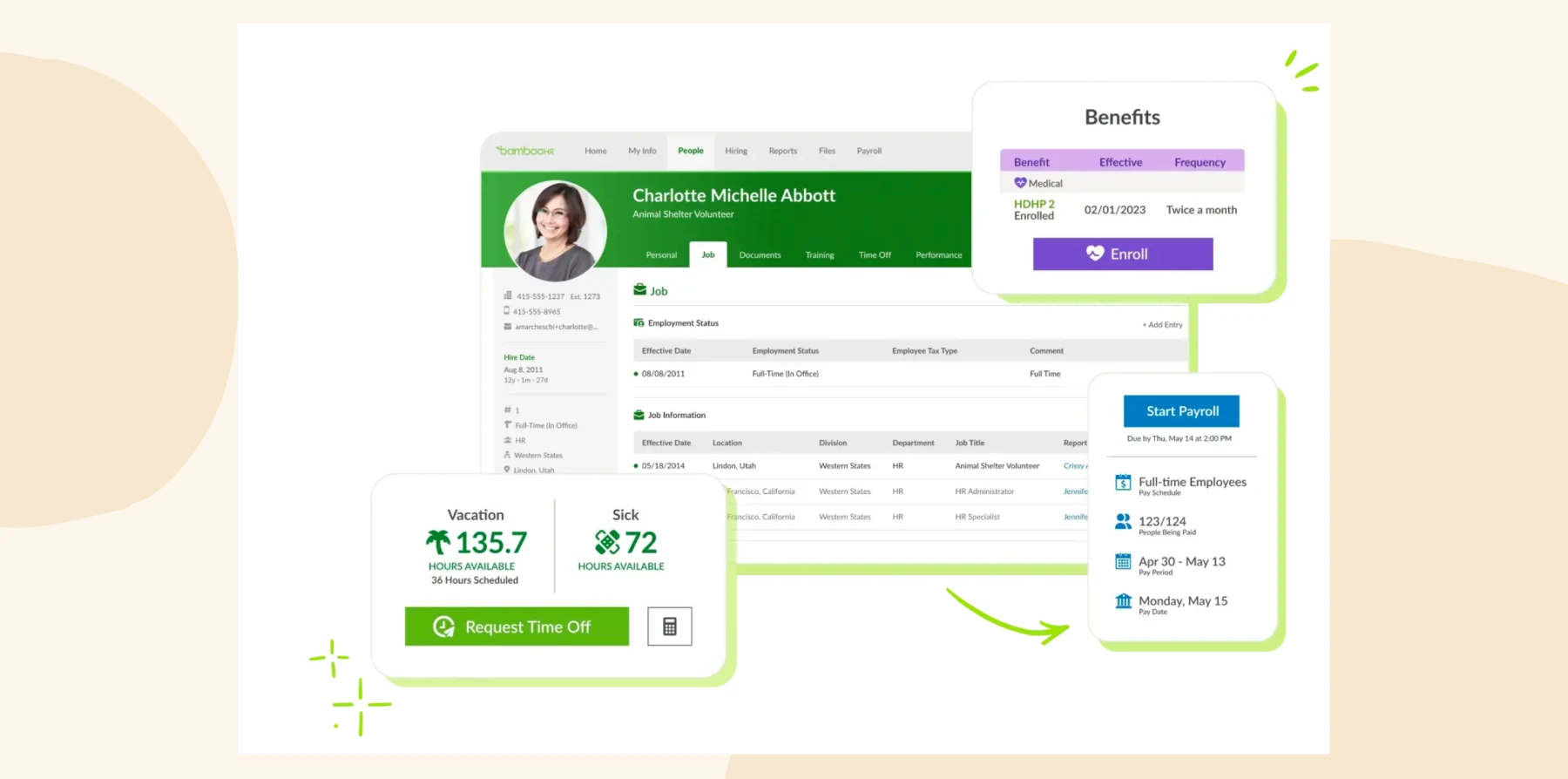
- Data management: Centralizes records and personal information in one HR database
- Time-off tracking: Tracks paid time off (PTO), leave balances, and requests with automated accruals and approval workflows
- Applicant tracking system (ATS): Manages hiring workflows, including job postings, applications, and candidate communications
- Performance management: Facilitates performance reviews, goal tracking, and evaluations
- Benefits administration: Tracks and manages employee benefits enrollment, deductions, and related HR data
- Reporting and analytics: Provides customizable reports and dashboards that help HR teams analyze trends
Pros:
- “The dashboard is clean and intuitive for both HR teams and employees.” – verified review
- “BambooHR makes it easier for me to manage a large team by providing daily updates and notifications.” – verified review
Cons:
- “The main downside at the moment is the analytics capability is weak so you need to extract data and do a lot of the analysis yourself.” – verified review
- “Customer support is not always quick to resolve issues.” – verified review
Pricing(as of publication date):
- Core: $10/mo per person
- Pro: $17/mo per person
- Elite: $25/mo per person
Deel

Best for: Startups hiring internationally that need support for global payroll, contractors, and employer-of-record compliance
Customer reviews: 4.8/5 on G2
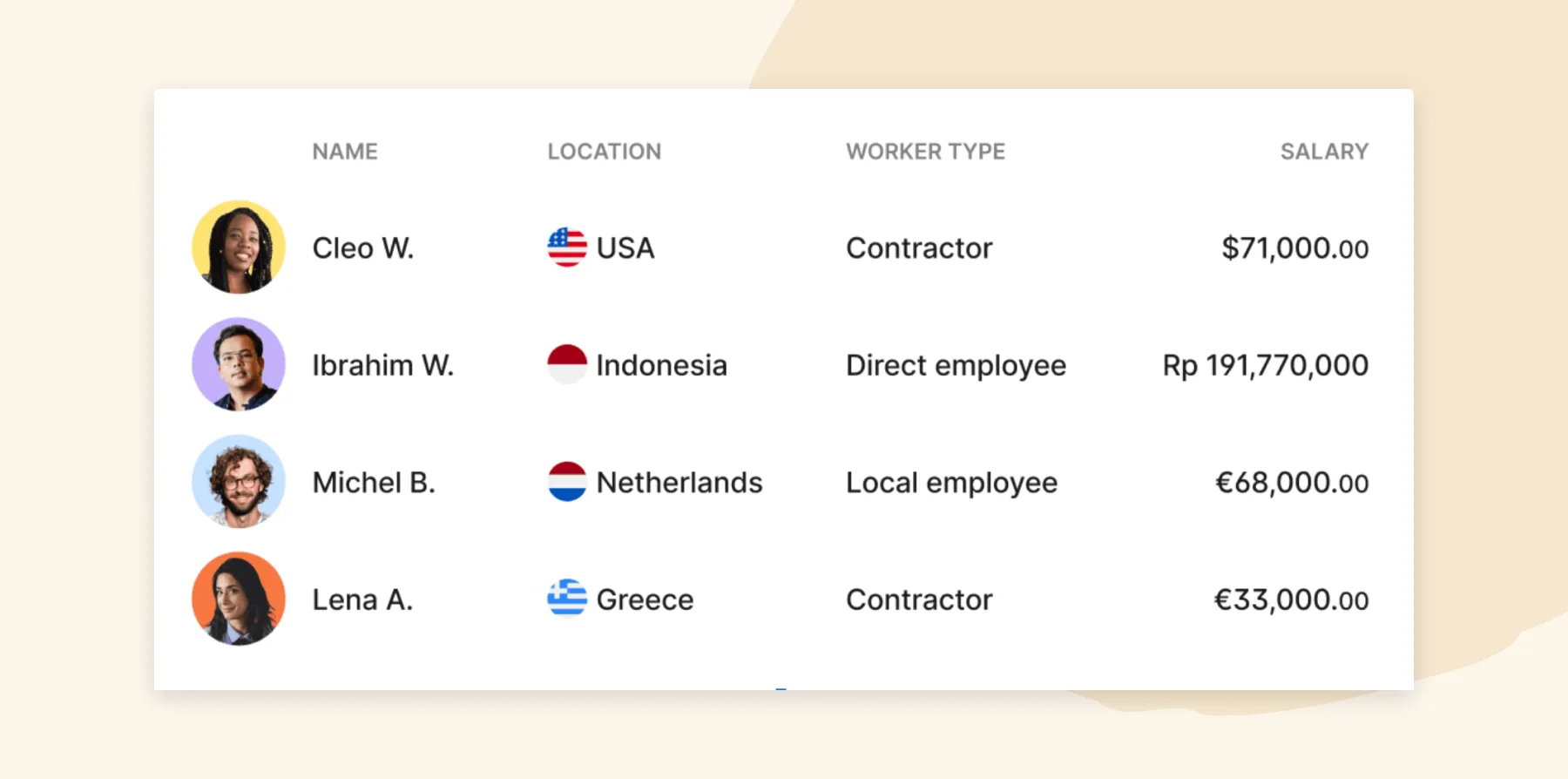
Deel is a global HR platform built to help businesses manage their international workforce. It offers solutions for hiring, payroll, and compliance for remote teams. Deel’s all-in-one platform is available in over 150 countries.
Key features:
- Global HRIS: Centralizes workforce data for direct team members, contractors, and EOR workers
- Onboarding and compliance: Automates onboarding workflows, contract generation, and compliance with local labor laws in 150+ countries
- Payroll and global payments: Streamlines payroll processing and payments across multiple jurisdictions, handling taxes, filings, and multi-currency payroll
- Compensation management: Enables design and management of competitive compensation structures, including salary bands and benefits configurations
- Engagement tools: Supports performance feedback, learning tools, and engagement surveys
- People analytics and workforce planning: Offers real-time workforce analytics, AI-driven insights, and planning tools to help HR and finance forecast headcount and trends
Pros:
- “What I like most about Deel HR is how simple and reliable it makes payments and contract management for international contractors.” – verified review
- “The automation for onboarding new hires saves us hours of manual work.” – verified review
Cons:
- “Onboarding was dreadful – basically sent a quote then told to use the system without any guidance.” – verified review
- “Deel is very expensive.” – verified review
Pricing(as of publication date):
- Employer of Record Standard: $599/mo per person
- Employer of Record Enterprise: $899/mo per person
- US PEO Employees: $125/mo per person
- Standard Contractors: $49/mo per person
- Contractor of Record: $325/mo per person
- Talent: Starting at $99 per hire + recruitment fees
- Applicant Tracking System: Custom pricing
- Additional Services: Custom pricing
Gusto

Best for: Startups that want payroll, benefits, and basic HR tools combined in one platform
Customer reviews: 4.6/5 on G2
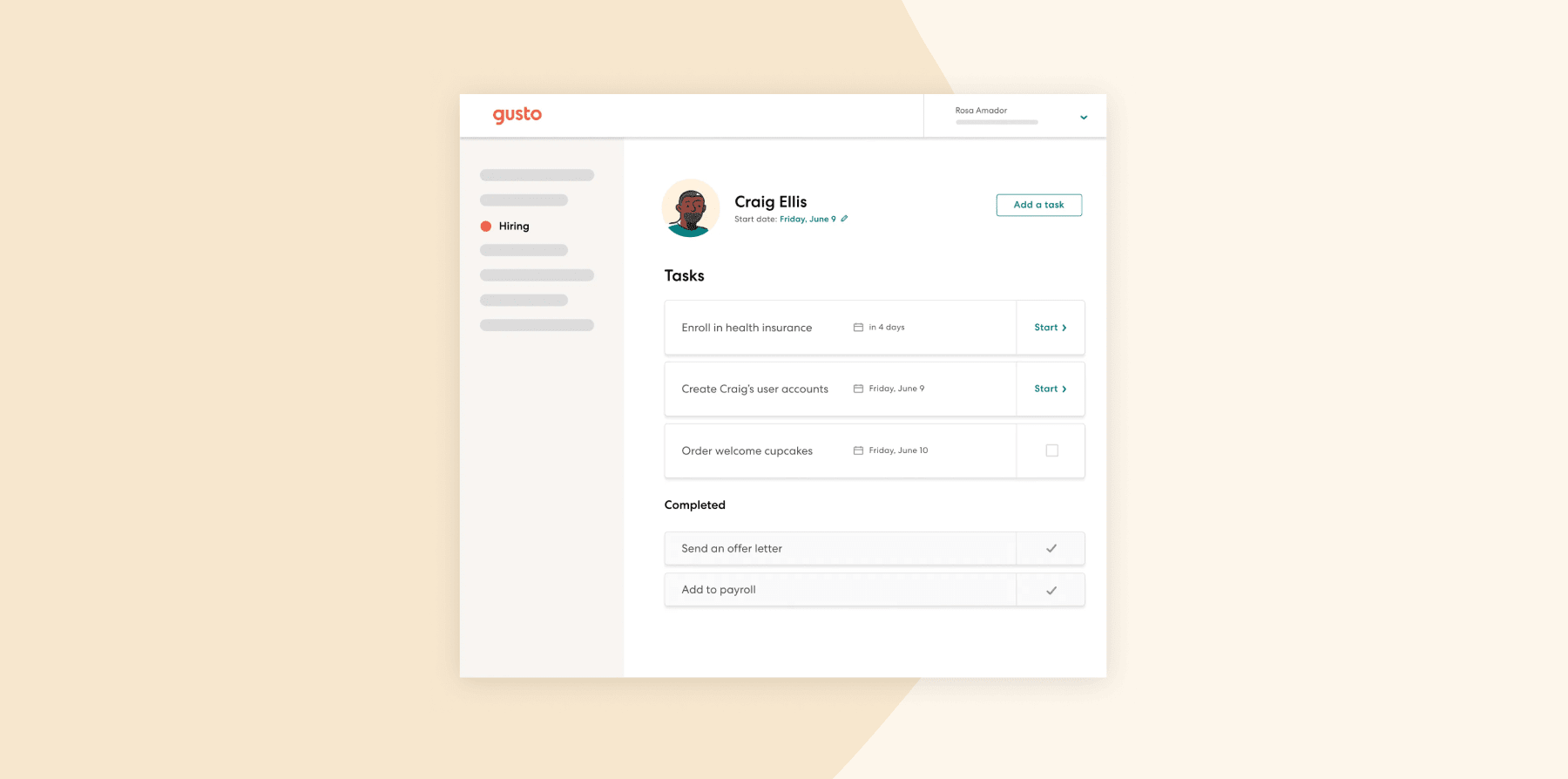
Gusto is an HR platform that offers tools for payroll, benefits, and talent management. Its automation features streamline HR tasks, while its compliance tools help teams stay ahead of tax and legal requirements. Gusto also offers engagement tools for small businesses.
Key features:
- Payroll: Run payroll for salaried and hourly employees with automatic tax calculations and filings
- Benefits administration: Manage health insurance, retirement plans, and benefits deductions alongside payroll
- Time tracking: Track hours worked and sync approved time directly into payroll
- Hiring and onboarding: Send offer letters, collect new joiner information, and complete required onboarding paperwork
- Self-service: Allow people to access pay stubs, tax forms, and personal information in one portal
- Reporting: Generate payroll, tax, and workforce reports for ongoing recordkeeping and review
Pros:
- “It has a bunch of features as well, like checking your benefits, tracking your time, your days off, and so much more.” – verified review
- “I like being able to customize my onboarding checklist.” – verified review
Cons:
- “Some features are a bit basic if you need more advanced HR tools or detailed reporting.” – verified review
- “Requires a lot of additional work on our side.” – verified review
Pricing(as of publication date):
- Simple: $49/mo plus $6/mo per person
- Plus: $80/mo plus $12/mo per person
- Premium: $180/mo plus $22/mo per person
GoCo

Best for: Startups looking to digitize HR paperwork, onboarding, and benefits administration without heavy configuration
Customer reviews: 4.6/5 on G2
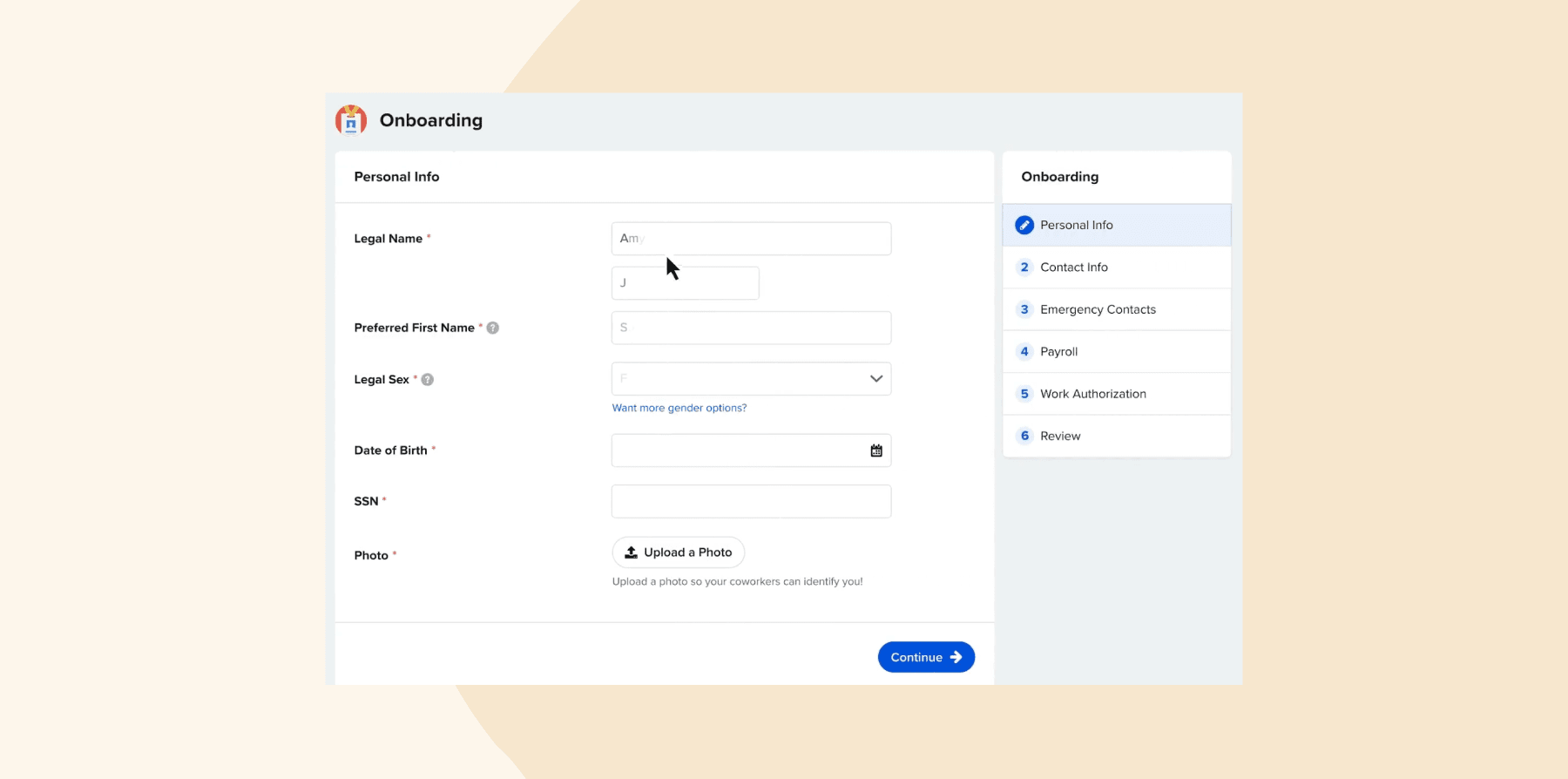
GoCo is an HR software platform geared toward small and mid-sized teams that want to manage core HR processes in one place. It focuses on centralizing records, onboarding workflows, benefits administration, and time-off tracking. The platform also includes compliance tools to help track required documentation and deadlines.
Key features:
- HRIS: Centralize records, documents, and job information in a single system
- Onboarding: Automate onboarding tasks, forms, and workflows for new joiners
- Benefits administration: Manage benefits enrollment, changes, and deductions with carrier connections.
- Time-off management: Track PTO policies, balances, requests, and approvals
- Performance management: Run performance reviews, goal tracking, and feedback cycles
- Compliance management: Track HR compliance tasks, deadlines, and required documentation
Pros:
- “I find GoCo’s embedded payroll to be really convenient.” – verified review
- “Onboarding new hires is done in a snap due to the workflows and well organized system.” – verified review
Cons:
- “It’s not possible to customize pay period date ranges unless you use their payroll system and get help from the support team.” – verified review
- “The payroll reports from the embedded Gusto payroll processor are REALLY basic and kinda messy.” – verified review
Pricing: GoCo offers custom pricing
OnPay

Best for: Startups that prioritize payroll accuracy and tax compliance with light HR support built in
Customer reviews: 4.8/5 on G2
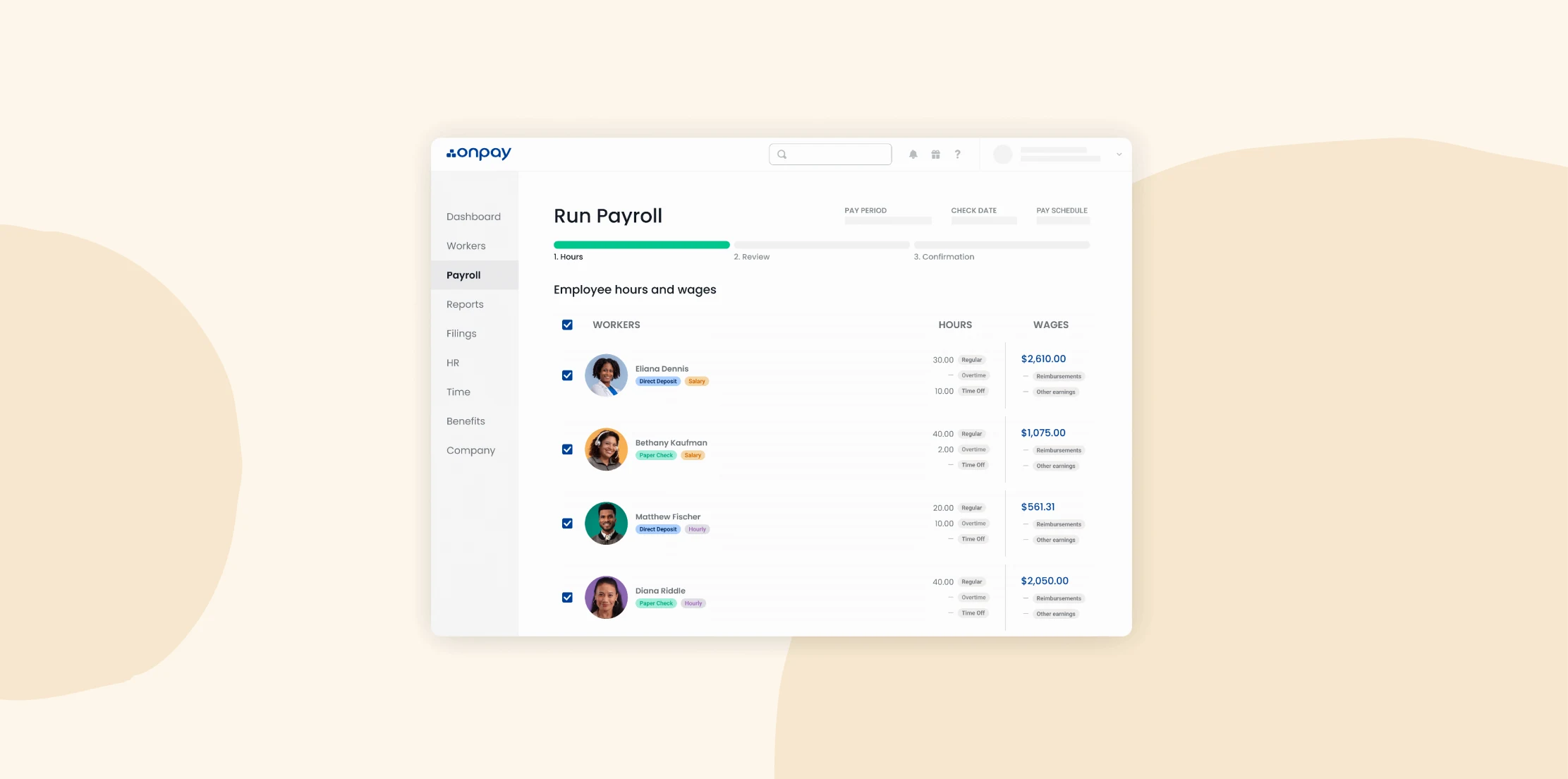
OnPay is a payroll-focused platform that also includes basic HR tools for small businesses and startups. Teams use it to run payroll, manage tax filings, and handle new joiner onboarding paperwork. OnPay combines payroll processing with record storage and benefits integrations.
Key features:
- Payroll: Run payroll for salaried and hourly team members with automated tax calculations and filings
- Tax filing and compliance: Handle federal, state, and local payroll tax filings and payments
- Onboarding: Collect new joiner information, complete I-9s and W-4s, and manage onboarding paperwork
- Time tracking: Track hours and sync approved time into payroll
- Benefits administration: Manage benefits deductions and integrate benefits data with payroll
Pros:
- “I appreciate that OnPay made my first payroll run easy with clear instructions and hands-on support.” – verified review
- “The minimal HR things I do are so easy on the platform. – verified review
Cons:
- “The only minor frustration is the recurring reminder about Social Security verification every time I run payroll.” – verified review
- “OnPay’s onboarding system seems drawn-out and clunky.” – verified review
Pricing (as of publication date): $49/mo base fee, plus $6 per user
Oyster HR

Best for: Startups building distributed teams that need help hiring, paying, and staying compliant across multiple countries without setting up local entities
Customer reviews: 4.4/5 on G2
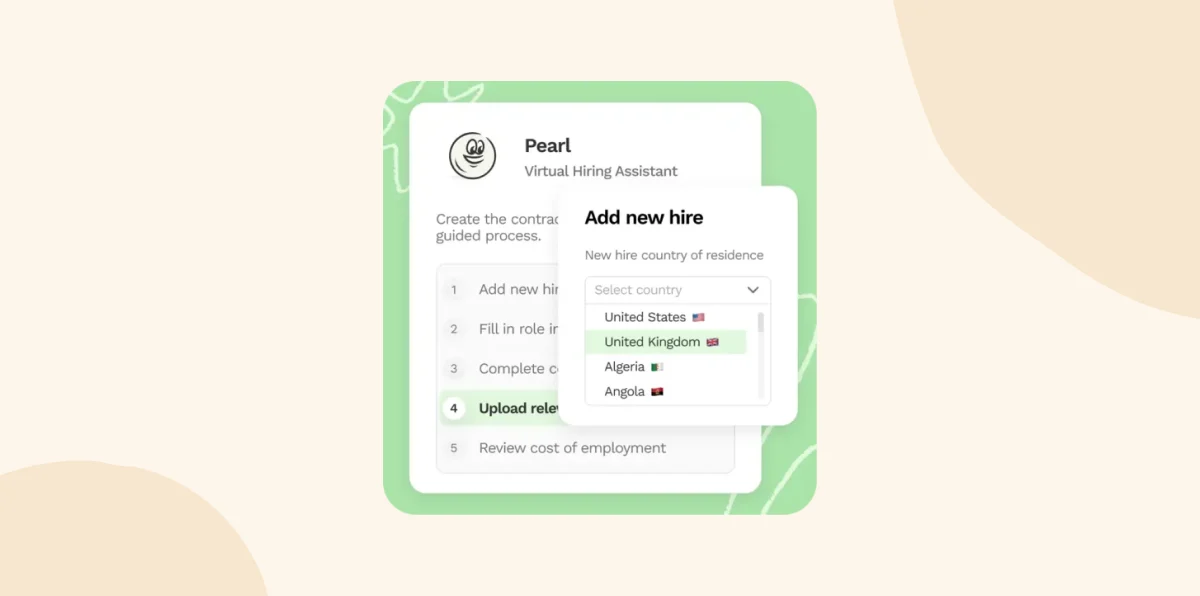
Oyster is an employment management platform with HR functionalities for hiring, managing, and paying startups. The platform handles global hiring with tools to onboard people, manage payroll, and streamline benefits administration.
Key features:
- Employer of Record (EOR): Hire and manage full-time team members in multiple countries without setting up local entities
- Global payroll: Run compliant payroll across countries with local tax handling and statutory deductions
- Contractor management: Create, manage, and pay international contractors in multiple currencies
- Compliance management: Support local labor law compliance, contracts, and required documentation
- Benefits management: Offer and manage country-specific benefits for global team members
- Onboarding: Handle onboarding workflows for international hires, including contracts and documentation
Pros:
- “I enjoy the cost calculator feature which is very useful when deciding whether to hire employees or not.” – verified user
- “Oyster provides a streamlined onboarding process for new hires.” – verified user
Cons:
- “You do not have a dedicated rep so you will get someone new each time.” – verified user
- “Everything has to take numerous steps to fix just one simple thing, or adjust a setting.” – verified user
- Contractor Plan: $29/mo per contractor
- Global Payroll Plan: $29/mo per team member
- Employer of Record Plan: $699/mo per team member
- US PEO Plan: $144/mo per team member
- People Partner Services: $300/hr
Paychex

Best for: Startups that want payroll, benefits, and compliance tools backed by a long-established provider
Customer reviews: 4.1/5 on G2
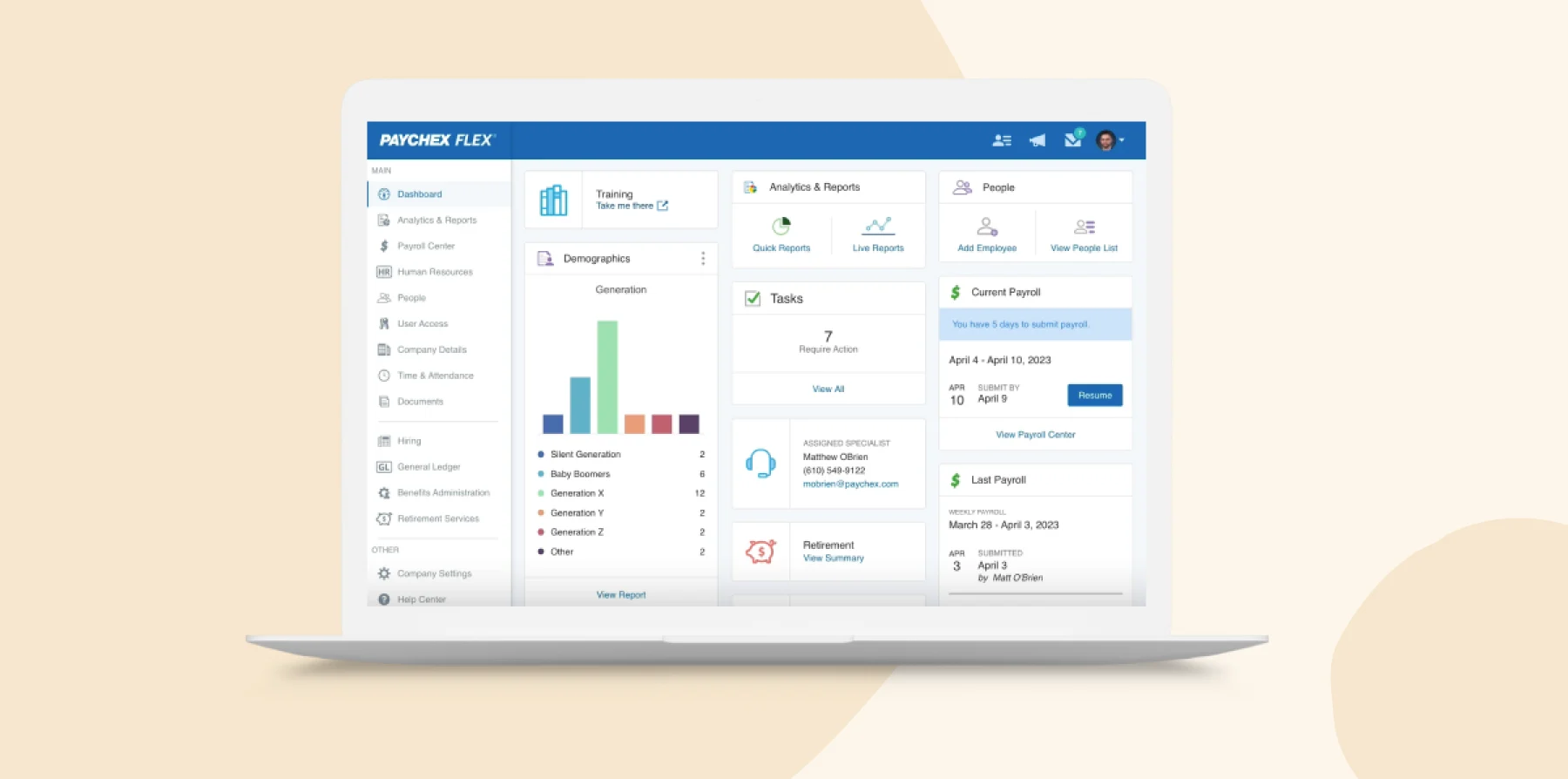
Paychex offers Paychex Flex as their HR and payroll platform that streamlines HR tasks, manages benefits, and supports compliance. The HR and payroll systems sync so you can handle all related tasks in a single platform.
Key features:
- Paychex Flex Payroll: Run payroll with automated tax calculations, filings, and payments for salaried and hourly people
- HR administration: Manage records, job information, and HR documents within Paychex Flex
- Time and attendance: Track hours, schedules, and attendance and connect time data to payroll
- Benefits: Access benefits administration tools for health insurance, retirement plans, and benefits deductions
- Compliance support: Use built-in tools and resources to manage payroll and employment compliance requirements
- Reporting and analytics: Generate payroll, tax, and HR reports for monitoring and recordkeeping
Pros:
- “It’s automated payroll and tax processing saves our significant time by handling payments, calculations, and filings.” – verified user
- “Paychex user-friendly interface and robust payroll processing are great to use.” – verified user
Cons:
- “Reports are not set up very well.” – verified user
- “It was not compatible with some products we utilize.” – verified user
Pricing (as of publication date): Paychex pricing is not publicly available
Personio

Best for: European startups that need core HR, recruiting, and compliance support built for EU requirements
Customer reviews: 4.4/5 on G2
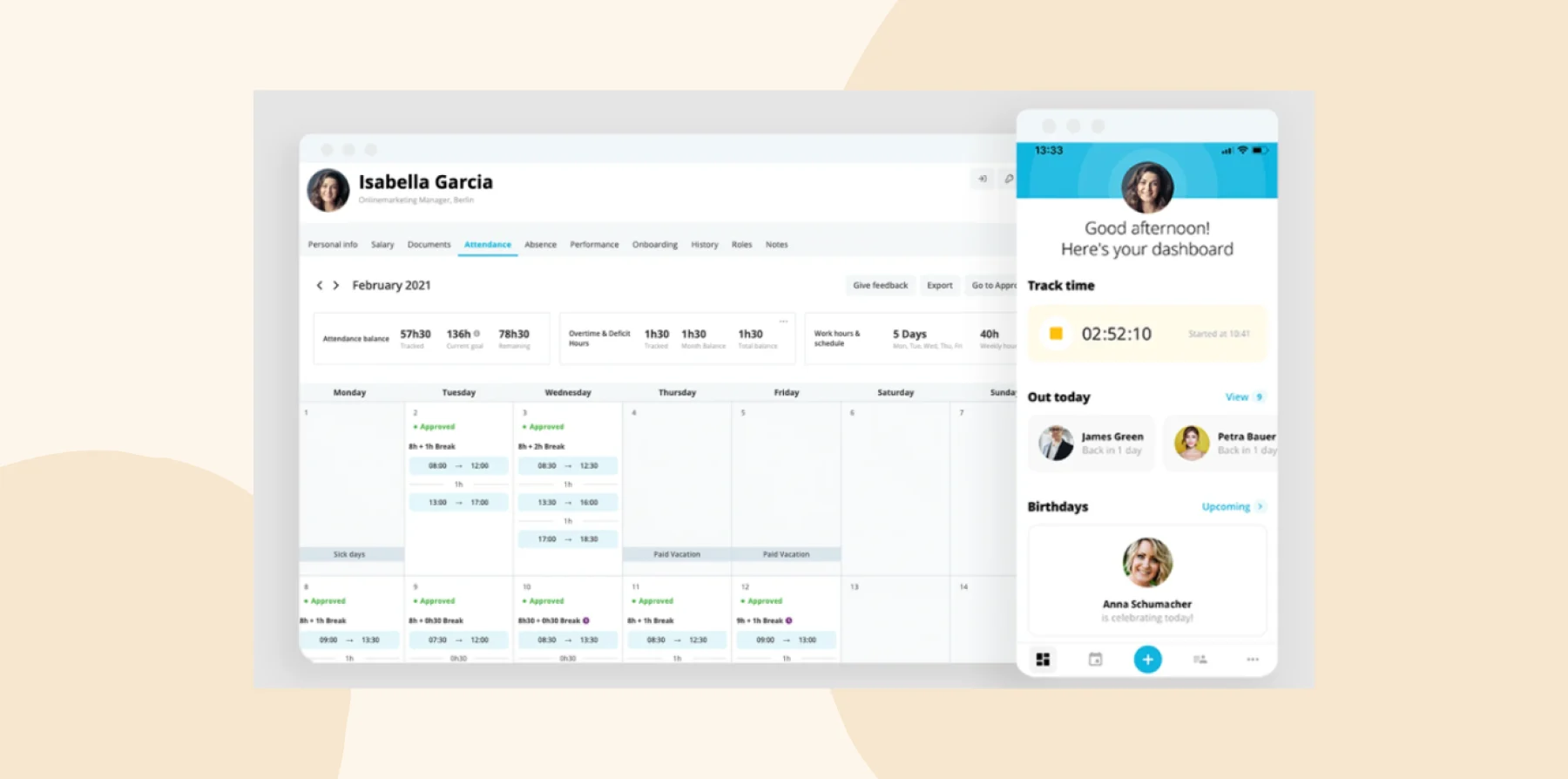
Personio is an HR platform that offers features that cover the entire employee lifecycle. Its automation tools and integrations can help startups streamline daily HR processes like onboarding, absence management, and time tracking.
Key features:
- Core HR: Centralize data, personnel files, and organizational structure in one HR system
- Recruiting: Manage job postings, applications, and hiring workflows through Personio’s recruiting module
- Onboarding: Automate onboarding tasks, documents, and checklists for new joiners
- Time off: Track absences, leave types, balances, and approvals across teams
- Performance and development: Run performance reviews, goal tracking, and development conversations
- People analytics: Access standard HR reports and dashboards for headcount, turnover, and workforce insights
Pros:
- “It’s easy to move between areas like recruiting, payroll, and employee management without getting lost.” – verified user
- “The time off and attendance feature is also great..” – verified user
Cons:
- “You can’t report or easily track signed documents.” – verified user
- “The UX is simply far far behind what you’d expect a company valued this high to be.” – verified user
Pricing (as of publication date): Personio pricing is not publicly available
Rippling

Best for: Startups that want HR, payroll, and IT access management connected in a single system
Customer reviews: 4.8/5 on G2
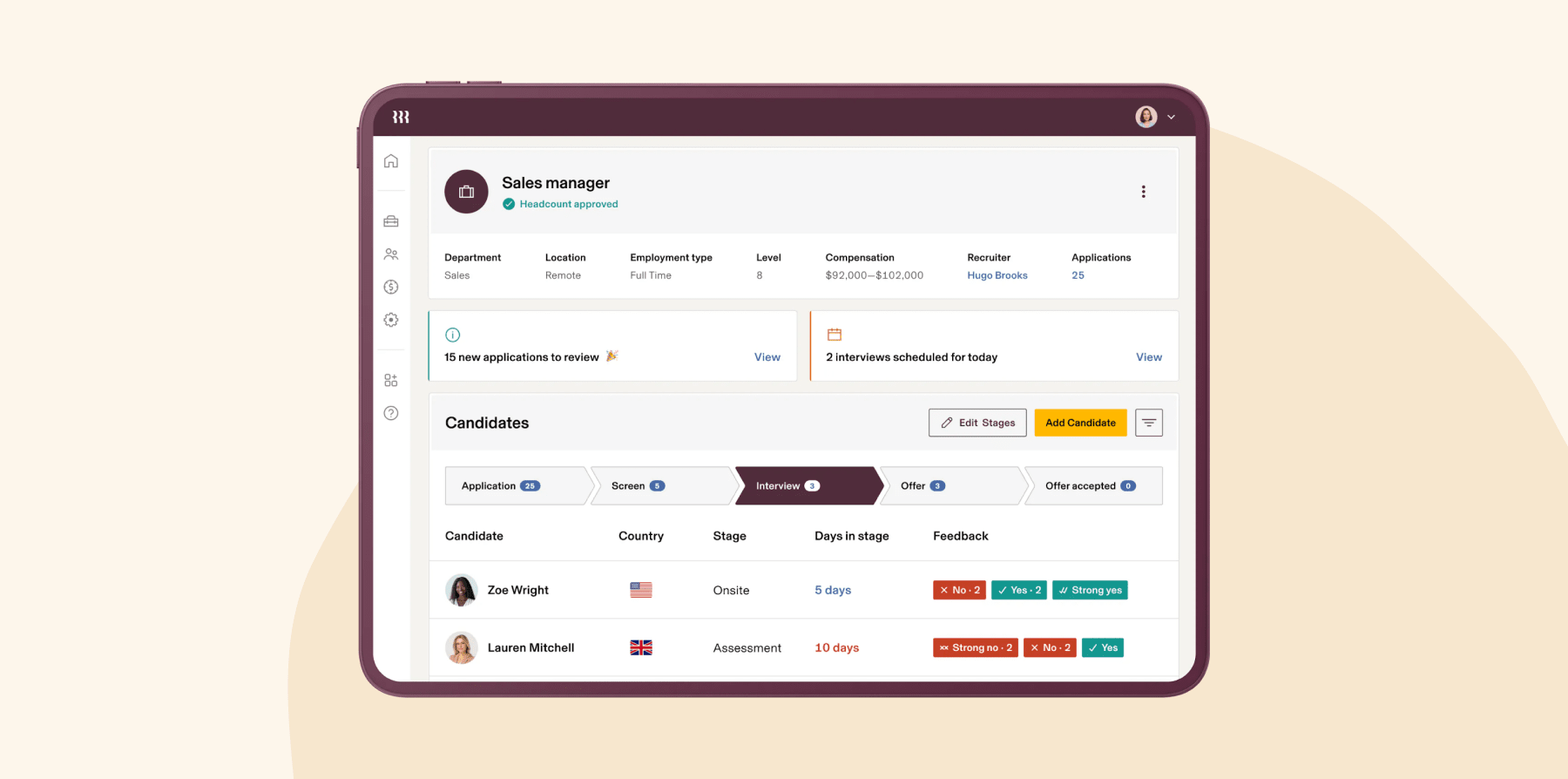
Rippling is a platform that combines HR, IT, and finance into a single system. It’s designed to simplify the management of both global and local teams. Rippling provides startups with a single source of truth for data and operations.
Key features:
- Employee management: Store and manage records, roles, and organizational data in a unified system
- Payroll: Run payroll with automated tax calculations and filings across states and countries
- Benefits administration: Manage benefits enrollment, deductions, and changes within the platform
- Time and attendance: Track hours, PTO, and attendance and sync time data to payroll
- App management: Manage access to workplace apps and software based on role and status
- Reporting: Generate reports across HR, payroll, and workforce data from a single system
Pros:
- “Most key HR tasks are automated.” – verified user
- “The automation and integrations make it easier to manage complex workflows.” – verified user
Cons:
- “This is slower than some of the competition. Also, their sales team can be a bit pushy.” – verified user
- “At times support has provided incorrect answers which has led to issues that need to be adjusted.” – verified user
Pricing (as of publication date): Rippling offers custom pricing plans
Talent HR

Best for: Very small startups that need a lightweight HR system for records, time off, and basic workflows
Customer reviews: 4.7/5 on G2
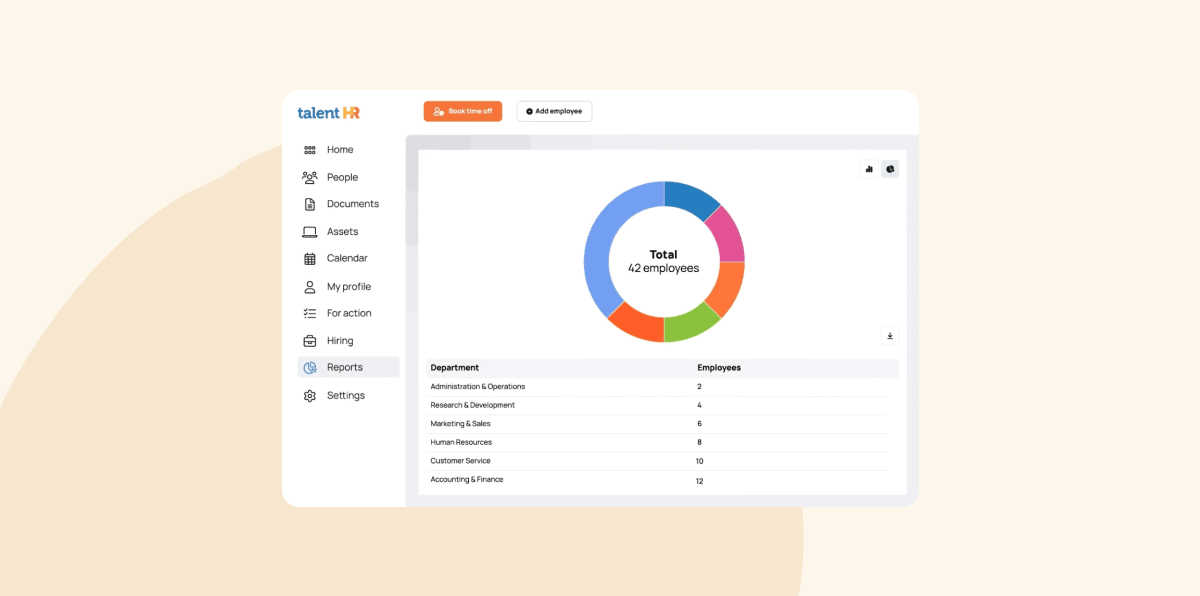
TalentHR is an HR platform that offers a user-friendly interface and automation features to streamline tasks like hiring, onboarding, and employee management. The platform was designed to grow with businesses of any size, startups included.
Key features:
- Employee management: Store profiles, job details, and organizational information in one system
- Onboarding: Create onboarding checklists and tasks for new joiners
- Time off management: Track leave policies, balances, and time-off requests
- Performance management: Run basic performance reviews and track feedback
- Reporting: View standard HR reports related to people data and time off
Pros:
- “I like how fast and easy TalentHR is to roll out while still covering the HR essentials well.” – verified review
- “Surveys make it simple to gather employee feedback.” – verified review
Cons:
- “There is a slight worry that if our team grows significantly that TalentHR will no longer be able to meet our needs.” – verified review
- “Migrating our data was not very easy. ” – verified review
- Free: Free for up to 10 users
- Essential: $2/mo per user
- Premium: $4/mo per user
TriNet

Best for: Startups that want to outsource payroll, benefits, and HR compliance through a PEO model
Customer reviews: 4/5 on G2
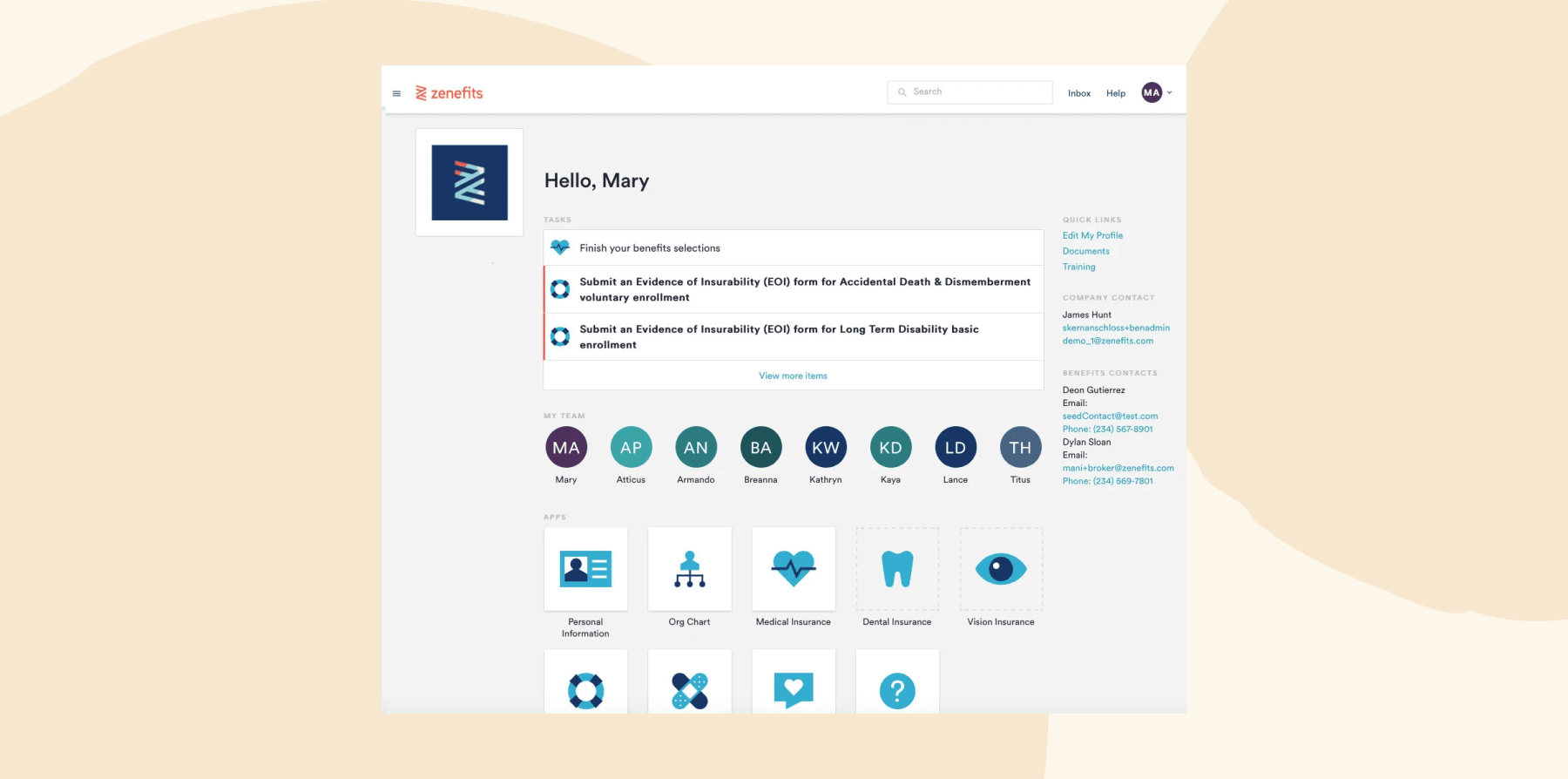
TriNet, previously Zenefits, offers an HR platform with payroll, benefits, and compliance solutions. It consolidates key HR functions like payroll, employee management, and hiring into one system. They also offer outsourced services for HR and payroll needs.
Key features:
- Payroll services: Process payroll with tax withholding, filings, and payments handled by TriNet
- Benefits administration: Access and manage benefits, including health insurance and retirement plans
- HR compliance: Support compliance with employment laws, payroll regulations, and workplace requirements
- HR advisory services: Receive HR guidance and support from TriNet’s HR experts
- Risk and workplace safety: Access risk mitigation and workplace safety support
- TriNet HR Platform: Manage data, documents, and HR workflows
Pros:
- “There are numerous safeguards in place to make sure you always remain compliant with state, federal, and local regulations.” – verified user
- “The reporting features are also great and always getting better.” – verified user
Cons:
- “The amount of time spent getting new/random customer service rep up to speed with the backstory and context for a question can be rather inefficient and frustrating.” – verified user
- “Difficult to transition from another system into this one. Data transfer is a bit clunky” – verified user
Pricing (as of publication date): TriNet pricing is not publicly available
Workable

Best for: Startups focused primarily on hiring and recruiting with a dedicated applicant tracking system
Customer reviews: 4.5/5 on G2
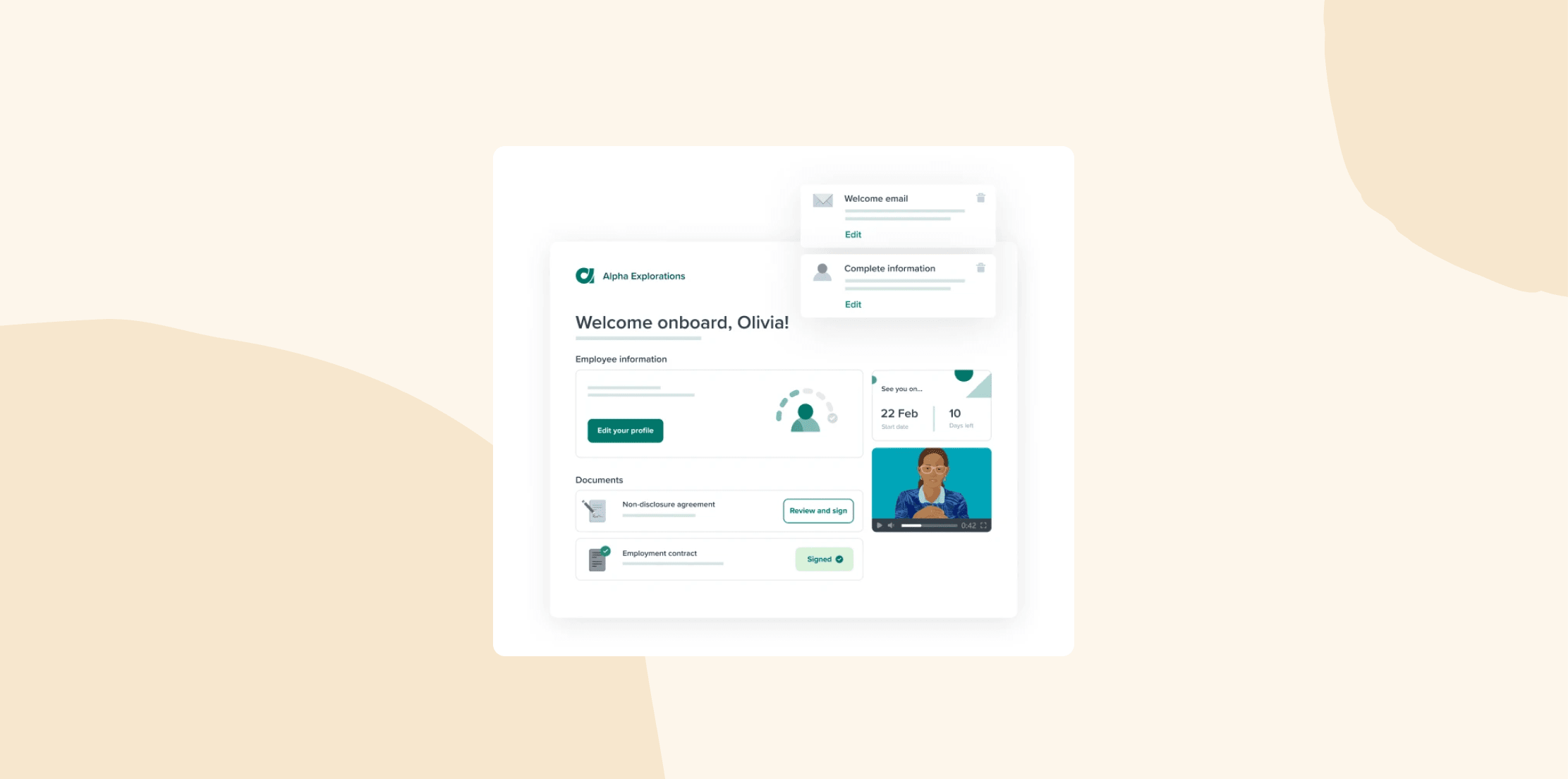
Workable is an HR platform that helps businesses streamline the hiring and team member management process. Workable’s AI-powered tools support recruitment, onboarding, and people management and reduce time spent on repetitive HR tasks.
Key features:
- Applicant tracking system (ATS): Manage job postings, applications, and candidate pipelines in one recruiting system
- Job distribution: Publish job openings to multiple job boards and social channels
- Candidate sourcing: Source candidates using resume databases, referrals, and AI-assisted recommendations
- Interview management: Coordinate interviews, collect feedback, and track hiring decisions
- Hiring analytics: Track recruiting metrics such as time to hire, pipeline performance, and hiring activity
- Compliance tools: Support hiring compliance with structured hiring workflows and documentation
Pros:
- “Features like job posting to multiple boards, resume parsing, email templates, and interview scheduling save us significant time.” – verified user
- “Communication with candidates is also effortless thanks to built-in email templates, scheduling tools, and automated reminders.” – verified user
Cons:
- “The platform is very slow and often buggy.” – verified user
- “It is not easy to integrate with some platforms.” – verified user
- Standard: $299/mo
- Premier: $599/mo
- Enterprise: $719/mo
Zoho People

Best for: Startups already using Zoho products that want flexible HR tools integrated into their existing ecosystem
Customer reviews: 4.4/5 on G2
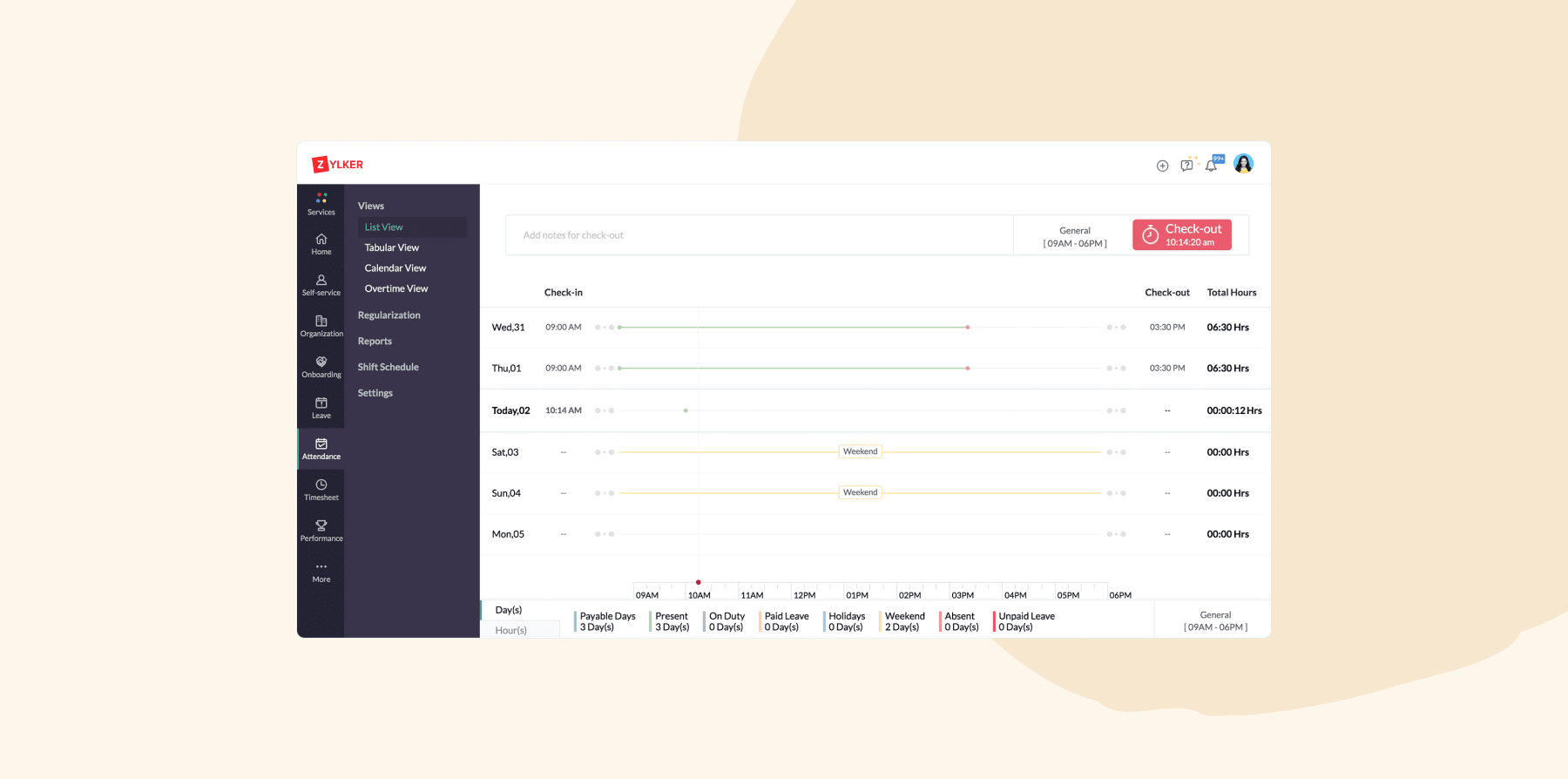
Zoho People is an HR management system that supports data management, time tracking, leave management, and performance reviews. It’s part of the broader Zoho ecosystem, which allows teams already using Zoho products to connect HR data with other business tools. The platform offers customizable workflows and self-service features for team members and managers.
Key features:
- Employee management: Store records, job details, and organizational data
- Leave management: Track leave policies, balances, requests, and approvals
- Time and attendance: Record team member attendance, shifts, and work hours
- Performance management: Run performance appraisals, goal tracking, and feedback cycles
- Onboarding: Manage onboarding tasks, forms, and new joiner workflows
- HR analytics: Generate HR reports and dashboards for workforce insights
Pros:
- “It’s simple to track attendance and leave.” – verified user
- “Overall, it seems practical and dependable for day-to-day HR tasks.” – verified user
Cons:
- “Uploading data manually can be tiring, especially when having to jump from one place to another, which feels tedious.” – verified user
- “Setting up attendance rules, shifts, and workflow feels a bit complex.” – verified user
Pricing(as of publication date):
- Free Edition: Limited features, up to 5 users
- Essential HR: $1.25/mo per user
- Professional: $2/mo per user
- Premium: $3/mo per user
- Enterprise: $4.50/mo per user
- People Plus: Custom pricing
Best HR software for startups according to review sites
We reviewed Reddit threads where startup HR teams compare HR software and share what worked after go-live. Across 200+ comments in several long-running discussions, a few patterns show up consistently. For most platforms, sentiment ties less to feature checklists and more to adoption, operational reliability, and whether the system keeps working without friction as complexity grows.
Best HR software for startups according to Redditors
- HiBob: Feedback trends strongly positive, at roughly 75 to 85 percent positive, with 15 to 25 percent neutral or mixed. Redditors highlight intuitive user experience, high adoption across team members and managers, and strong execution of core workflows such as onboarding, time off, profiles, and basic performance. Many also say HiBob “sticks” after rollout and avoids the slow adoption drop that can happen with heavier systems.
- BambooHR: Sentiment trends moderately positive, at roughly 60 to 70 percent positive and 30 to 40 percent neutral or negative. Practitioners consistently praise ease of use, clean design, and straightforward onboarding for startups moving off spreadsheets. Criticism typically shows up later, when reporting needs deepen or workflows become more complex, not because the core HR experience falls short.
- Rippling: Sentiment trends moderately positive, at roughly 55 to 65 percent positive and 35 to 45 percent neutral to negative. HR professionals point to consolidated HR and payroll, automation, and the ability to support growth as headcount and geographic complexity increase. Critical feedback focuses on implementation friction, pricing and add-ons, and the sales experience, which creates a more polarized but still net-positive profile.
HR software with the most mixed or negative sentiment
- Gusto: Sentiment is mixed, at roughly 45 to 55 percent positive and 45 to 55 percent neutral or negative. People often position Gusto as an excellent early-stage payroll and benefits option. In longer-term discussions, though, many describe it as a starting point rather than a system startups stay on as HR needs expand.
- Paychex: Sentiment skews neutral to negative, at roughly 50 to 65 percent negative and 35 to 50 percent mixed or positive. Some teams mention reliability and breadth, but criticism centers on reporting limits, integration friction, and a product experience that can feel dated compared to newer startup-focused platforms.
- TriNet: Feedback trends more negative than positive, at roughly 55 to 70 percent negative and 30 to 45 percent mixed or positive. Redditors often describe TriNet as functional but heavy. They point to inconsistent service, complex transitions, and added operational friction, especially for startups without dedicated HR support.
Other tools mentioned in the startup HR software list appeared too briefly in these threads, or without enough repeated firsthand detail, to place confidently in a top or bottom tier.
Sources:
- https://www.reddit.com/r/payrollsystem/comments/1qq962l/best_hr_software_going_into_2026_whats_actually/
- https://www.reddit.com/r/startups/comments/1enwzcl/hris_software/
- https://www.reddit.com/r/startup/comments/1mpze5w/founders_heres_what_actually_works_for_hr_at/
- https://www.reddit.com/r/EntrepreneurRideAlong/comments/11ra6ce/which_payroll_and_hr_software_is_best_for_a/
- https://www.reddit.com/r/HumanResourcesUK/comments/1pn3eak/best_hr_software_for_a_small_team_thats_kind_of/
Best HR software for startups according to G2
G2 includes hundreds of HR products across HRIS, HCM, payroll, and talent categories. To keep this analysis startup-relevant, we first narrowed G2’s broader list to the tools featured in our startup HR software shortlist. Then we reviewed G2 sentiment summaries and recurring themes in reviews to see which platforms show the strongest patterns, positive or negative, around usability, implementation experience, and day-to-day HR work.
HR software with the most positive sentiment
- HiBob: Reviews trend strongly positive and constructive. Users emphasize intuitive design, configurability, and meaningful reductions in manual HR admin across core workflows like onboarding, time off, people data, and engagement. Reviewers frequently link HiBob to strong adoption in scaling organizations and a better experience for team members and managers.
- Rippling: Sentiment trends strongly positive overall. Reviewers highlight ease of use, modern design, and the convenience of consolidating HR, payroll, and IT workflows in one platform. Many call out fast onboarding, automation, and less operational overhead. More critical feedback tends to be situational, including occasional glitches, feature discoverability, pricing complexity, or a more US-centric focus for global teams.
- BambooHR: Sentiment remains consistently positive, especially for small and mid-sized teams. Reviewers praise ease of use, clean interface, and dependable core HR functionality. When feedback turns critical, it usually points to workflow rigidity, integration limits, or the need for more advanced analytics and reporting as companies scale.
HR software with the most negative sentiment
- Paychex Flex: Sentiment trends mixed-to-negative compared to peers. Users appreciate straightforward payroll processing and device accessibility, but they often cite reporting limitations, compatibility issues with other tools, and frustration with customization. Reviews suggest Paychex can work for basic payroll needs but adds friction as HR requirements become more complex.
- TriNet (Zenefits): Sentiment skews more negative than positive overall. Reviewers like the breadth of features and the general interface, but they frequently point to inconsistent support, onboarding friction, and difficulties during transitions or data migration. Operational pain after setup often offsets the early positives.
- Workable: Sentiment trends mixed-to-negative when teams evaluate Workable beyond recruiting. Users praise the hiring tools and clean interface, but they cite slowness, bugs, and integration challenges when they try to use it as part of broader HR workflows. Reviews read more favorable when Workable stays in the recruiting lane.
The other tools on this list show more balanced sentiment in G2 reviews. In this snapshot alone, they do not cluster clearly into the strongest top or bottom tier.
Benefits of using HR software with your startup
Let’s look at how HR software can help you scale your startup without needing additional headcount.
Reduces human error through automation
Use automated workflows to prevent costly mistakes in everything from payroll to personal details. Automation also reduces the time your team spends on manual, time-consuming processes. In fact, automating HR processes can reduce administrative costs by up to 30 percent, helping teams scale without adding manual work.
Improves decision-making
Access to real-time data and reports can uncover deep insights into your team’s work trends and behaviors, like turnover, engagement, and performance. Use actionable insights to spot trends, plan for changes, and make strategic moves that help your startup thrive.
“The best way I ever attracted talent…was focusing on how talent connects to business outcomes,” said Johnny C. Taylor, Jr., President and CEO of the Society for Human Resource Management.
HubSpot executes on this concept well. They run a recurring employee engagement survey (eNPS) and give leaders the results so they can track progress at the department and team level
Increases employee engagement
HR software can support engagement in several practical ways, including:
- Promoting regular communication through pulse surveys, feedback cycles, and recognition tools that give managers real-time visibility into how their teams are feeling
- Providing structured recognition by enabling peer shout-outs, milestone celebrations, and performance-based acknowledgments directly within the platform
- Supporting development planning by linking performance reviews to growth plans, tracking goals over time, and giving managers visibility into skill gaps and promotion readiness
These tools help build a supportive work environment that fosters trust, boosts morale, and enhances overall engagement. In fact, Gallup research consistently shows that highly engaged teams are 21 percent more profitable, reinforcing the link between engagement tools and business performance. When everything runs smoothly—and everyone feels recognized and valued—your team can get straight into their productive flow.
Streamlines compliance
HR software can help teams navigate complex labor laws and regulations. Automated updates and reminders about compliance changes keep your business ahead of regulatory shifts, securing a protective shield around your operational practices.
“When no one is looking at the payroll reports or asking questions, compliance becomes invisible until there’s a problem,” said Jennifer Lee, payroll and HR expert.
Centralized audit trails make it easier to review who approved what, when changes were made, and how payroll data moved between systems. That visibility reduces surprises during audits and keeps filings accurate.
Choose the best HR software for your startup
In a startup environment, culture is critical: it builds collaboration, innovation, and a sense of community among team members. The right HR software allows startups to automate time-consuming tasks, freeing up HR teams to focus on what really matters: its people.
HiBob helps startups put structure in place early. Founders and small HR teams can automate onboarding tasks, centralize team records, manage time off, and run compensation reviews without relying on disconnected spreadsheets. As headcount grows, approved salary changes sync directly to payroll, and leaders can see how hiring plans affect workforce costs in real time.
HiBob also supports established mid-sized and global organizations by bringing HR, payroll, and finance onto one connected system. AI-powered insights surface trends in retention, engagement, and headcount growth, which help teams make decisions based on current data, not outdated reports.
Disclaimer:
This content reflects HiBob’s perspective, informed by our experience supporting HR teams as they evaluate and implement HR software. It is provided for informational purposes only and is not intended as independent research or professional advice. Prospective users should conduct their own evaluation before making a decision.
Feature descriptions, pricing references, and availability for third-party platforms are based on publicly available information at the time of publication and may change. HiBob does not guarantee the accuracy or completeness of information related to third-party products. Prospective users should verify details directly with each provider.
FAQs on startup HR software
Which is the leading HR software for startups?
HiBob is the best HR software for startups that need structured HR processes without adding administrative overhead. Growing teams use HiBob to manage onboarding, performance, compensation, and time off in one system, while syncing approved changes directly to payroll. As companies expand into mid-sized or global operations, HiBob also supports workforce planning, compensation governance, and AI-powered people insights, making it suitable for businesses at every stage of growth.
When should a startup get an HR system?
Startups should consider using HR software when manual processes like payroll, time tracking, or onboarding are becoming hard to manage. If your team finds itself stretched thin or you’re experiencing rapid growth, investing in an HR solution early on can help you stay organized and support your people effectively as you grow.
How do I set up an HR system as a startup?
Follow this implementation checklist to properly plan and set up your HR system:
- Create a plan: Define your goals, timeline, budget, and assign responsibilities
- Find the right software: List out system requirements, research vendors, compare features, and conduct demos to choose the best solution
- Configure and install the system: Work with IT to configure the system, import data, and integrate it with existing tools
- Test the system: Run tests to ensure functionality, validate data accuracy, and address any issues or concerns
- Train and onboard your team: Host training sessions for HR and staff, and provide guides for continued support
- Rollout the system: Decide on a rollout strategy (gradual or full launch), communicate the plan internally, and ensure IT support is available
- Monitor and iterate: Gather feedback, provide ongoing support, and make necessary updates to the system based on user input
Does a startup need HR?
Every startup needs HR responsibilities covered, even if there isn’t a dedicated HR role yet. Early on, those responsibilities are often shared between founders, operations, or finance, covering areas like hiring, onboarding, payroll coordination, and compliance.
As a startup grows, managing these responsibilities can become more complex and time-consuming. At that point, having structured HR processes or HR AI software that centralizes people data helps reduce risk, improve consistency, and support better decision-making. Whether handled by a person or a system, HR is essential as soon as a startup begins scaling its team.

From Madeline Hogan
Madeline Hogan writes about HR technology, people operations, and practical HR strategies for growing organizations. Her HiBob work spans HRIS and HCM software, onboarding, performance management, workforce data, HR automation, and templates. She focuses on helping people teams build clearer processes, improve data quality, and scale everyday HR operations.