
Organizational change is one of the most people-intensive challenges HR leaders navigate. Whether you’re rolling out a new system, restructuring a team, or changing how your organization operates, lasting change depends on clear planning, communication, and support.
The pressure to get it right is growing. Gartner reported in 2024 that the average person experiences four times as many organizational changes as they did eight years earlier. Constant change takes a toll, and ambiguity is the hardest part for people to navigate: Gartner found it’s 1.5 times more likely to challenge them than volatility, uncertainty, or complexity. A people-centered approach to change helps HR reduce that ambiguity by keeping everyone clear on what’s changing, why, and what it means for them.
A structured change management plan can help you turn strategy into action, clarify responsibilities, anticipate resistance, and keep people informed throughout the process. Combined with the right change management strategies, it gives HR leaders a practical framework for guiding people through transitions and strengthening adoption.
This article covers everything you need to build a strong change management plan, including how to create one step by step and free change management templates you can adapt to your organization.
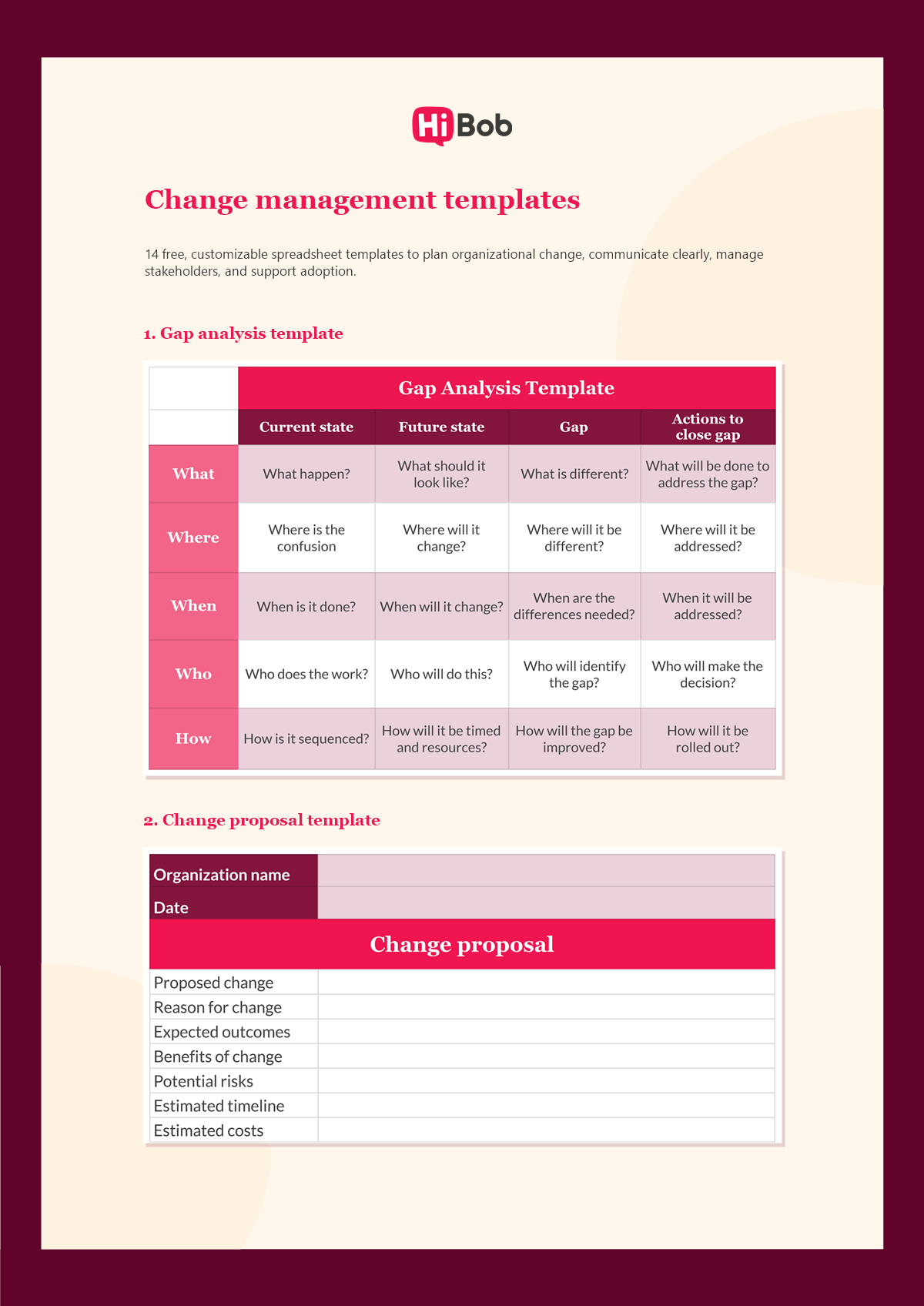
<< Download these change management plan templates to drive adoption and engagement. >>
Key insights
- A structured change management plan turns strategy into action by aligning people, responsibilities, timelines, communication, and success metrics
- The right templates help HR teams plan each stage of change consistently, from assessing impact and costs to managing implementation and adoption
- Effective change management puts people at the center through clear communication, active leadership, training, recognition, and ongoing support
- Choosing a change management model that fits the initiative’s scale, pace, and complexity gives teams a stronger framework for execution
What is change management?
Change management is a structured approach to helping people, teams, and organizations navigate change successfully. It focuses on the people side of change, whether you’re introducing new technology, updating processes, or transforming how the organization works.
While project management focuses on tasks, timelines, and deliverables, change management focuses on the people who need to adopt new ways of working. Clear communication, active involvement, training, and ongoing support help people move through the change with confidence.
What is a change management plan?
A change management plan is a strategic document that outlines the steps, actions, and resources needed to navigate a new project or organizational shift. It covers communication strategies, training, stakeholder roles, timelines, and success metrics, keeping everyone aligned and focused throughout the transition.
Think of it as the blueprint connecting your change vision to day-to-day execution. It answers the key questions your team will ask:
- What’s changing?
- Why is it changing?
- Who’s responsible?
- What happens next?
Why is a change management plan important?
A change management plan clarifies the change process for everyone involved, from senior leaders to frontline team members. With a thoughtful plan in place, HR teams can:
- Minimize disruptions: Change often creates uncertainty and can affect productivity. A well-designed plan helps HR anticipate challenges, reduce disruptions, and maintain business continuity.
- Boost team engagement and collaboration: Effective change management plans engage team members through clear communication, resources, and support, helping people feel valued and informed and supporting a positive culture through complex shifts.
- Reduce resistance: A structured plan addresses common concerns and aligns teams, making it easier to secure buy-in.
How to create a change management plan
Building a change management plan is complex. The key to simplifying it is to break it into clear, sequential steps that give your team a shared roadmap from day one.
1. Build a change management team
Assemble a dedicated team to manage the change process and define each member’s roles and responsibilities clearly. For example, assign who monitors operations, who submits change order requests, and who reviews and approves those requests.
A change management team keeps the process on track, supports people through the transition, and maintains two-way communication between executives and team members. Strong teams typically include three key roles:
- Change champions: Communicate the change and guide people through the process
- Change agents: Plan and execute the day-to-day operations of the change
- Change controllers: Receive, review, and approve change requests
2. Document your plan
Divide the plan into two parts: a strategic plan that highlights long-term goals, and a tactical plan that breaks the change into smaller objectives. The plan sets out key elements—decision-makers, communication strategies, and critical dates—so nothing falls through the cracks.
Include elements like:
- Reason for the change
- Goals and key performance indicators (KPI)
- Timeline with a schedule, including key milestones and deadlines
- List of actionable tasks
- Stakeholders and their roles
- Departments, processes, and technology the change affects
- Resources the organization needs to implement the change
3. Make an implementation timeline
Attach a timeline to each actionable task in the change management plan. Determine the full implementation period—say, six months—and then assign shorter due dates for specific tasks within that window.
Prioritize tasks by importance before setting deadlines, and make sure each deadline feels achievable for the people responsible. Timelines keep the team accountable, maintain momentum, and surface bottlenecks early so you can address them before they delay the broader initiative.
4. Recognize your people’s achievements
Recognizing and appreciating team members’ achievements reinforces positivity and encourages faster adoption. Implement a recognition program that rewards people for hitting milestones and predetermined KPIs, whether through gift packages, company merch, or public acknowledgment.
Recognizing effort and progress during the change process signals to your people that their contributions matter, which keeps morale high when the path forward feels uncertain.
5. Track change management success
Track change management success by setting KPIs that measure the plan’s and process’s effectiveness. Establish a KPI dashboard for the change management team to monitor regularly, enabling ongoing assessment and course correction.
Useful KPIs to track include:
- Resistance/rejection rate
- Adoption rate
- Time to adoption
- Training effectiveness
- Change cost
- Employee engagement
- Change success rate
- Stakeholder satisfaction
- Customer satisfaction
- Change return on investment (ROI)
No single KPI fits every initiative. Each metric works best when aligned with the overall change goal. For example, if you’re rolling out a new recognition program, employee satisfaction scores matter far more than customer satisfaction rates.
6. Communicate early and often
The earlier and more consistently you communicate about the change—its purpose, timeline, and impact—the less room there is for speculation and anxiety.
Use a mix of channels to reach different audiences: all-hands meetings for organization-wide updates, team-level conversations for department-specific impacts, and one-on-one check-ins for people navigating particularly significant shifts.
Change management plan templates
Structured templates simplify the change management process and provide a clear roadmap for each stage. Below are free templates you can customize and use across any type of organizational change.
<< Download these change management plan templates to drive adoption and engagement. >>
1. Gap analysis template
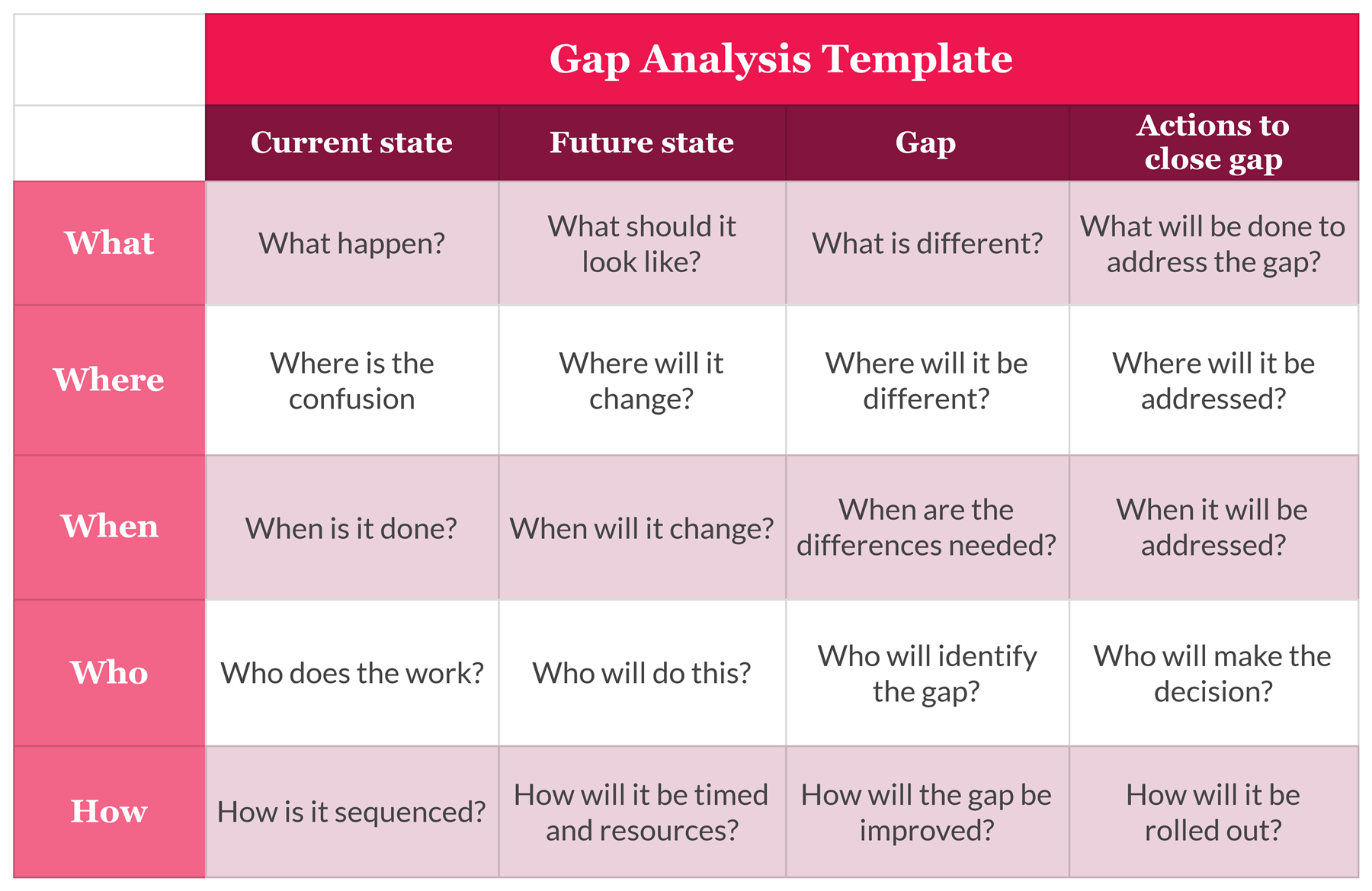
A gap analysis template helps HR leaders assess where the organization currently stands, where it needs to go, and what actions will close the distance. Use gap analysis insights as a foundation for additional planning. It’s often the first template to complete before building out the rest of your change management plan.
What this template includes:
- Current state: Describe the organization’s current position and why it needs to change
- Future state: Explain the outcome of the change and the benefits your people can expect
- Gap percentage: Measure the percentage difference between the current and future state; for non-quantifiable gaps, a reasonable estimate works
- Action to take: Define what steps will move the organization toward the future state, such as hiring additional people or adopting new technology
- Change leader: Specify who will lead each action
2. Change proposal template
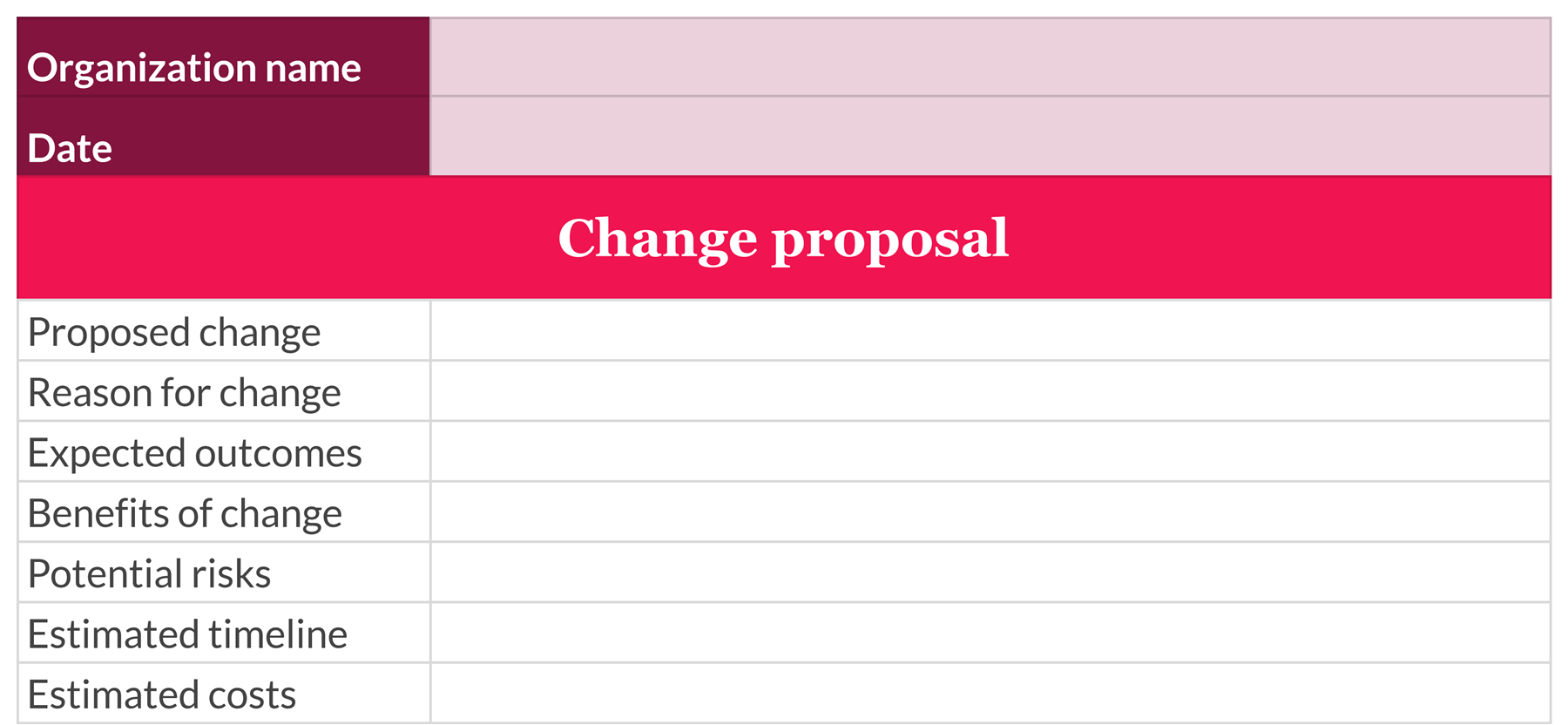
A change proposal template explains the rationale and benefits of a proposed change before you take action. It provides a standardized format for detailing the purpose, scope, benefits, potential risks, and resource requirements. This gives stakeholders the information they need to decide whether to proceed.
What this template includes:
- Proposed change: Explain the change, which people, teams, or departments it will affect, and when it will begin
- The rationale for the change: Review the necessity of the change, its pros and cons, and address possible concerns people will raise
- Expected outcomes: Detail the primary impact of the change and any indirect effects
- Estimated timeline: Include an estimate of how long the change will take and a general schedule
- Estimated total cost: Consider all costs the organization may incur—technology, consultation, additional labor—and include estimates for each
- Additional considerations: Cover any other factors that may influence the change, such as regulatory requirements, dependencies on other projects, or impacts on company culture
3. Change management leader template
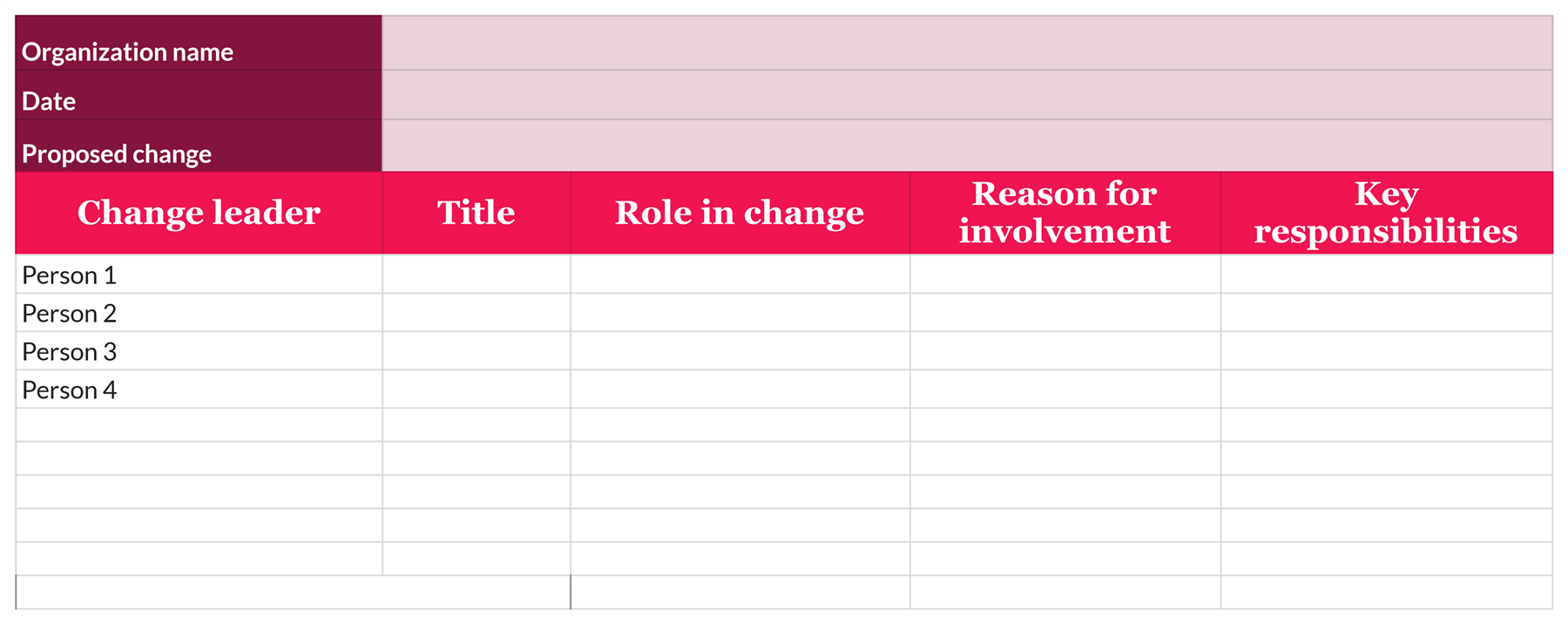
To help people accept change with minimal resistance, build a team of influential leaders to guide, support, and address concerns. A change leader template identifies each leader, their role, key responsibilities, and reason for involvement, which provides clarity and accountability from the start.
For example, a change leader might be your head of HR. They can educate people about the change, organize training sessions and workshops, and provide continuous support through regular check-ins.
What this template includes:
- Change leaders: Choose leaders with strong communication skills and organizational influence who are ready to champion the change
- Roles and responsibilities: Clearly explain each change leader’s role, including their daily, weekly, or monthly responsibilities
- Reason for involvement: Explain why you’ve chosen each person as a change leader, highlighting their strengths and what makes them the right fit
4. Change management communication plan
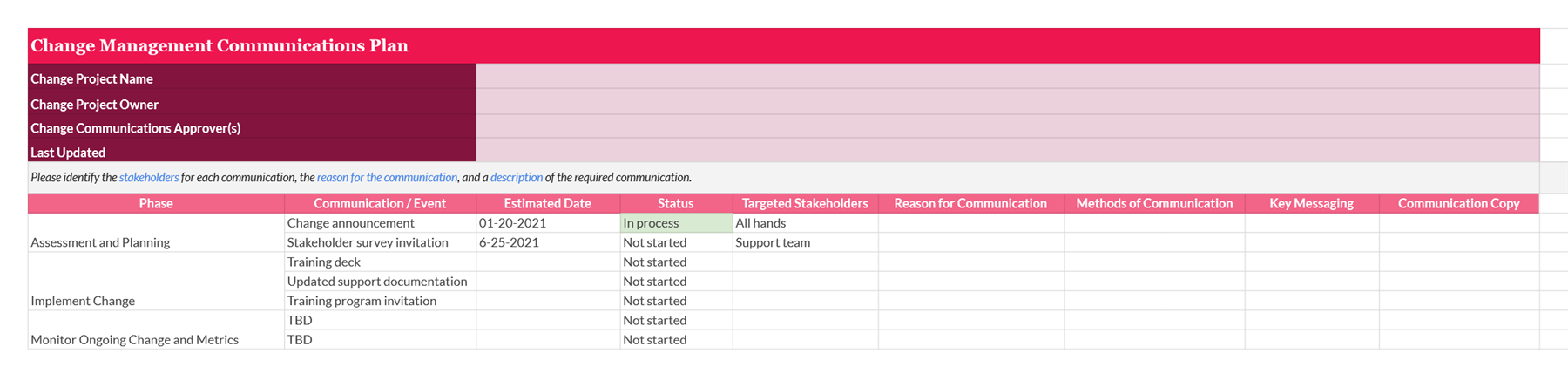
A change management communication plan outlines the organization’s strategy for communicating change to key stakeholders and team members. It identifies which situations call for communication, assigns responsibility for each message, defines the target audience, and specifies the delivery method.
Overcommunication is rarely a problem during change initiatives—undercommunication almost always is. Build in more communication touchpoints than you think you need, especially during the early stages of implementation when uncertainty tends to peak.
The change management model you’re using will shape your communication strategy. For example, Kotter’s 8-step model encourages top-down communication, while the ADKAR model takes a bottom-up approach, building individual awareness before scaling to the broader organization.
What this template includes:
- Your change management model: Explain which model you’re using and how it influences communication
- Change leaders: List the people responsible for communicating the change—for example, department heads explaining how the change affects their teams
- Situations that require communication: Identify what events trigger communication, such as deadline announcements, progress reports, and training sessions
- Method of communication: Note the channels for each communication event—email, all-hands meetings, team stand-ups, and so on
- Target audience: Define the intended audience for each communication
- Reason for communication: Explain why communicating each situation matters and what outcome it aims to achieve
5. Change management plan budget template
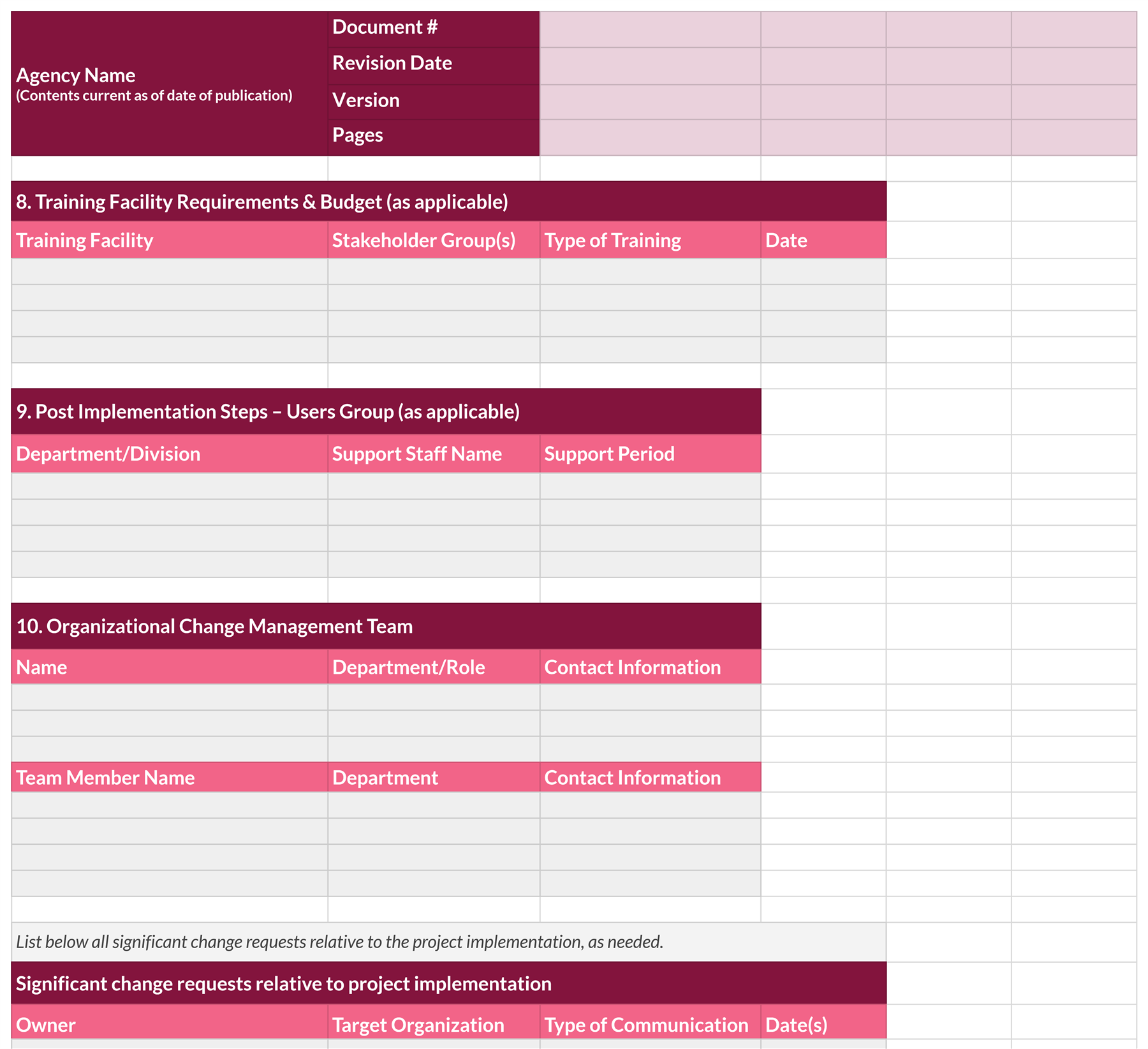
Use a budget template to estimate the people, materials, hours, and other resources needed for a successful change initiative. Including a column for actuals allows you to measure budget variance post-project and apply those insights to future initiatives.
What this template includes:
- Project tasks: Break the project into achievable tasks
- Cash budget for each task: Estimate how much completing each task will cost
- Labor hour budget: Budget the time each task requires and the associated labor cost
- Physical resource budget: Allocate the resources needed for each task and estimate their cost
- Total budget amount: Combine cash, labor, and physical resource estimates into a total
- Actuals: Record what you actually spent on the project
- Variance: Note the difference between planned and actual spend
6. Cost-benefit analysis template
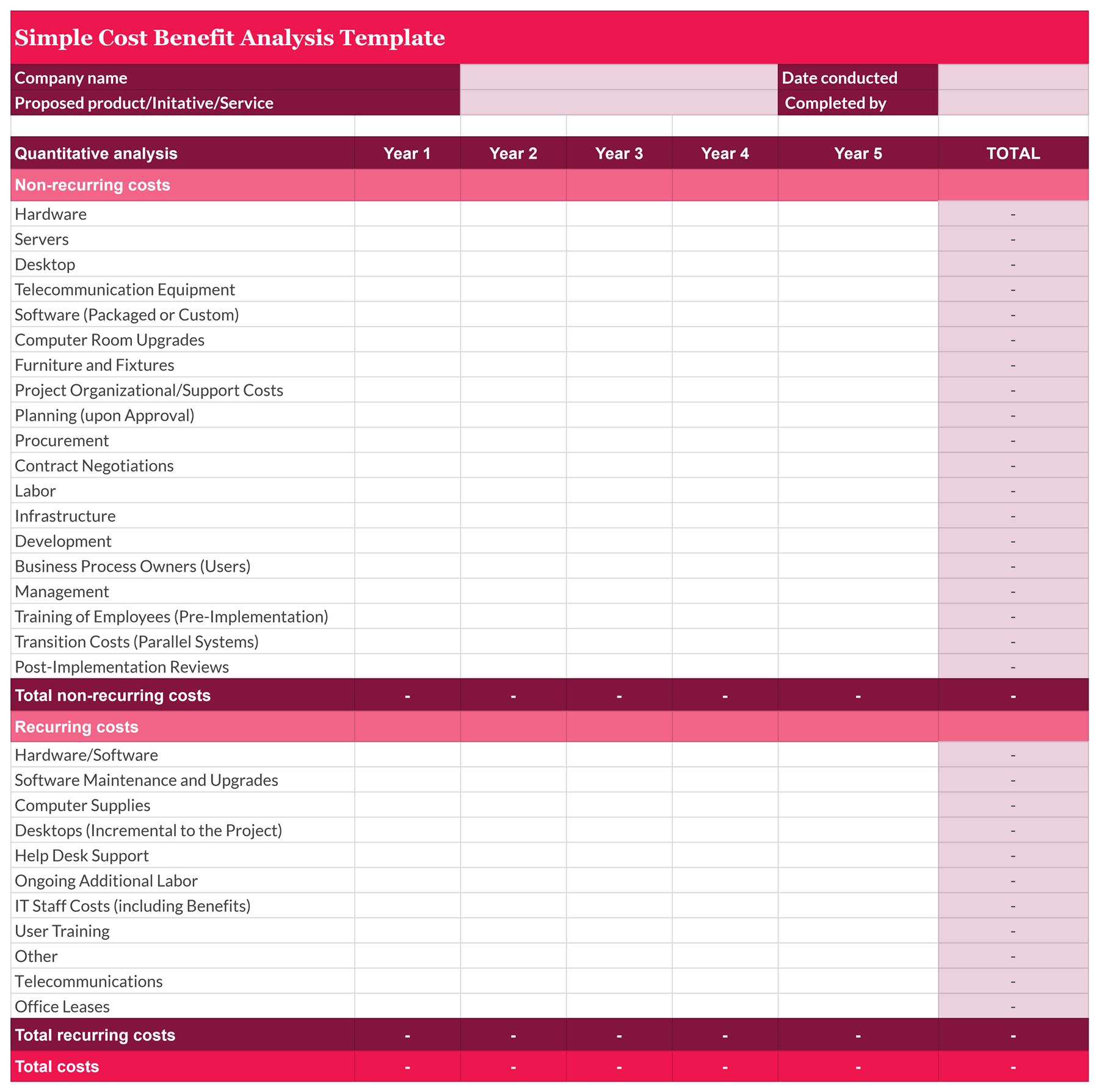
This analysis weighs a project’s various costs against its benefits to determine whether it’s worth pursuing. A cost-benefit analysis template helps HR leaders assess whether investing time, resources, and people in a change will yield meaningful results.
What this template includes:
- Quantitative costs: Include production costs, labor costs, material costs, and utility costs
- Qualitative costs: Account for non-financial costs of the change, such as lower team morale, reduced productivity during the learning curve, and change fatigue
- Quantitative benefits: Explain the financial benefits and why they justify the investment
- Qualitative benefits: Review non-financial benefits the organization will gain, such as higher customer satisfaction, lower team member turnover, and improved stakeholder trust
7. Change management tool template
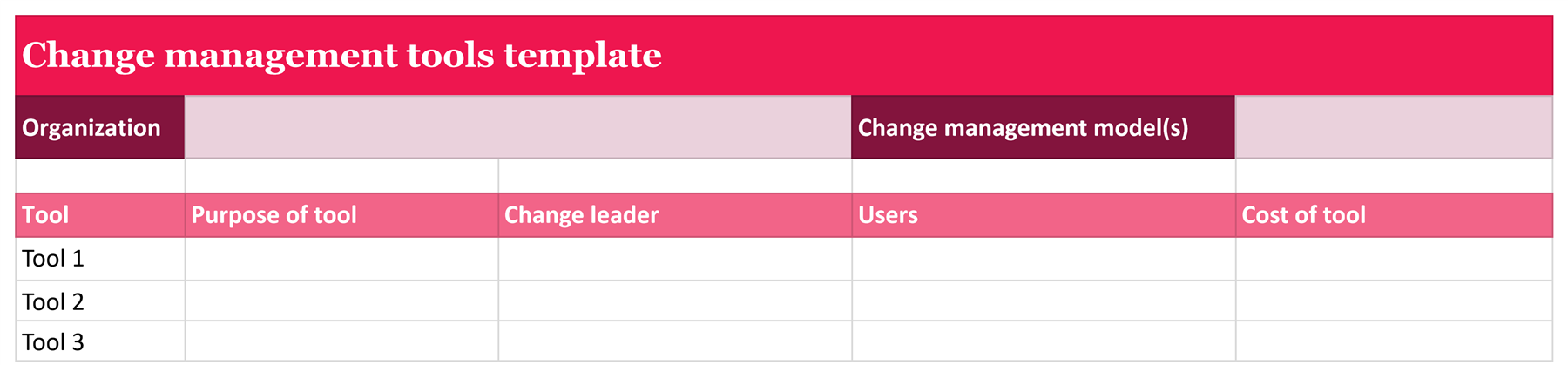
Change management tools help organizations automate parts of the change process and optimize workflows. A change management tool template documents all the tools people will use, who will use them, why they’re necessary, and the costs involved, so nothing gets overlooked during implementation.
What this template includes:
- Tool: List all tools people will use to implement the change—from complex platforms like a human resources information system (HRIS) for managing HR processes during organizational changes to simpler tools like Google Docs for documentation
- The tool’s purpose: Explain why the tool is necessary for the change—for example, using an HRIS to streamline onboarding processes for new joiners during the transition
- Who will use it: List who will use each tool—everyone might use a messaging app for communication, but only the Finance team will use accounting software for budget tracking
- The tool’s cost: Include an estimate of implementation costs and any ongoing fees beyond the initial investment
8. Change management training plan template

A change management training plan template helps you prepare for any training sessions team members need to navigate the change confidently. It covers the training type, delivery method, target audience, tools, responsible leaders, and duration.
What this template includes:
- Training type: Start with the goal and type of training
- Target audience: List who’s participating in each training session
- Duration: Estimate how long the training will take
- Delivery method: Explain how team members will receive the training—in person, online, on-demand, or another format
- Training tool: Cover the tools you’ll use to deliver the training, referencing your change management tool template
- Training leaders: Note which leaders oversee training sessions and who’s responsible for tracking performance
- Costs: Estimate the cost of delivering the training
9. Change order form template
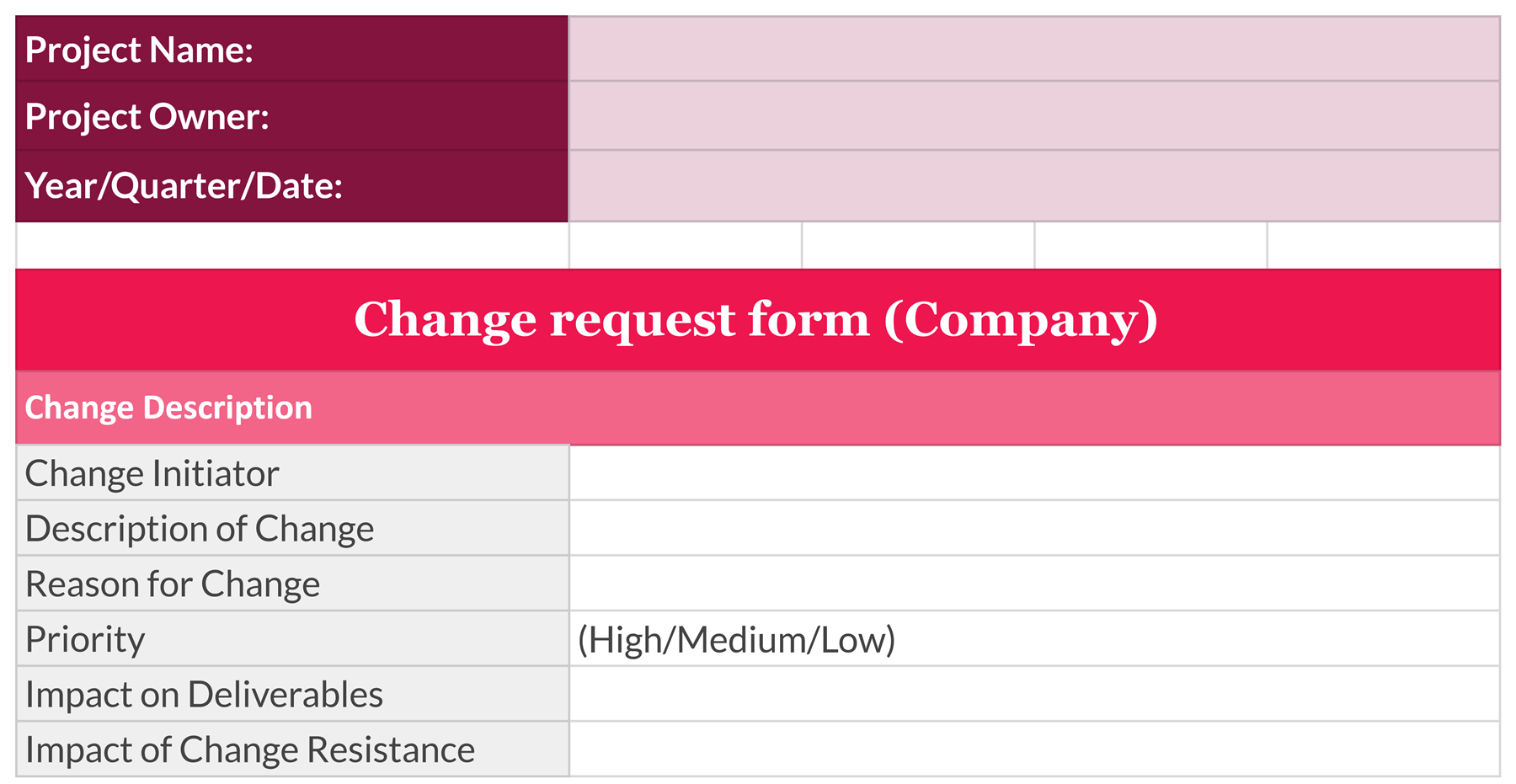
A change order form—also called a change request form—helps organizations maintain control over all change processes. It prevents any single team or department from making changes without approval from key decision-makers, creating a clear audit trail throughout the initiative.
What this template includes:
- Project name: The title of the change project
- Date: The date of submission
- Requested by: Who requested the change
- Reason for change request: The rationale behind the request
- Impact of the change: What the change aims to achieve
- Approval or rejection: Documentation of whether the request was approved or rejected
- Date of approval or rejection: The recorded date of the decision
10. Change implementation plan template
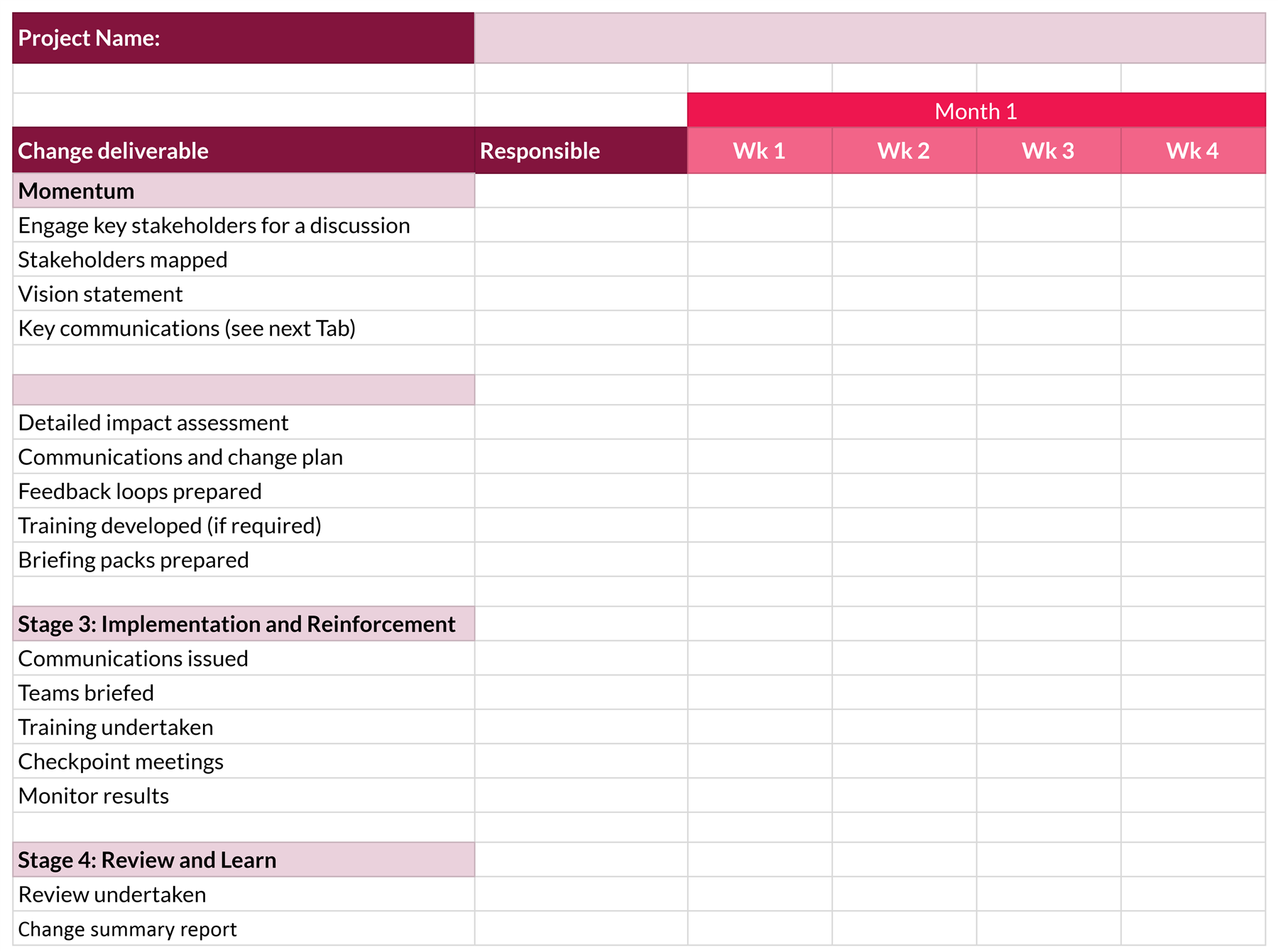
The implementation plan template outlines every task, schedule, resource allocation, cost estimate, and budget needed to drive the change forward. It also functions as a working checklist, helping change leaders monitor progress, assign team members, set due dates, and update task statuses throughout the initiative.
What this template includes:
- Tasks: List all tasks to complete in each implementation phase
- Priority levels: Assign priority to each task—critical, high, medium, or low
- Start date: Indicate when each task begins
- End date: Provide the expected completion date for each task
- Assignments: Note who holds responsibility for each task
- Progress: Share regular updates for each task, noting whether it’s on track or facing delays
11. Change management resource template
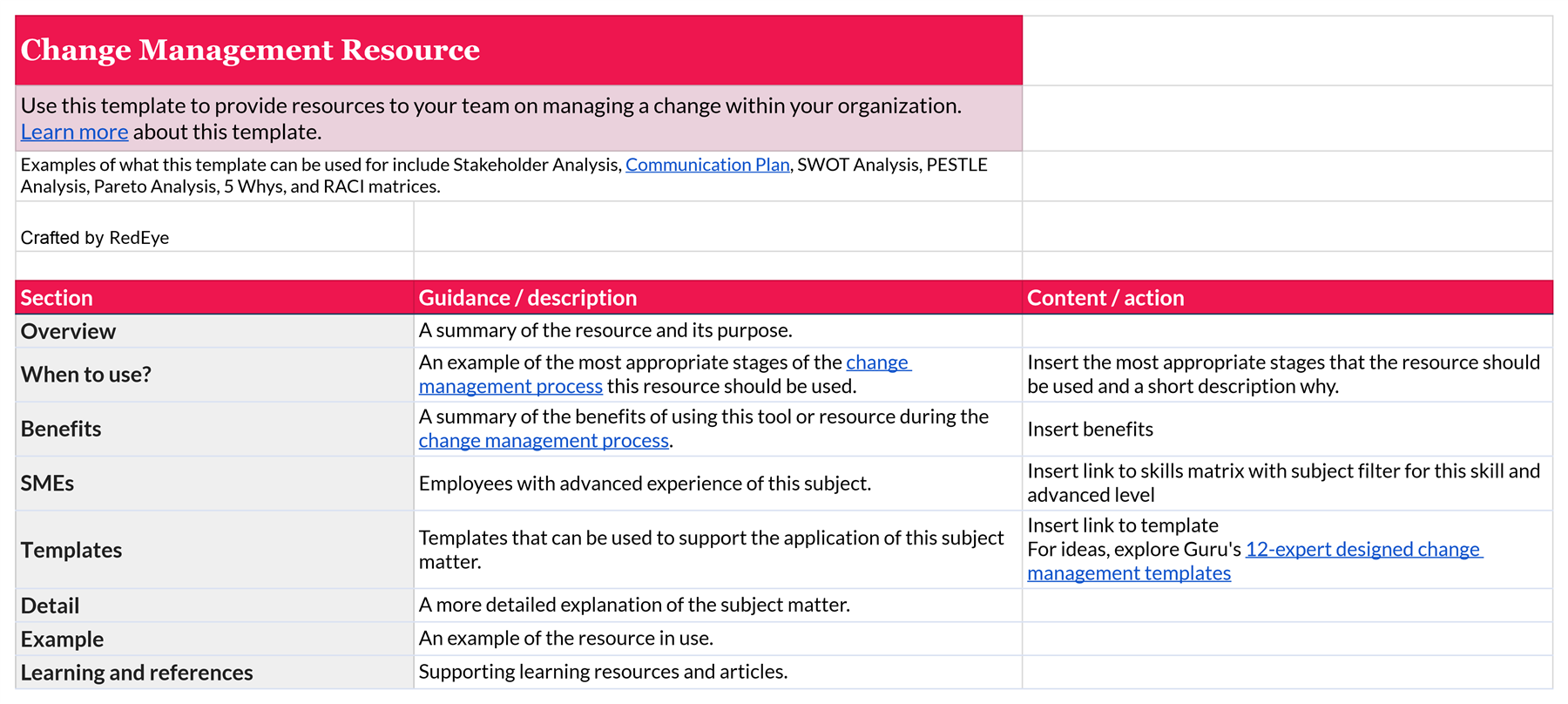
A change management resource template ensures the organization has the resources it needs to implement change initiatives. It covers the type of resources available, their purpose, and who will manage them, so teams can access what they need without confusion or duplication.
What this template includes:
- Resource type:
- Training and development resources: Specify training programs, workshops, seminars, and learning materials
- Templates: Provide templates to standardize processes during the change
- Technology and tools: Include the software, platforms, or tools people can use to manage and automate the changes
- Purpose of each resource: Explain the importance of each resource, how to use it, and when to use it
- Target users: Note which individuals or departments will use each resource
- Subject matter experts: List team members with advanced experience using the resource
- Example: Provide an example of how to use the resource in practice
12. Change management timeline template
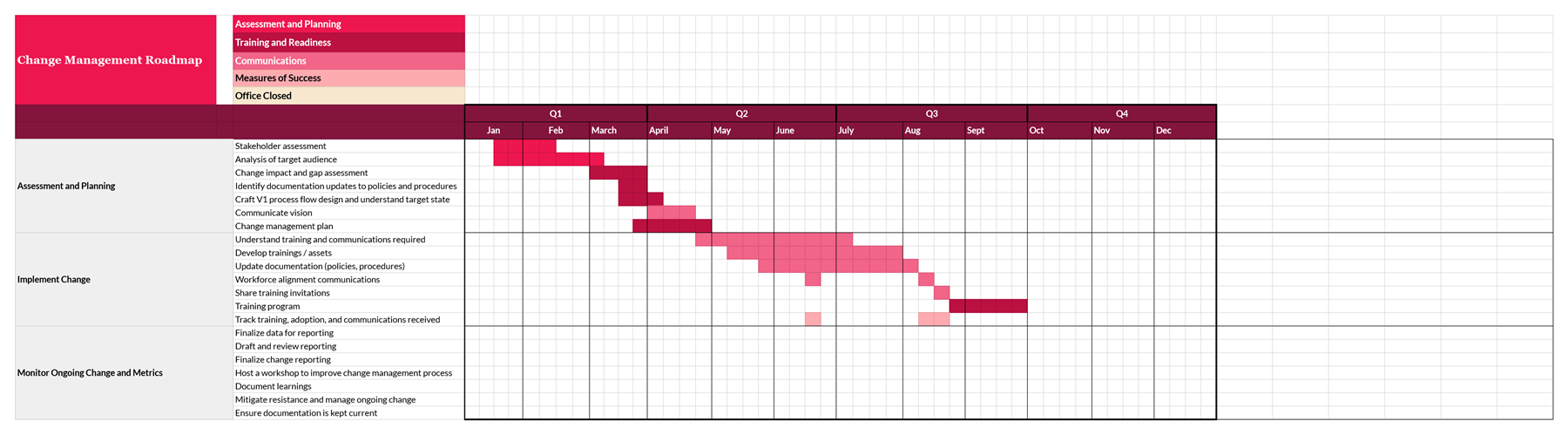
A change management timeline template creates a schedule that breaks the change process into measurable phases and sets a duration for each. For example, phase one might cover communicating the change and setting up tools; phase two could involve training team members and gathering feedback; phase three could be full implementation, and so on.
What this template includes:
- Change phases: Define the various stages, each with a specific duration
- Duration: Estimate the expected length of each phase
- Start date: State when each phase begins
- End date: State when each phase is expected to close, building in time for progress reviews
13. Change log template
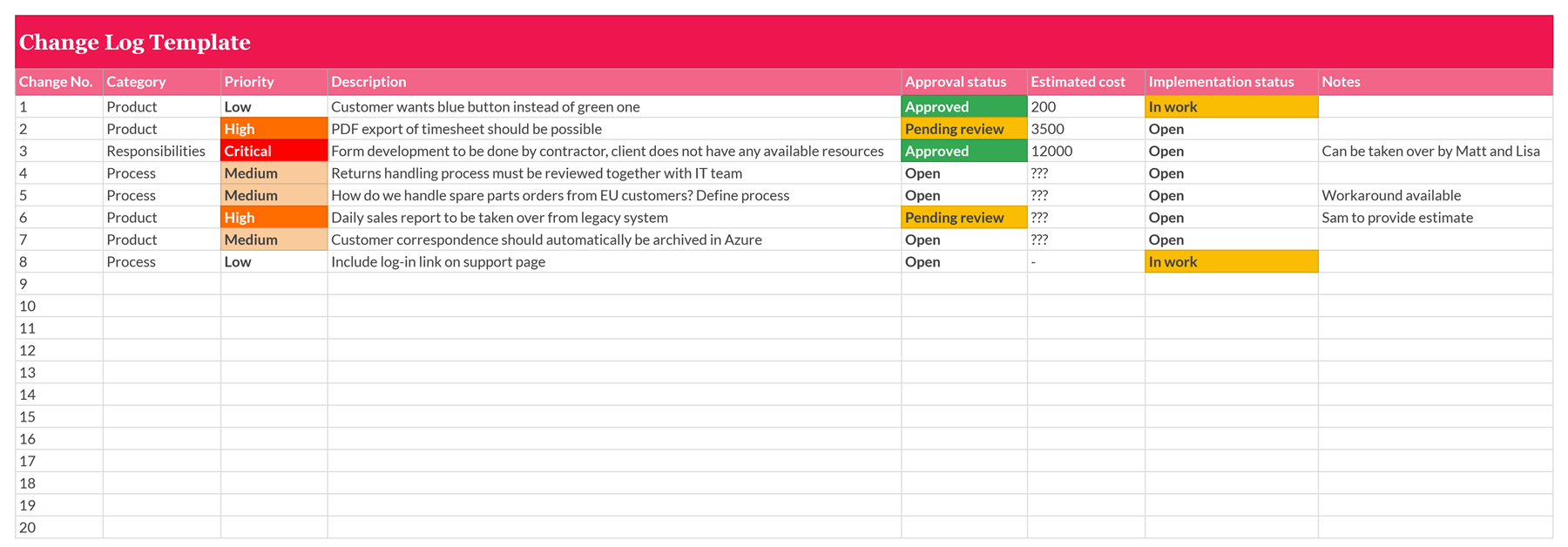
A change log template tracks all change order requests in one place. It details who requested a change, the request date, its priority level, its current status, documents approvals, updates, and any relevant communication throughout the process.
What this template includes:
- Change request: The name of the request, the reason for the change, and its expected impact
- Date: The date someone submitted the change request
- Priority: A priority level assigned to each request—high, medium, or low
- Progress status: The current status of the change—complete, in progress, not started, or blocked
- Change scope: The extent of the change and which teams, departments, or functions it affects
14. Change impact template
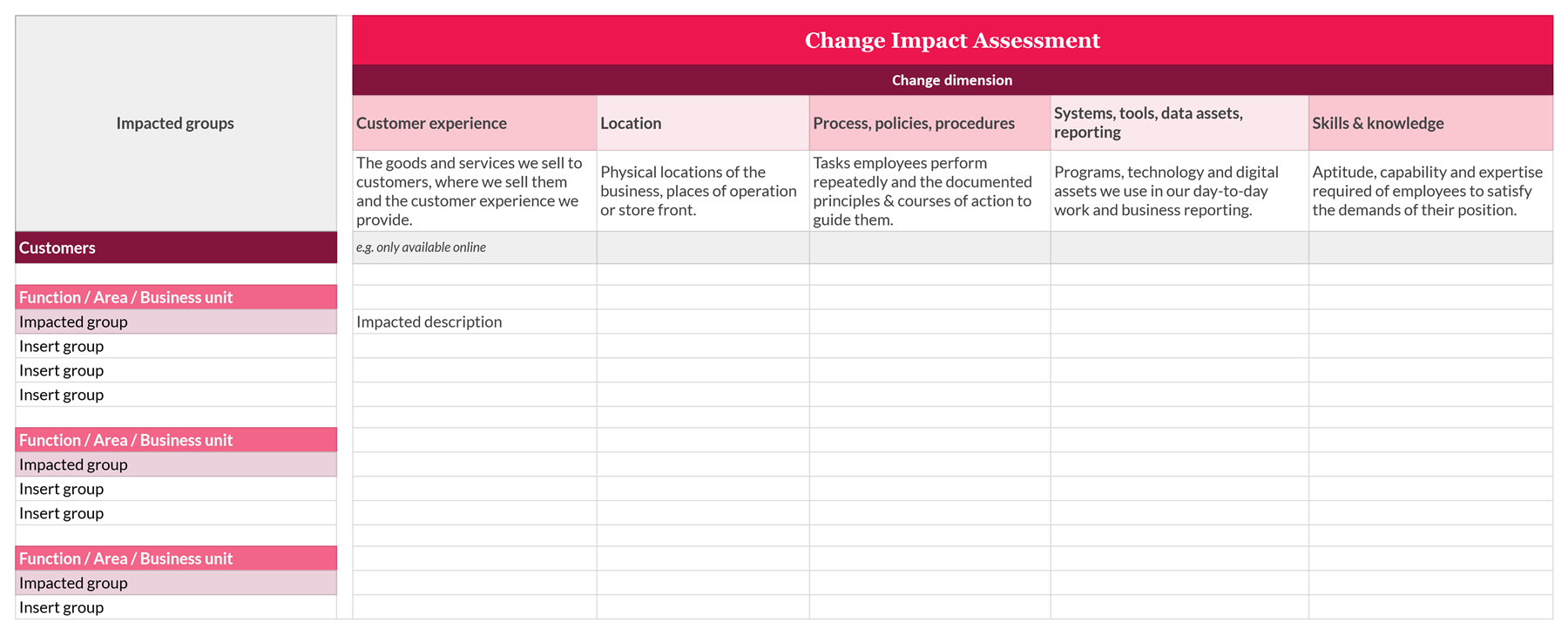
A change impact template helps you estimate how a proposed change will affect the organization both financially and non-financially. It lists all variables, such as team members, culture, workflows, finances, and resources, along with the potential positive or negative impact the change will have on each.
What this template includes:
- Scope of the change: Determine the extent and complexity of the change. Does it fit within current processes with minimal adjustments, or does it require a more significant overhaul?
- Variables: Identify all variables affected by the change and describe the positive and negative impacts in detail.
- Expected risks: Outline potential risks, including resistance from team members, workflow disruptions, financial implications, and other possible challenges.
How to choose the right change management model
Before filling out your templates, ground your plan in a recognized change management model, a framework that guides how you sequence and approach the change. Each model suits a different kind of transition, and your choice will shape your communication, training, and leadership strategies.
Some of the most widely used change management models include:
- Kotter’s 8-step model: A top-down, sequential approach that moves from creating urgency and building a guiding coalition through to generating short-term wins and embedding the change in company culture. It’s best for large-scale transformations, such as a merger or company-wide restructure, where leadership alignment makes or breaks the effort. Keep in mind that it relies on strong senior sponsorship and moves step by step, so it can feel slow for smaller or fast-moving changes.
- ADKAR model: Prosci’s people-focused framework tracks each person through five stages: Awareness, Desire, Knowledge, Ability, and Reinforcement. It’s best for changes where success depends on individual adoption, like rolling out a new HR system or process. It also helps you diagnose resistance, because it shows which stage someone is stuck in. Keep in mind that it focuses on individuals, so pair it with a broader plan for leadership and timelines.
- Lewin’s change model: A three-stage model: Unfreeze (prepare people to let go of the current way), Change (introduce the new way), and Refreeze (reinforce it until it sticks). It’s best for well-defined changes with a clear before and after, like a new policy or a single process update. Keep in mind that its simplicity makes it less useful for ongoing or iterative change.
- McKinsey 7-S framework: A diagnostic framework that examines seven connected elements: strategy, structure, systems, shared values, style, staff, and skills. It’s best for complex changes that touch many parts of the organization at once, because it shows how a shift in one area ripples into the others. Keep in mind that it helps you assess alignment but doesn’t give you a step-by-step plan, so many teams pair it with Kotter or ADKAR.
- Bridges’ transition model: Focuses on the emotional side of change through three phases: Ending (letting go of the old way), the Neutral Zone (the uncertain in-between), and New Beginning (embracing the new way). It’s best for changes that affect people’s roles, teams, or sense of identity, like a reorganization or leadership change. Keep in mind that it complements a project-focused model rather than replacing one.
To narrow your choice, look at where the biggest risk sits. If it’s leadership misalignment, start with Kotter. If it’s individual adoption, use ADKAR. If the change touches many parts of the organization, use McKinsey 7-S to map the ripple effects. Many HR teams combine two: one to structure the rollout and one to support people through it.
Change management best practices for HR leaders
Templates give you structure, but how you lead the change process determines whether it sticks. Here are the practices that separate successful change initiatives from those that stall.
Secure executive sponsorship early
Change initiatives with visible, active executive sponsors benefit from high-level support. Sponsors help communicate the change’s importance, remove barriers, and model the behaviors they expect others to follow.
Identify your executive sponsor before you finalize your change management plan, and keep them actively involved throughout the process, not just at the launch.
Involve people in the process
People are more likely to support a change they helped shape. Wherever possible, involve team members in decisions about how the change will be implemented.
Build in feedback loops
Change rarely unfolds exactly as planned. Build in regular checkpoints to surface what’s working and what isn’t.
Feedback loops also signal to your people that their experience matters, which strengthens trust and engagement throughout the transition.
Plan for sustainability
The most overlooked phase of change management is what comes after go-live. Without reinforcement, people often revert to old habits, especially when the pressure of the transition eases.
Build a reinforcement plan into your change management timeline that includes ongoing training, updated documentation, and clear accountability for maintaining the new way of working.
Recommended For Further Reading
Build a successful change management plan
A strong change management plan gives you the structure to implement change smoothly and delivers lasting benefits long after the transition is complete. With the right plan in place, you can expect:
- A higher success rate for change initiatives
- Faster adoption across teams
- Less resistance from people at every level
- Higher engagement and satisfaction throughout the process
- Upskilling opportunities for team members as they adapt to new ways of working
With a solid plan in place, you’ll have visibility into each phase, the ability to anticipate and address surprises, and a team that feels supported through the change.
<< Build an effective change management plan with these free change management templates. >>
Change management plan FAQs
The seven R’s of change management are questions used to evaluate and manage change requests. They include:
- Reason for the change: What drives this change, and what issue or opportunity does it address?
- Risks involved: What potential risks and challenges accompany this change?
- Resources required: Which resources—time, budget, tools, skills—enable successful implementation?
- Raised or suggested changes: Who initially raised or suggested this change, and what motivated the suggestion?
- Return of the change: What measurable benefits or returns come from making this change?
- Responsible for implementing change: Who holds responsibility for carrying out and managing the implementation?
- Relationship between changes: How does this change interact with, align with, or influence other planned initiatives?
The five C’s of change management are a framework for leading change effectively. They include:
- Communication: Keep stakeholders informed, address the change openly, and share its purpose and benefits
- Commitment: Foster a shared understanding of the change goals and gain active support from stakeholders across the organization
- Culture: Address the existing company culture to align the change with the company’s values and norms
- Capability: Assess current capabilities, identify gaps, and provide training or resources to support successful adoption
- Consistency: Maintain consistency in actions, messaging, and implementation to build trust and credibility throughout the process
The five P’s of change management are a framework that covers the core dimensions of a change initiative. They include:
- Purpose: Answers the core questions—what are we doing, why are we doing it, and what do we hope to achieve?
- People: People drive the change. Success rests on the commitment of the people involved and impacted, from buy-in to alignment with company culture
- Process: Defines how the organization operates now and how it will adapt—refining current practices, removing inefficiencies, and building toward a future state rooted in best practices
- Platform: Includes all the essential tools that support the organization’s work during and after the transition
- Project: Organizes change into actionable steps and aligns leaders and teams on shared goals, turning strategic vision into measurable outcomes
Change management focuses on the people side of change, ensuring team members are informed, supported, and equipped to adopt new ways of working. Project management focuses on the tasks, deliverables, timelines, and budgets needed to execute the change. Both complement each other: Project management builds and deploys the change, while change management ensures people embrace and sustain it.