
Rapid shifts in the business landscape have made HR compliance even more of a core responsibility than in the past. Everything from frequent regulations changes and an average additional $174K for breaches associated with non-compliance to the sheer responsibility of safeguarding both your people’s rights and the company’s integrity makes understanding HR compliance crucial.
This comprehensive guide breaks down the essentials of HR compliance, with a clear checklist to help you stay current, reduce risk, and lead with confidence.
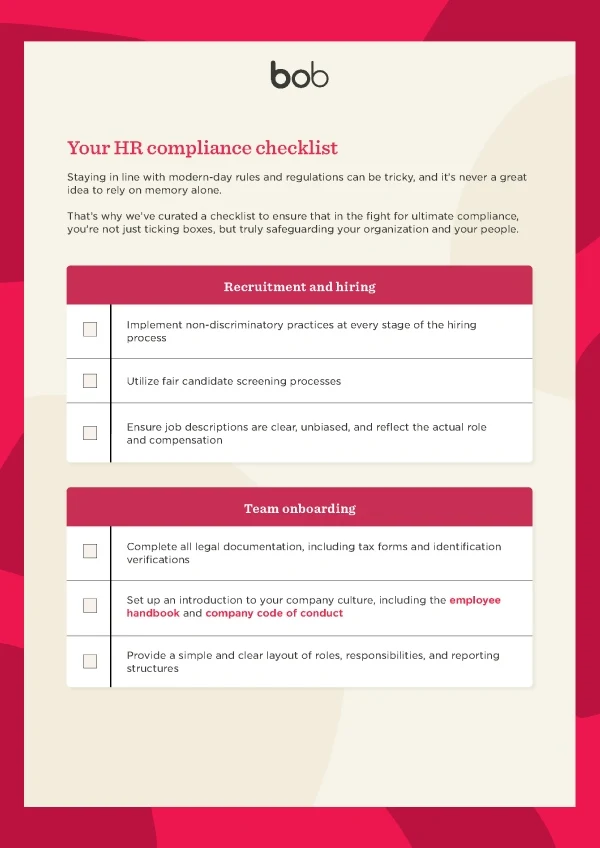
<< Download our HR compliance checklist >>
Key insights
- Compliance is more than legal coverage—it’s a way to put your people first by protecting their workplace rights. Fair, consistent practices build safer, more inclusive, and engaged workplaces.
- Non-compliance is costly. Fines, lawsuits, and reputational damage are avoidable with proactive HR.
- Standardization drives efficiency. Clear policies and repeatable processes cut errors and support smarter decisions.
- Modern risks need modern solutions. Remote work, data privacy, and DEI&B demand up-to-date compliance.
- HR tech plays a critical role in helping teams track changes, automate workflows, and ensure lifecycle compliance.
What is compliance in HR?
Compliance in HR is the process of making sure that the organization’s human resource practices are fully in line with local, state, and federal labor and employment laws. Full compliance includes everything from equal employment opportunity and workplace health and safety to benefits administration and much more.
HR compliance not only protects your business from potential legal mishaps but makes sure your people receive fair and just treatment, which goes a long way toward building a positive and safe workplace culture.
Why is compliance important to HR?
The HR department is rightly seen as the backbone of an organization, but it’s about far more than just managing and enabling people to succeed. It’s also the guardian of organizations and their people when it comes to navigating the complexities of legal and ethical matters.
Effective compliance management helps organizations:
- Protect team member rights. At its heart, HR is about people. A primary function of HR is ensuring that the organization treats every single person equally and fairly under the law. This not only involves making sure your business follows anti-discrimination and equal employment law but also creating an environment where your people feel protected and valued. With engagement trending down in recent years, this is an ideal time for companies to double down on policies that put their people first.
- Avoid legal penalties. Missteps in the dynamic world of labor laws can prove costly. Non-compliance can lead to repercussions ranging from hefty fines and penalties to legal action that could harm the company’s future financial health. A proactive HR department can identify potential areas of risk and ensure all laws are followed—helping keep your organization on the straight and narrow.
- Maintain company reputation. With the instantaneous nature of social media and digital communication, a company’s reputation constantly exists on a knife’s edge. But a compliant HR department can develop trust among current and potential team members while signaling to business partners, stakeholders, and customers that the company operates with integrity and respect for all.
- Achieve operational efficiency. Streamlined operations are one of the trademark signs of a successful business. Compliance guides standardized HR practices, ensuring companies run like well-oiled machines. Cutting down on errors, inconsistencies, and potential legal pitfalls helps the company focus its energy on growth and innovation.
To get a deeper understanding of how HR departments can streamline their adherence to legal and ethical standards and get a structured approach to evaluating and improving HR practices, check out our HR audit checklist.
Free HR compliance checklists and best practices
Keeping up with today’s complex regulations is tough—but the right HR tech can make it easier. Companies like Novatti use modern platforms to streamline documentation, surface real-time insights, and support end-to-end compliance.
Use this curated checklist to turn requirements into meaningful action. Strengthen compliance, protect your organization, and support your people—every step of the way.
Recommended For Further Reading
1. Recruitment and hiring
Build fair, compliant hiring practices that stand up to scrutiny and support inclusive growth:
- Implement non-discriminatory practices: Standardize interview questions, avoid protected class references, and train hiring managers on bias prevention
- Utilize fair candidate screening processes: Rely on structured interviews and skills-based assessments—not subjective impressions
- Ensure job descriptions are clear and unbiased: Use inclusive language, avoid gender-coded terms, and focus on outcomes over credentials
- Align background check and reference practices with legal requirements: Comply with regional laws (e.g. GDPR, FCRA), gain consent, and ensure consistency across roles
- Regularly review work authorization compliance: Confirm documentation (e.g. I-9, visas) is accurate, updated, and securely stored
<< Simplify recruitment and hiring with a free hiring process checklist >>
2. Team classification
Correctly classifying your workforce reduces legal risk and improves cost visibility. Strong HR compliance processes help:
- Ensure classifications align with work responsibilities and hours: Differentiate between contractors, part-time, full-time, and exempt vs. non-exempt roles
- Reassess roles regularly: Review responsibilities against classifications during organizational or policy changes
3. Team onboarding
Onboarding is your first compliance checkpoint and your first impression. Here’s how you can wow new team members while staying compliant:
- Complete all legal documentation: Collect signed agreements, benefits enrollment forms, and tax documents
- Set up an introduction to company culture: Share your values, mission, and diversity, equity, inclusion, and belonging (DEI&B) commitments alongside handbooks and policies
- Provide clear layout roles and reporting structures: Help new hires understand their responsibilities and how they contribute to team goals
<<Start onboarding off strong with a free onboarding documents checklist >>
4. Compensation and benefits
A compliant, transparent approach to pay builds trust and reduces risk. Here are a few best practices to ensure your compensation policies and practices stay compliant:
- Review and update compensation and benefits packages regularly: Benchmark pay and benefits against industry and legal standards
- Check for minimum wage law compliance: Align with federal, state, and local wage regulations
- Comply with tax requirements: Ensure accurate payroll deductions, reporting, and year-end summaries
- Ensure everyone receives legally mandated benefits: Track eligibility for healthcare, leave, retirement, and other statutory benefits
<< Ensure fair and compliant compensation practices with a free pay equity audit template >>
5. Workplace safety and workers’ compensation
A safe work environment is a legal and ethical responsibility—try these practices to protect your people’s health and wellness:
- Conduct regular safety audits: Identify and address hazards across remote, hybrid, and on-site workspaces
- Ensure compliance with local, state, and federal safety standards: Document adherence to OSHA, HSE, or regional regulations
- Provide regular training on safety procedures: Keep all team members up to date on emergency protocols, equipment use, and mental health resources
- Offer compliant disability benefits: Understand regional obligations and communicate clearly with impacted team members
- Post worker’s compensation rights where visible to team members: Make information accessible digitally and in shared spaces

6. Diversity, equity, inclusion, and belonging (DEI&B)
A strong DEI&B strategy goes hand in hand with compliance and culture. Try these practices to ensure your organization is an inclusive, welcoming place:
- Develop clear DEI&B policies and processes: Embed expectations into handbooks, training, and performance reviews
- Develop Affirmative Action Plans (AAP) when required: Follow federal or regional guidance for compliance and recordkeeping
- Standardize reporting and audits: Track diversity metrics to stay compliant and measure progress
- Include DEI&B in leadership accountability: Tie inclusive goals to manager KPIs and performance evaluations
7. Training and development
Ensure your learning programs support both compliance and performance:
- Schedule mandatory training sessions: Cover topics like anti-harassment, workplace conduct, and data security
- Conduct regular DEI&B and anti-harassment trainings: Make these part of your ongoing learning culture—not one-offs
- Conduct regular performance reviews: Keep feedback structured, documented, and legally sound
- Evaluate training effectiveness and gather feedback: Adjust content based on what team members find useful and applicable
<< Encourage equitable professional development with free performance review templates >>
8. Team member rights
Protecting team member rights starts with transparency. Clear communication supports wellbeing, reduces legal risk, and strengthens compliance.
- Distribute materials clarifying team member rights: Share digital and physical copies of rights documents and policy summaries
- Set up avenues for easy and anonymous complaints: Provide tools to report issues without fear of retaliation
- Collect feedback on workplace conditions regularly and address concerns: Use surveys and open forums to identify and resolve pain points
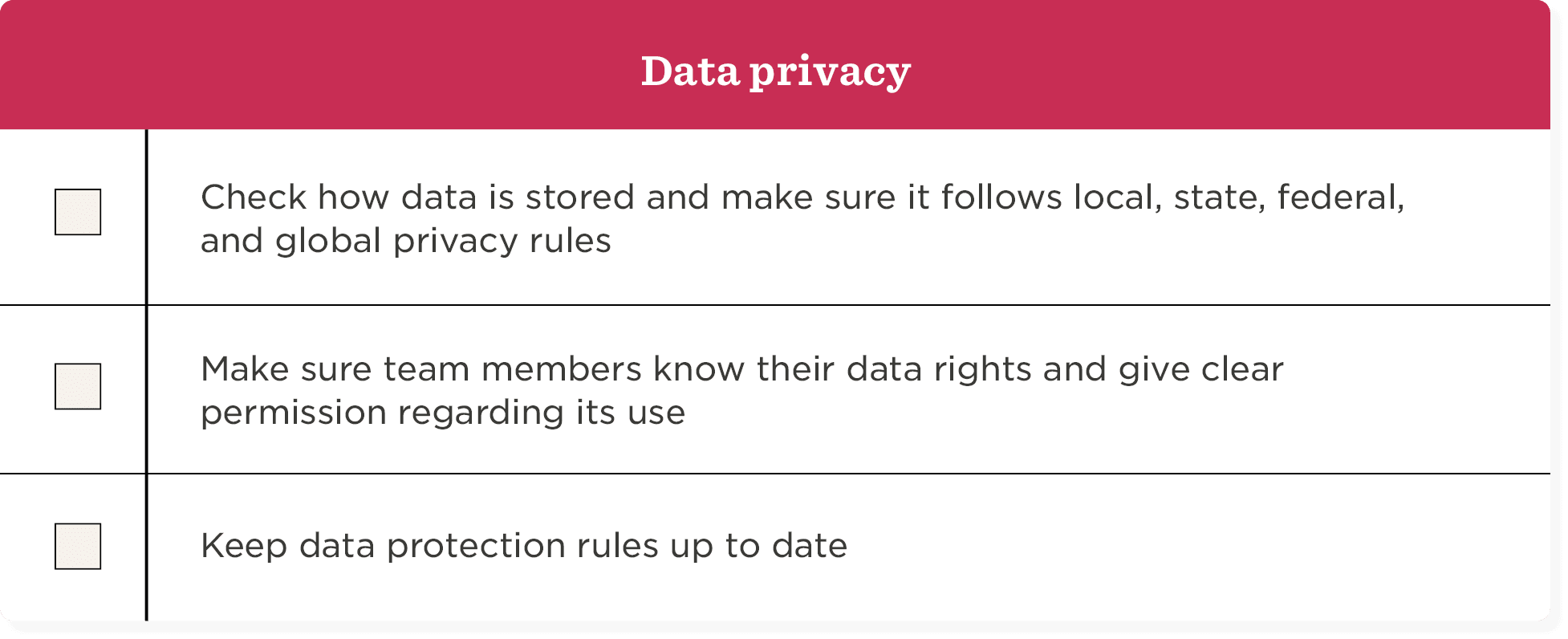
9. Data privacy
Handle people data with care—and compliance:
- Keep data storage practices up to date with legal requirements: Follow GDPR, CCPA, and local privacy laws
- Implement cybersecurity measures: Encrypt data, manage access permissions, and conduct regular audits
- Ensure team members know their data rights: Make data policies easy to find and understand
- Create a data breach response plan: Define roles, timelines, and notification procedures
10. Termination and separation practices
Respectful, compliant exits matter as much as great onboarding.
- Document clear termination processes: Use consistent procedures for voluntary and involuntary exits
- Implement exit interviews and feedback sessions: Capture insights, address issues, and protect brand reputation
- Classify terminations correctly: Code layoffs, dismissals, and resignations accurately for legal and reporting purposes
- Lay out specific reasons for ending jobs: Ensure these reasons meet legal requirements and keep detailed records to avoid disputes
- Provide support for exiting team members: Offer final pay, benefits info, and mental health resources where appropriate
11. Unions and collective bargaining agreements (CBAs)
Compliance with labor agreements starts with understanding and awareness:
- Train managers on CBAs and labor laws: Ensure leadership can uphold collective agreements and navigate negotiations effectively
- Maintain accessible, up-to-date documentation: Store CBAs and related policies where managers and team members can easily find them
- Track agreement terms and deadlines: Monitor key dates for renewals, negotiations, and legal obligations to stay ahead of compliance risks
12. Documentation and reporting
Up-to-date records keep your organization audit-ready and efficient. Try these tips for maintaining effective documentation:
- Update HR papers regularly: Review contracts, policies, and forms in line with legal changes
- Edit the team member handbook and code of conduct whenever laws change: Share revisions proactively with the team
- Organize digital and physical files for easy reference: Centralize documents in a secure, searchable system
- Develop procedures for reporting and investigating HR violations and concerns: Ensure fair, timely, and well-documented investigations of disciplinary infractions
Your HR team might have a deep well of knowledge, but certain complex situations may come up where the expertise of a legal professional is invaluable. In these cases, don’t hesitate to get some outside help from legal experts.




<< Download our HR compliance checklist >>
HR compliance challenges
The business world never stands still. With so much fluidity and change comes a constant slew of new challenges and opportunities. In the realm of HR, remaining up to date with the latest compliance requirements ensures smooth organizational operations.
While these issues and challenges will vary from sector to sector, there are a few common human resource compliance issues worth watching for. With that in mind, let’s dive into some of the significant HR compliance issues we face today:
- Data protection and privacy. Data has always been important, but the digital age has amplified that importance. Every click, every interaction, and every piece of information shared within your organization is a piece of data you need to protect. As cyber threats and data breaches become more and more common, the pressure to safeguard sensitive information rises.
HR departments have a level of responsibility to ensure data collection, storage, and processing adhere to the latest privacy regulations. This includes clear levels of communication with team members about how the company uses their data and ensures they’ve consented to its use when necessary. - Diversity, equity, inclusion, and belonging. The global push for more inclusive workplaces has seen the term “diversity” go from a buzzword to a business imperative. Regulatory bodies worldwide are putting a large amount of emphasis on making sure workplaces aren’t just diverse, but fully inclusive.
HR departments now shoulder the responsibility for hiring practices that prevent discrimination, while also creating a culture where everyone feels respected and as if they belong. Continuous training, unbiased performance evaluations, and clear anti-discrimination policies are just a few ways HR can ensure compliance in this area. - Regulatory updates. HR tech solutions aren’t static—they evolve alongside ever-shifting laws and regulations. Make sure your HR tech supplier offers updates in response to regulatory changes, and prioritize those updates in your system.
- Remote work regulations. The global pandemic reshaped the way we work. Remote and hybrid work is common now for people all over the world. With this shift comes new challenges for HR to keep up with. Regulations around work hours, compensation, benefits, and even workstation ergonomics have emerged.
Ensuring fair compensation across regions with varying costs of living is a complex challenge. It’s just one of many factors HR teams must manage while navigating the intricacies of remote work compliance.
Staying current on these issues and other compliance challenges helps HR departments ensure seamless operations while protecting their organizations and their people.
For a structured overview of these issues and how to address them, take a look at our HR compliance checklist.
<< Download our HR compliance checklist >>
Compliance never stands still
Navigating the intricate pathway of HR compliance is crucial for the longevity and integrity of any organization. Staying informed, adopting best practices, and leveraging HR tech will ensure your company stands on the straight and narrow now and in the future.
Just remember, prioritizing the wellbeing and rights of your team members creates a strong backbone to build and sustain the success of your organization.